Bukhara to Khiva – Uzbekistan
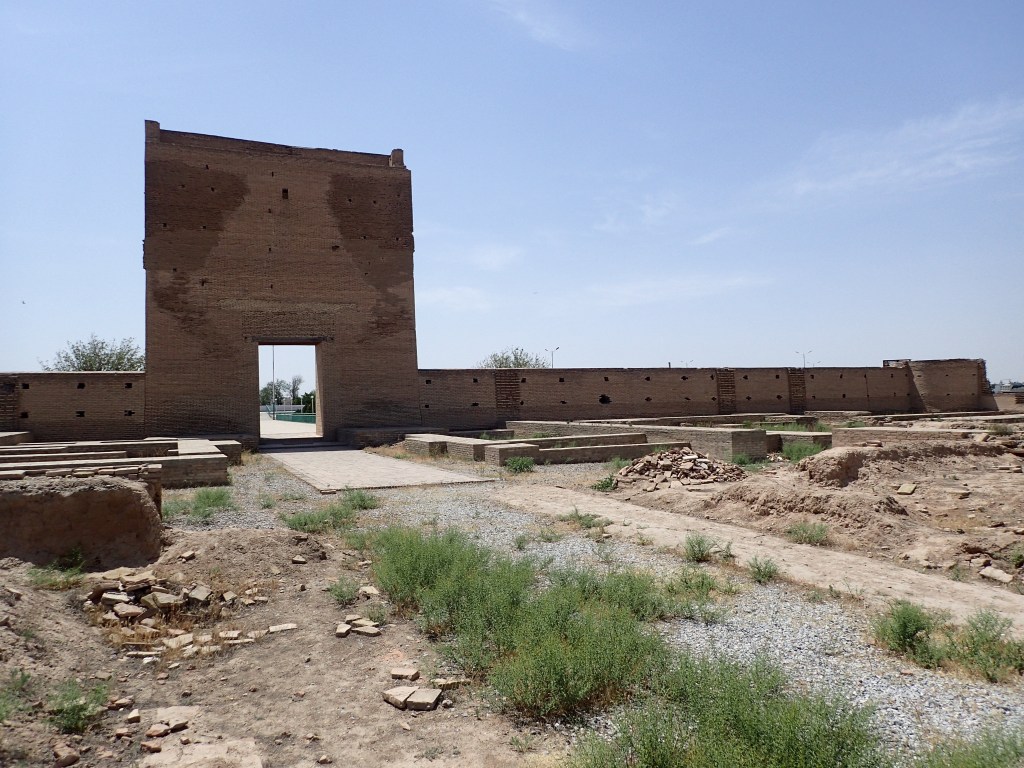
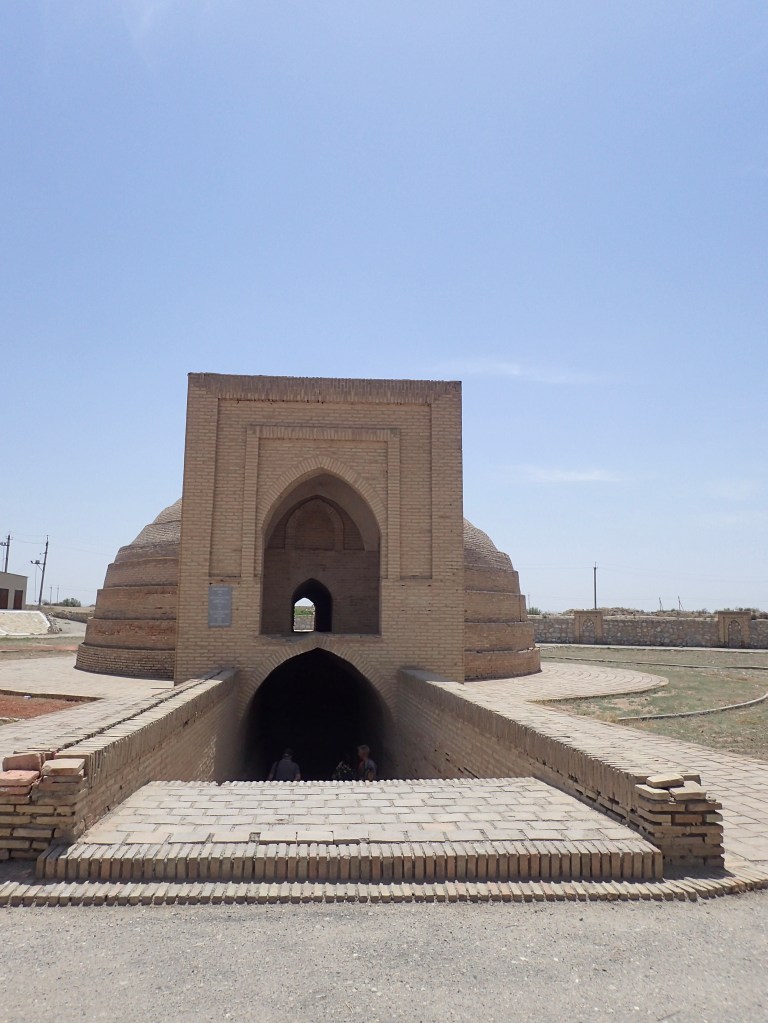
It doesn’t feel right not mentioning the Silk Roads as Uzbekistan was well and truly part of them. I’m no historian but I believe they can be summed up as ancient overland trading routes throughout Central Asia that the major population centres of the day traded through until Europeans worked out how to make boats float for long distances without getting lost and eventually undercut the overland trade. Anyway, on the way to Bukhara we stopped by the side of a highway to have a gander around some old ruins that consisted of little more than the foundations of some bygone era. It was apparently the Silk Roads version of an overnight truck stop, a safe place where traders could park up their camels for the night, rest, and maybe even do a little business, all while not getting murdered by some vodka fuelled Kazakh (see previous post) I presume. Nearby was the well that had supplied the camel stop with water all those years ago and had been restored to its former glory beyond what is required of a well. It has of course dried up, most likely due to the terrifying decline of available water in this region, yet no more terrifying than crossing the present-day road that cuts between the camel stop and its well. This was obviously a popular tourist stop made apparent by the immaculate public toilets that are rare in these parts. Therefore, intoxication from putrid public lavatories was off the cards for once, but a road traffic incident seemed highly likely as we cautiously attempted to cross a dual carriageway (and back) full of traffic unwilling to stop, all in the name of seeing a few bits of history.
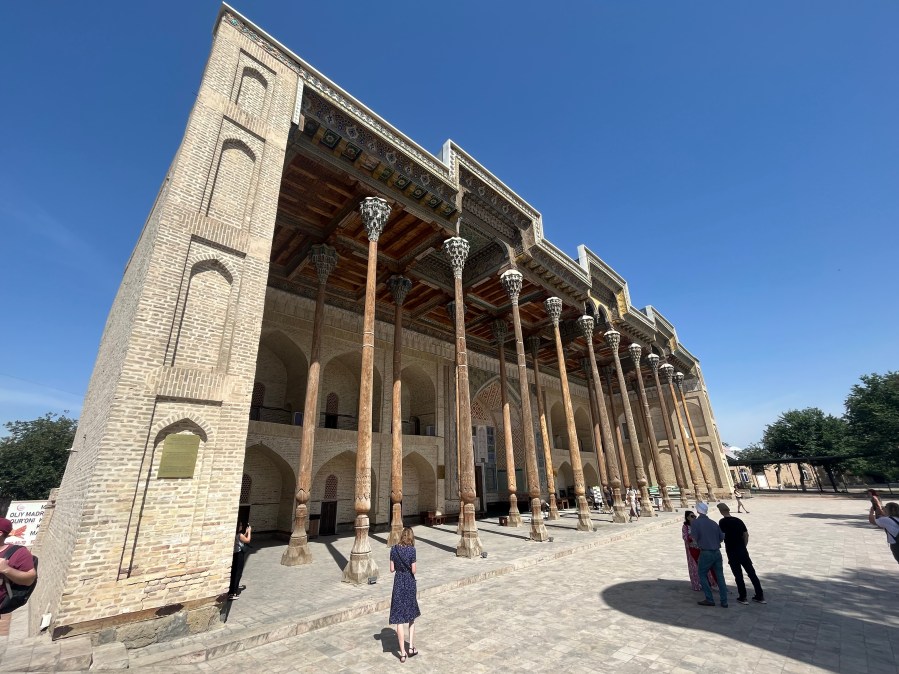
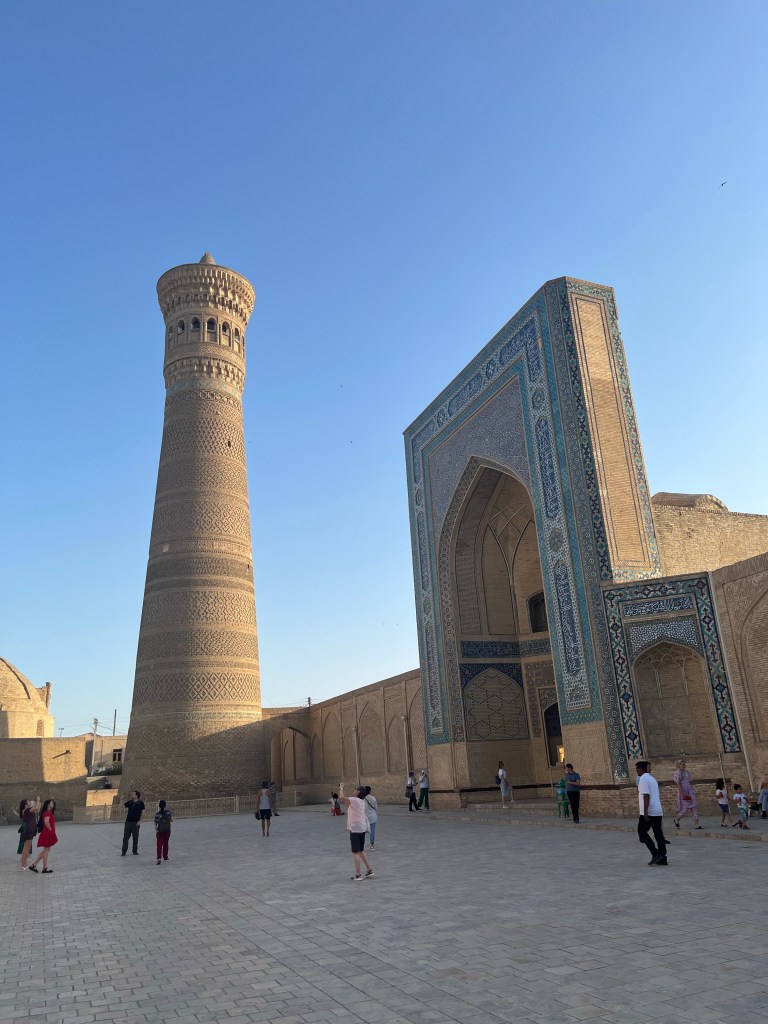
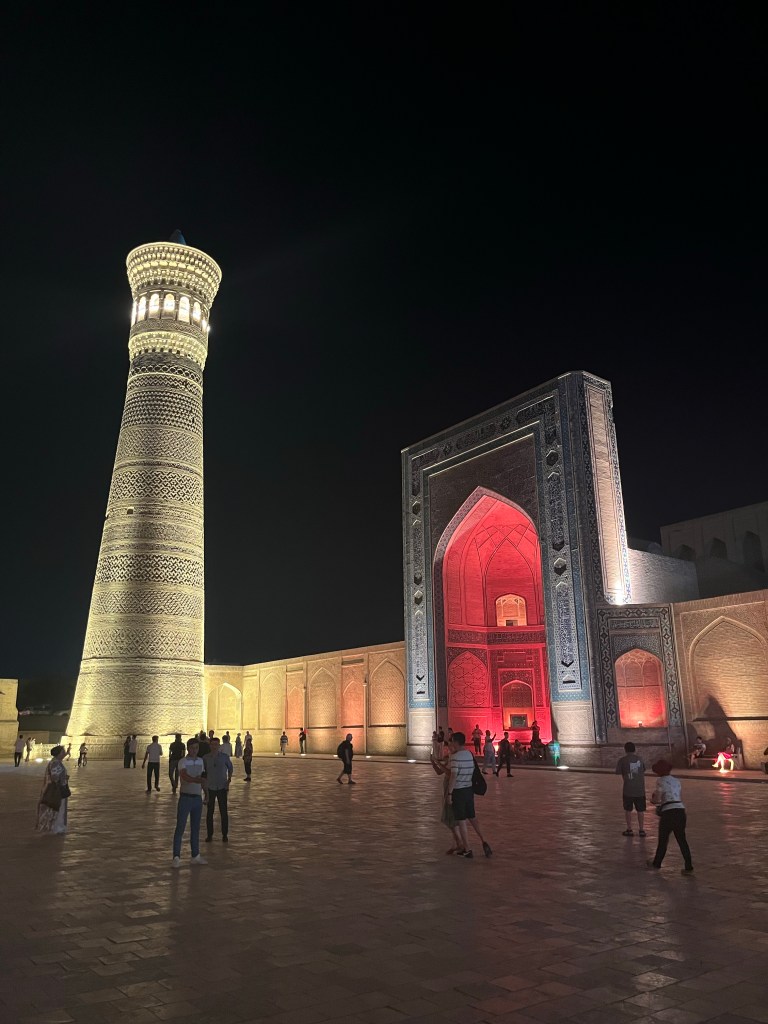
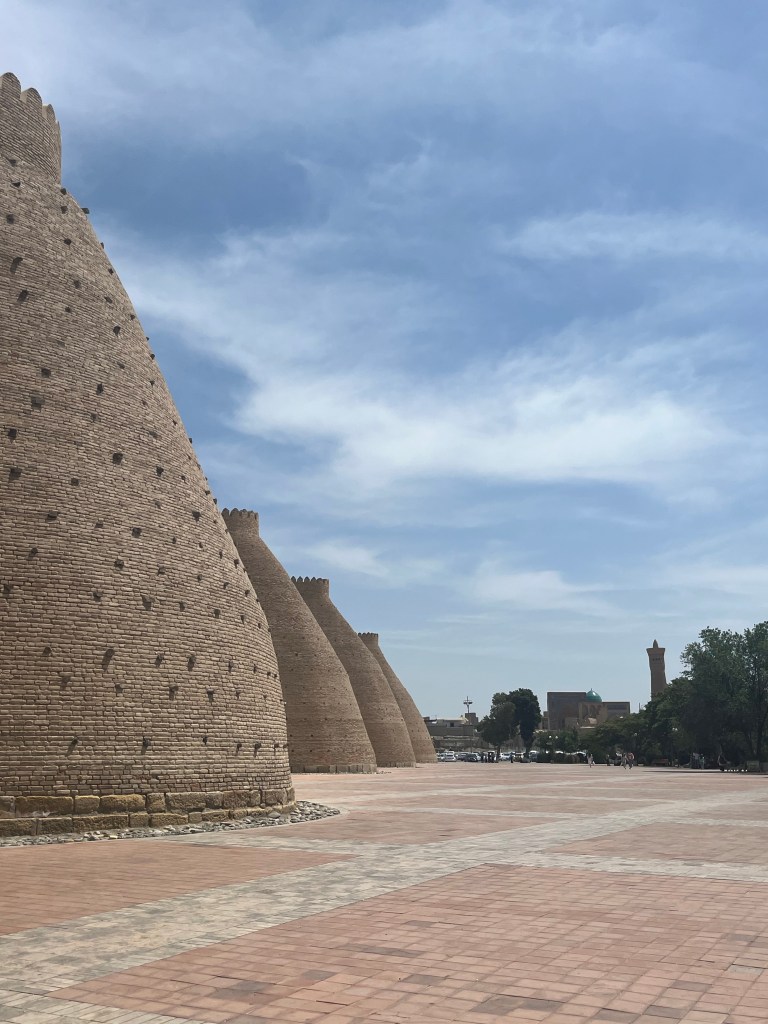
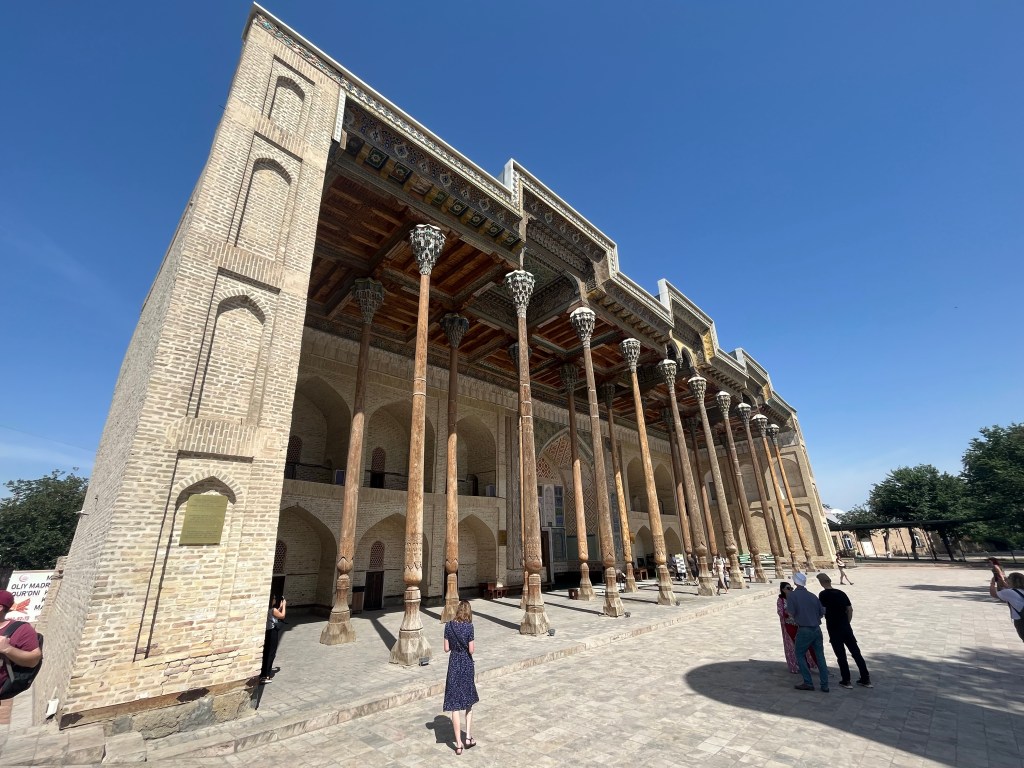
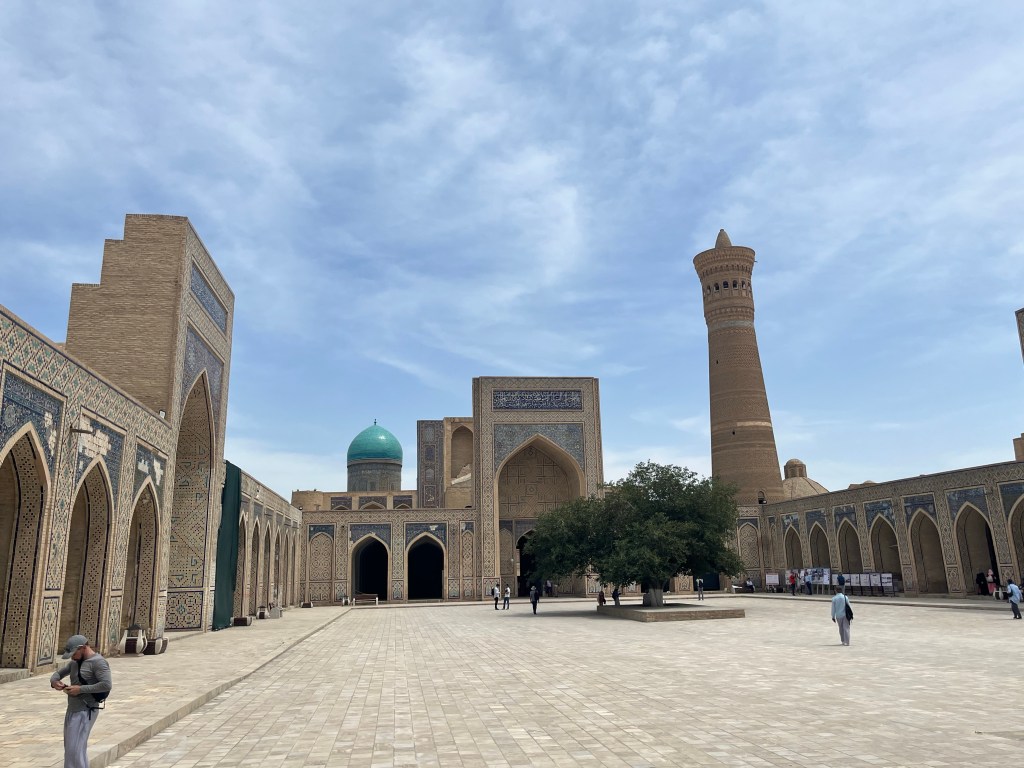
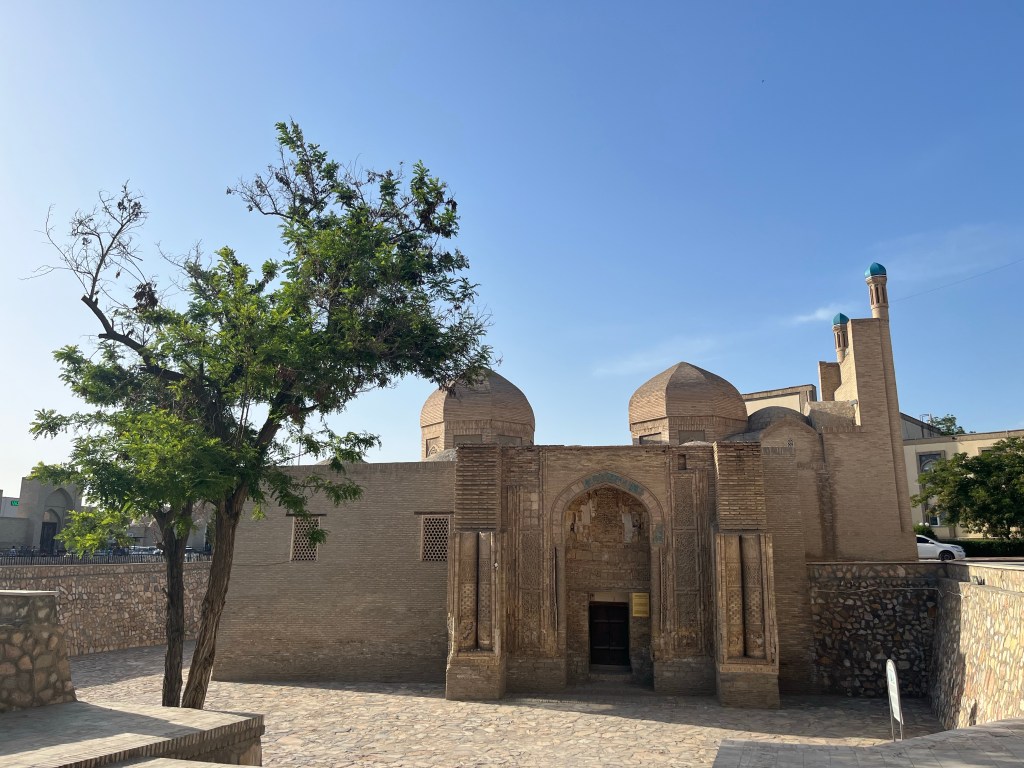
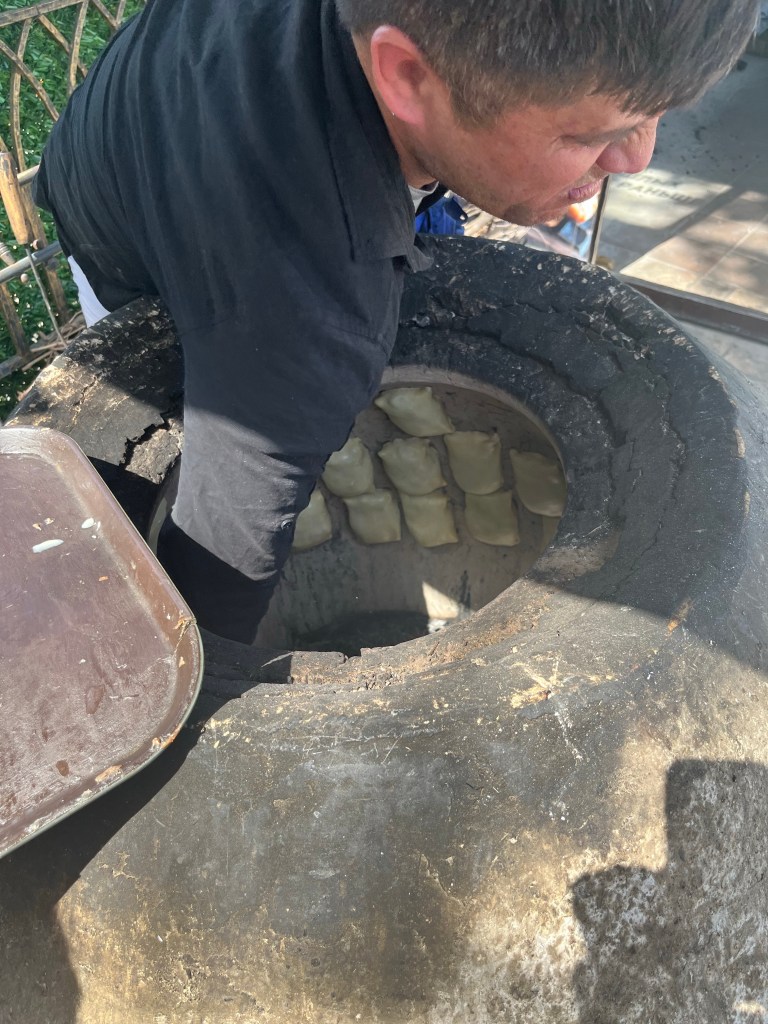
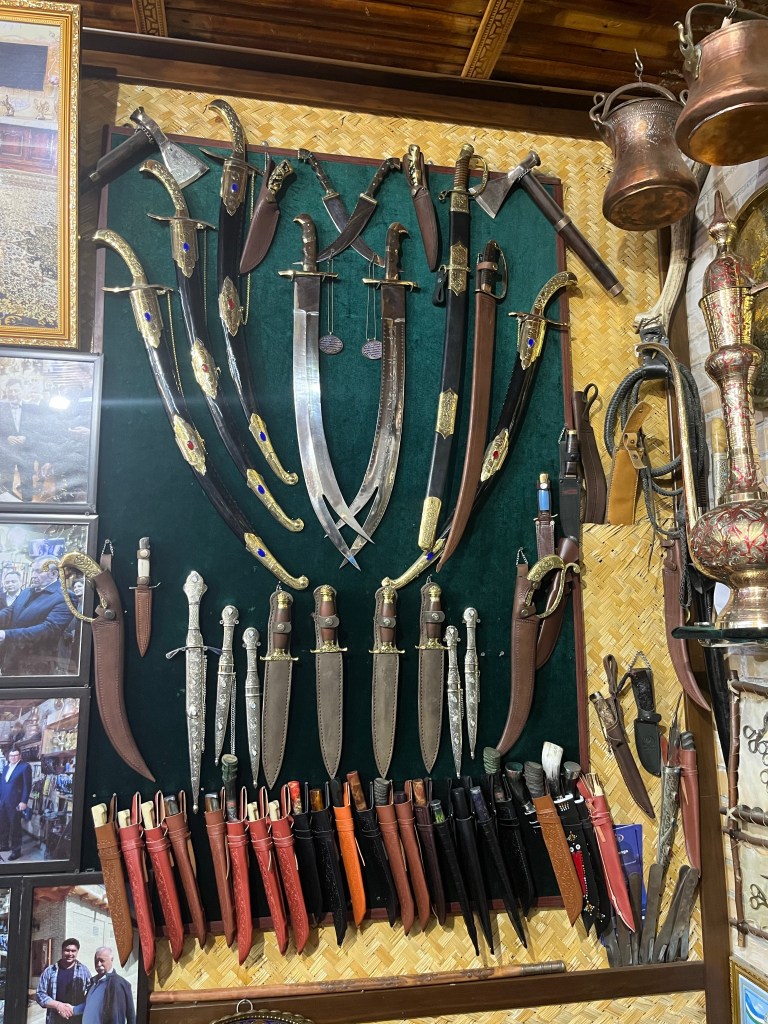
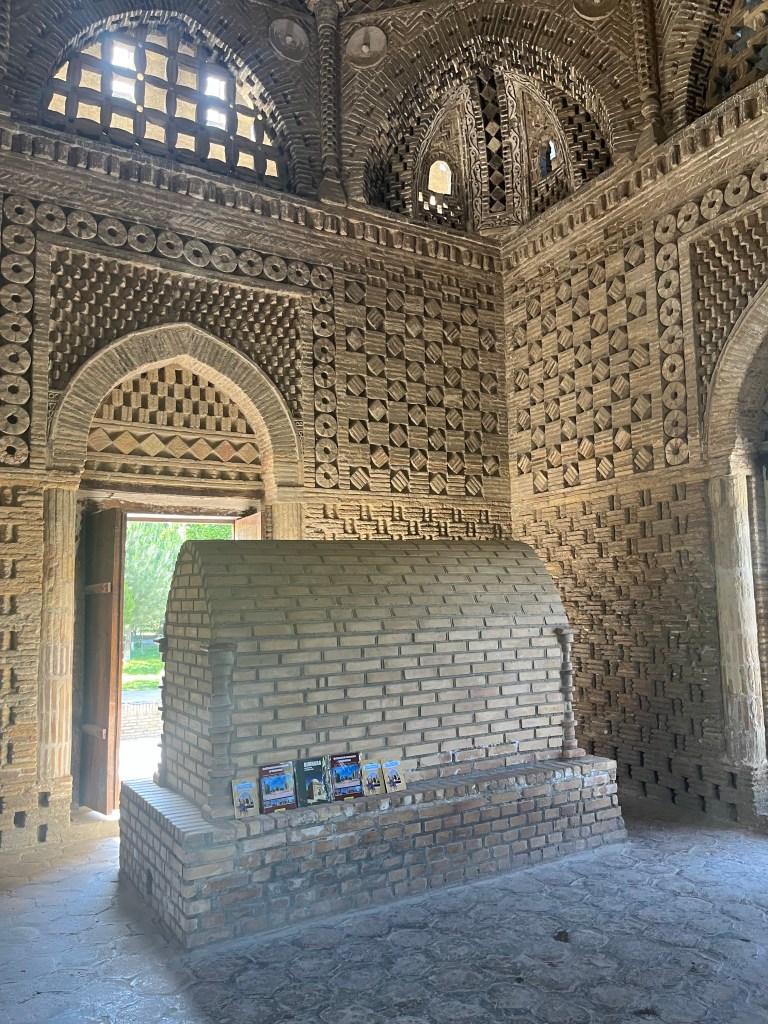
Bukhara is a nice place to be. A central old town largely restored and filled with curio stalls, its spaced out just enough to encourage some light exercise while offering the opportunity to find a bit of peace away from the crowds, most of which appear to be local or at least regional. There is the usual collection of madrasahs, mosques and mausoleums, and the added bonus of an old fort and palace that looks mighty impressive on the outside but slightly less so on entering, not that it wasn’t great. I was tempted to negotiate a deal for a stunning $700 painting featuring Arab astronomers, but my tight dairy farmer upbringing kept me grounded. Another shop we visited sold incredible knives of all sizes that apparently cut through anything, but as beautiful as they were I couldn’t face the numerous times I would have to confront customs over the coming months. Other than seeing samosas being placed into a hot clay oven, individually stuck to the side walls by hand, the highlight for me was seeing a tower that had been traditionally used to execute people by throwing them off the top of it. The Soviets tried to blow it up for some reason, firing rockets at it from a plane but failing and achieved nothing other than the creation of five holes, the patched-up aftermath of which can still be clearly seen today. The tower stands next to a beautiful mosque and one that apparently has a bit of common sense. After I was rejected by a mosque in Tashkent, the Bukhara mosque also frowned upon my shorts but were happy to lend some cotton pj bottoms that would deem me decent enough to enter. They had this brainwave after people failed to comply with rules at another beautiful mosque in town and so it simply closed. Offering idiots like me the opportunity to cover up is fine by me, even if it means looking like an escaped psychiatric patient; a healthy balance of openness and respect from both sides of the aisle can only be a good thing. My maximum respect however went to a father and his daughter on the morning we left Bukhara. We were just casually stood looking at a little old madrasah in an unassuming neighbourhood listening to our guide as he charged us up with history for the day. A little girl, maybe four years old walked by in front of us with her father and of course instantly fell flat on her face. The flustered father helped her up and did what caring parents do while being observed by 14 foreign tourists, the child however, did not. She simply composed herself, looked at her hand in curiosity as though she felt a degree of pain but decided to shed no tears or make a fuss and walked on. I was mighty impressed.
From Bukhara the road skirted with the border of Turkmenistan where we were under orders not to get caught taking any pictures of the bridge we were crossing. As I filmed the entire crossing for the purpose of understanding the destruction of the world, I could see a 1,200-metre-wide river reduced to possibly a fifth of its original width as water has been continually abstracted for decades in order to grow wheat and cotton, and to keep cites looking clean and green. As a result, the Aral Sea, sat on the north-western border of Uzbekistan has basically dried up thanks to these rivers unable to replenish what was once the fourth largest lake in the world. But who cares, we had a few days in Khiva to enjoy and our final stop in Uzbekistan before crossing the border to the apparently mysterious Turkmenistan.
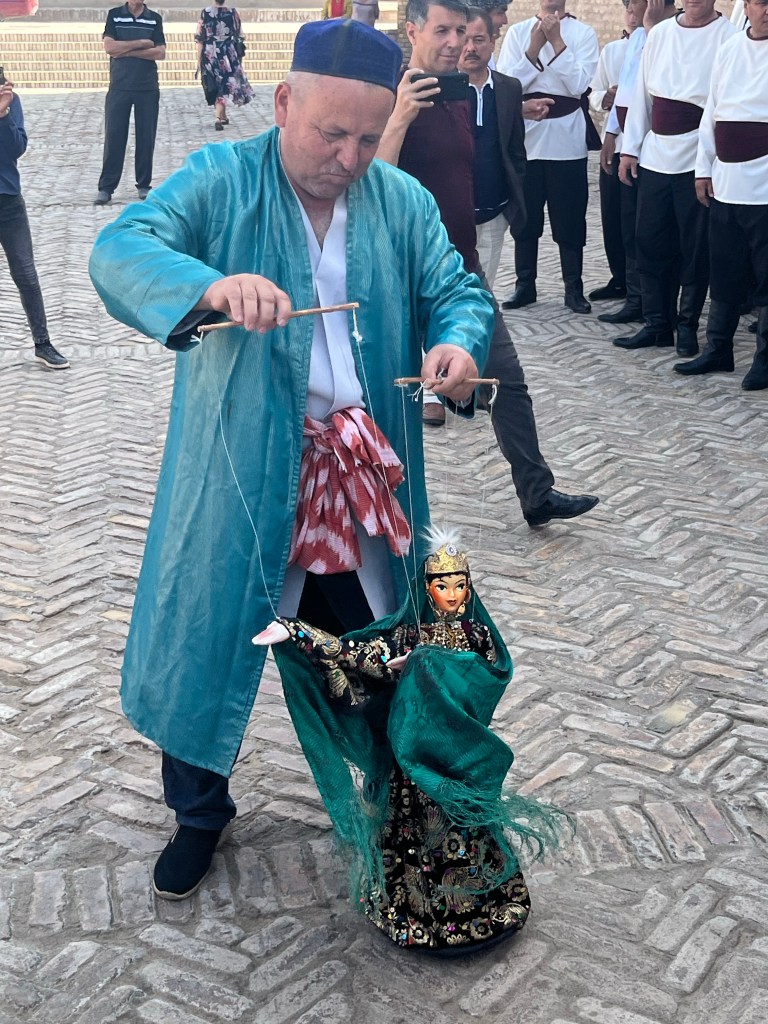
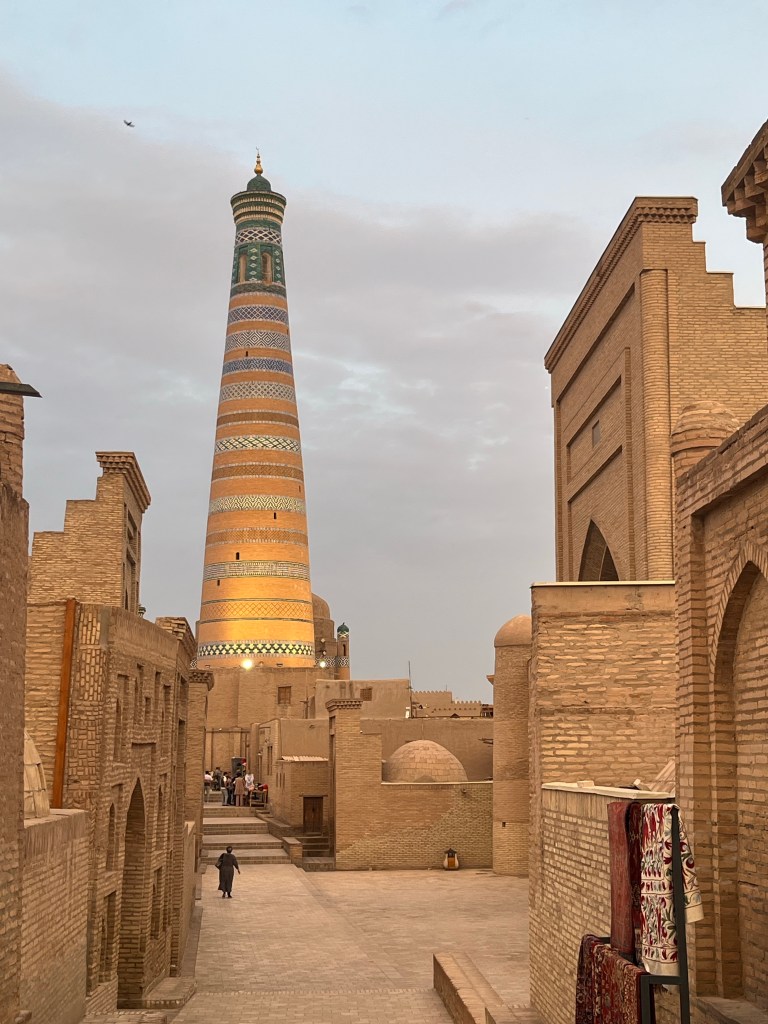
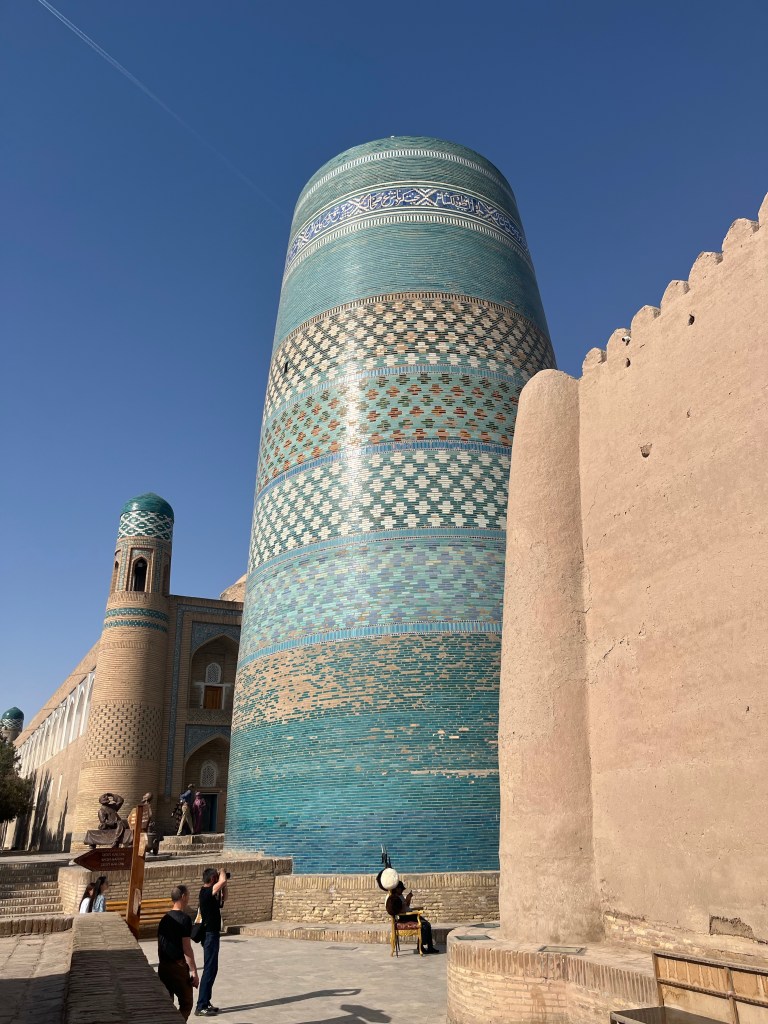
Khiva is a western tourist’s wet dream which thankfully for me has not been discovered yet. Dating back around 1,500 years, the old town has been fully restored and is surrounded by thick city walls that keep the modern town at bay. A ticket is required to get through the turnstiles that now guard the main gateways and upon entering, a beautiful unfinished tower steals attention despite the best efforts of curio sellers trying to sell fluffy hats that seem rather inappropriate in the hot sun. The centre is tightly packed with the usual Uzbek assortment of stunning mosques, madrasahs, and towers with several days needed for someone who really wants to delve into the history. It’s particularly notorious for the way executions were carried out which included the standard throwing off a tower but also impalement, burying alive, stoning, and being put in a bag with several cats and beaten with sticks until dead. Continuing on; restaurants, cafes, and curio stores fill the rest of the space while several thousand locals live around the edge of the centre but still within the historic walls. A bride and groom walked the streets, they looked thoroughly miserable as the sun beat down despite the best efforts of their wedding party spontaneously dancing in the street. It turns out this is tradition, and the bride and groom should look grumpy until the end of the festivities, God forbid they look happy before sealing the deal. If wedding parties weren’t dancing, school children were. However, it was the lady puppet that stole the show during a traditional performance of song and dance, going as far to steal a kiss from an unsuspecting male bystander who fell back in fright, I assume triggered by some previous incident with a lady puppet.
Khiva was beautiful and I should be annoyed by its commercial twang, but it still retained its culture as did everywhere in Uzbekistan. It felt different, and it felt like the locals embraced this with no pressure to bow down to the demands of western tourists that thankfully haven’t flooded the place yet. That said, after a long drive to Khiva none of us were really interested in the late afternoon orientation of the town and simply wanted to be fed. Throwing our guide’s plans into disarray we arrived at our rooftop restaurant an hour early to be met by builders still in the process of constructing it. Within minutes of our arrival tools were downed and packed away, the floor was swept, tables were laid, and a tasty three course meal began to trickle out from a kitchen several buildings away. It didn’t need to be any more than a building site because the views of the old town were more than enough. But as a country, Uzbekistan is no building site, it’s a jewel, a wonderful blend of cultures with a colossal history. For a country relatively unknown to westerners, it certainly isn’t the case for Central Asia where it appears to be a top destination to visit. The country shoots to one of my highly recommended countries to visit, one that is safe, full of culture, history, kind people, beauty, and offers something comfortingly familiar yet so incredibly different.



 Trig Tales