Ashgabat – Türkmenistan
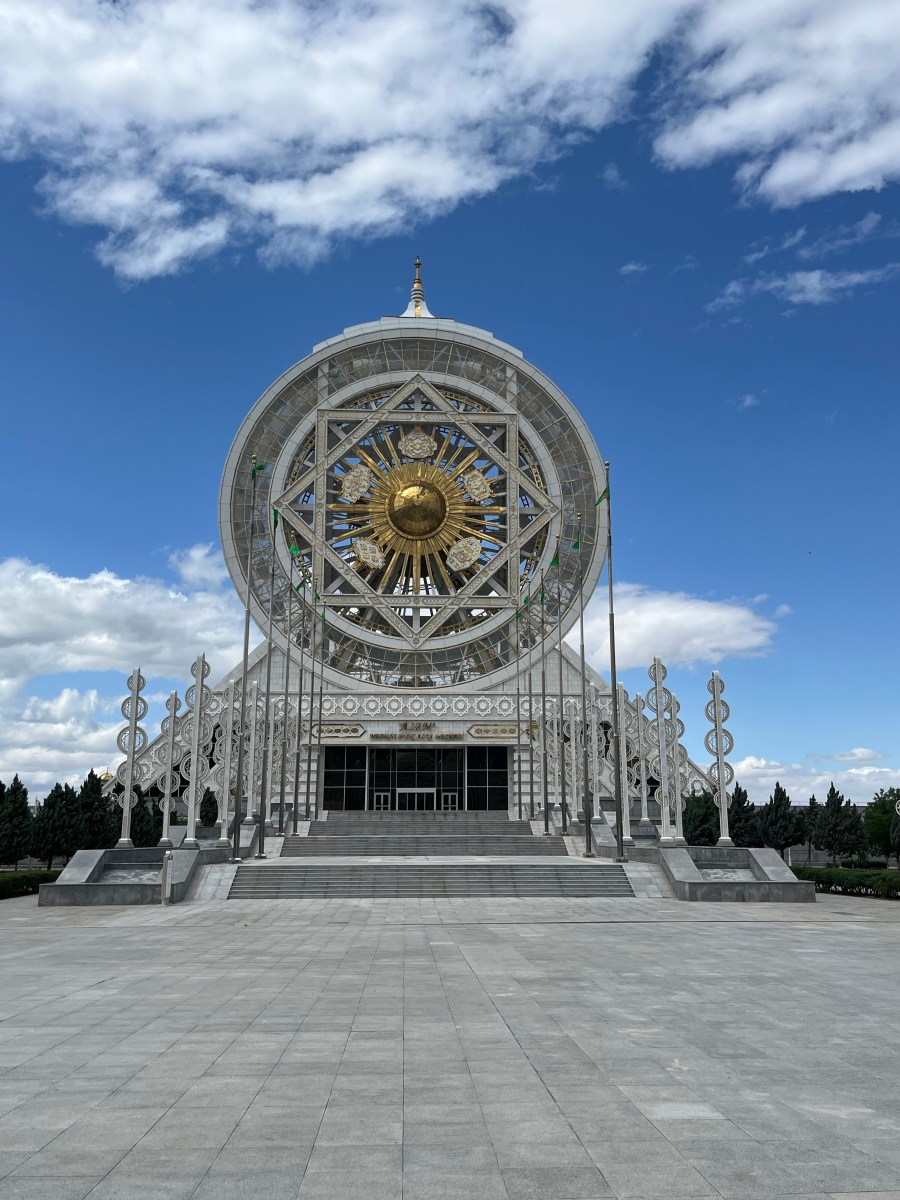
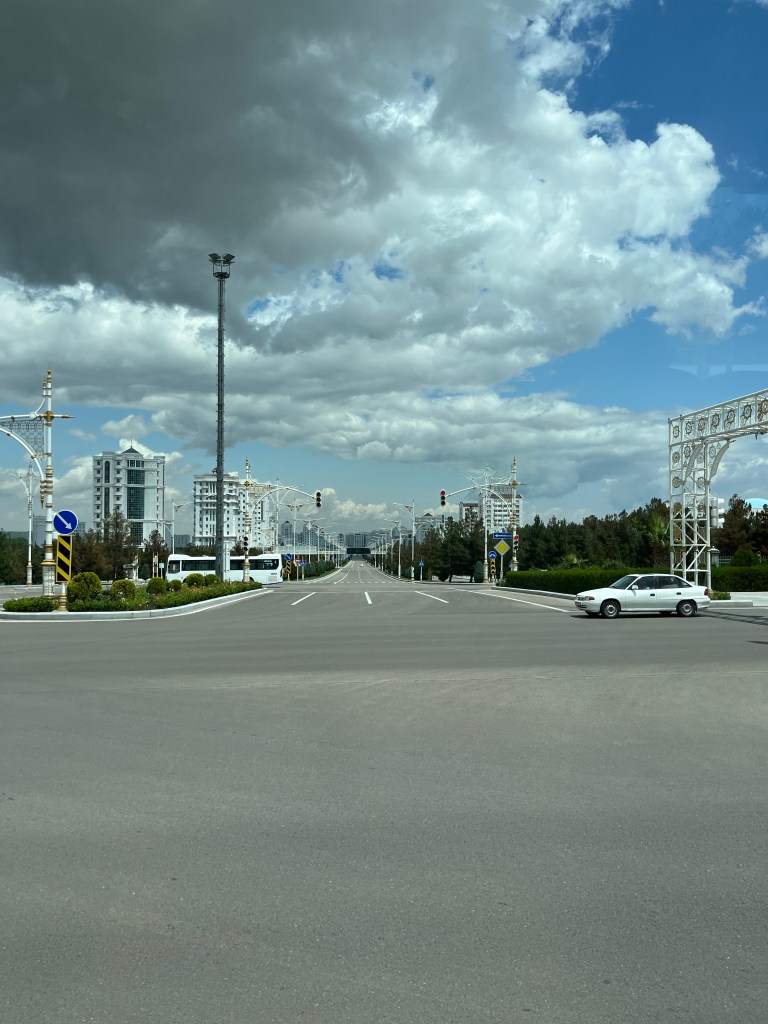
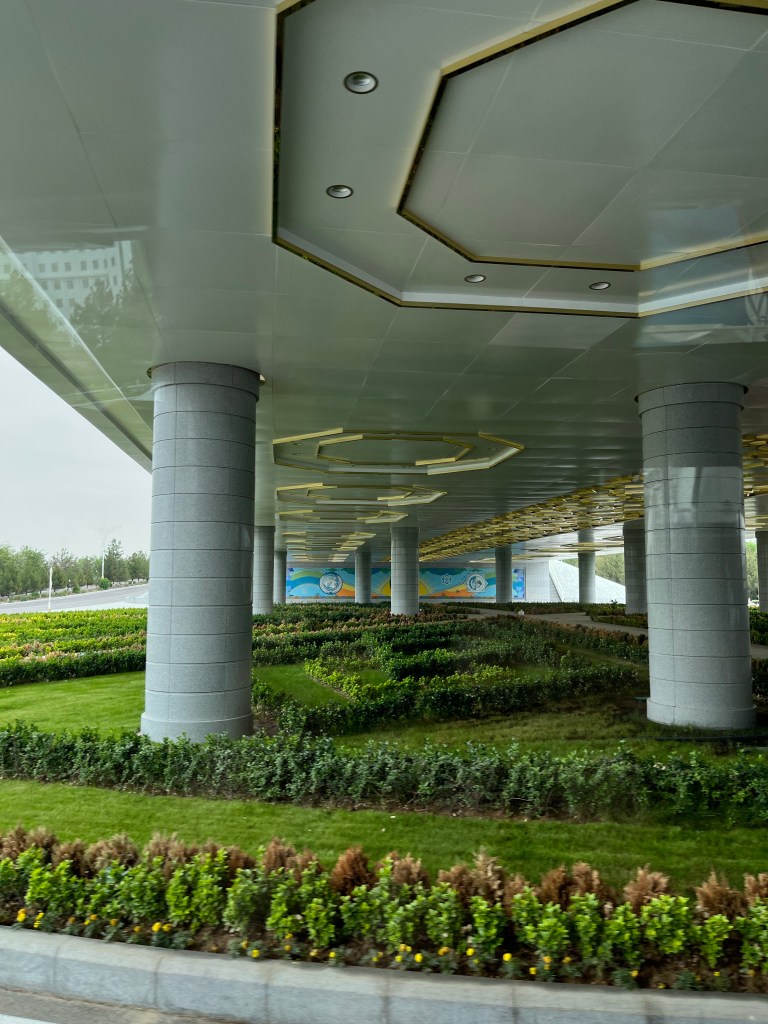
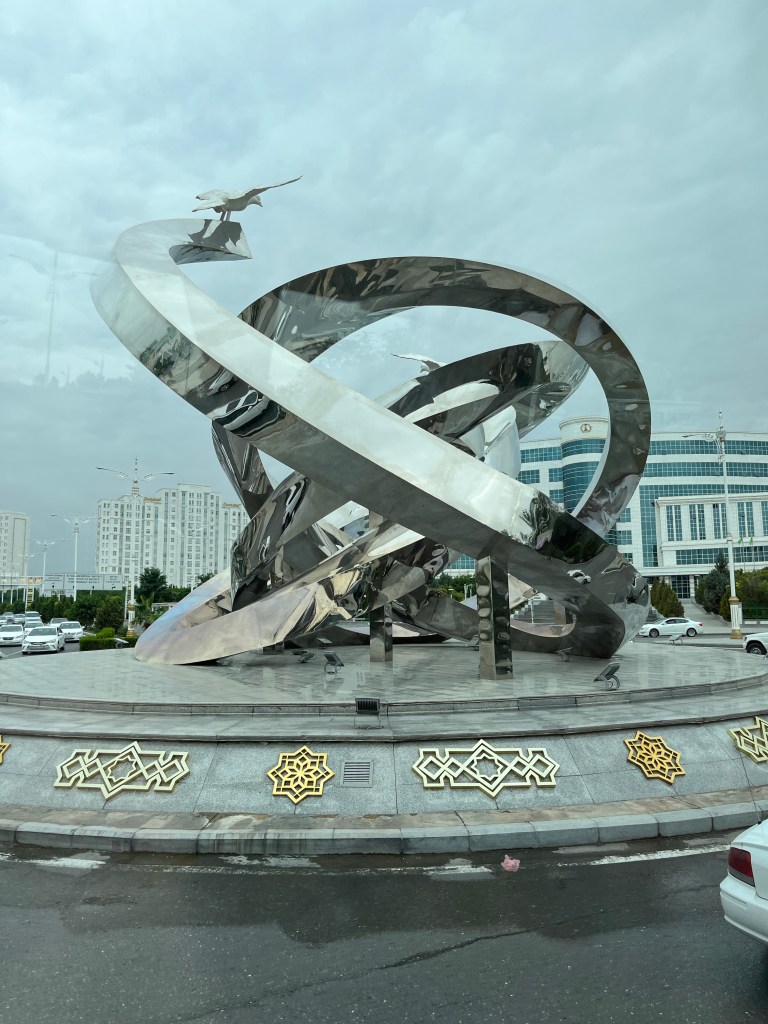
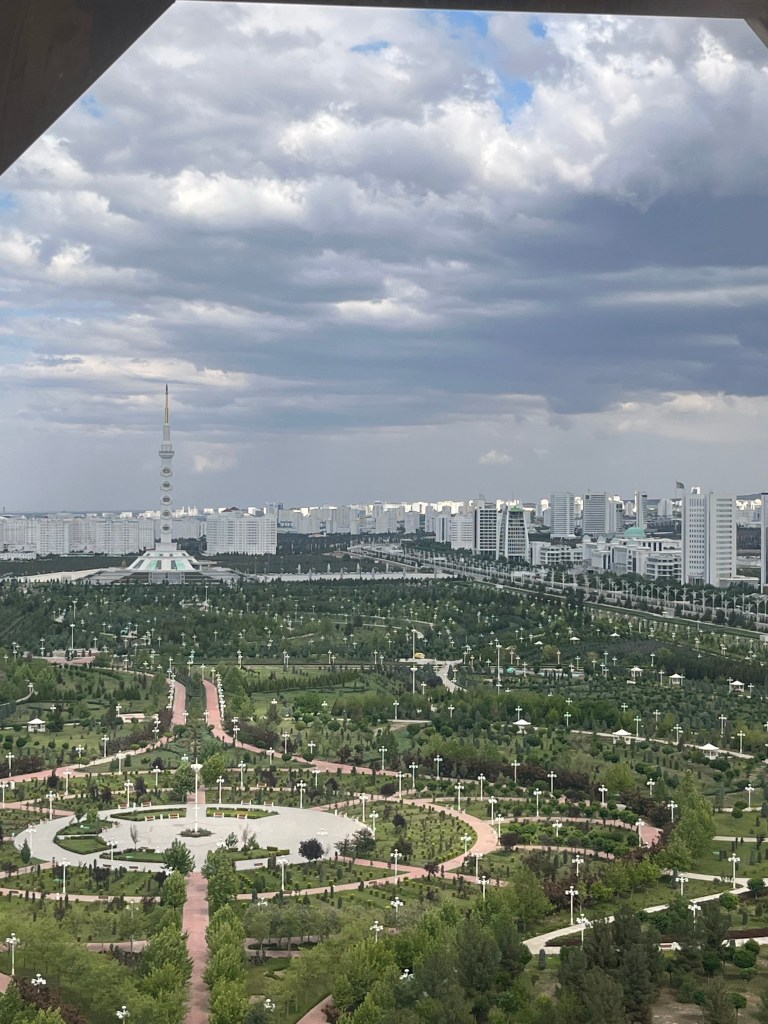
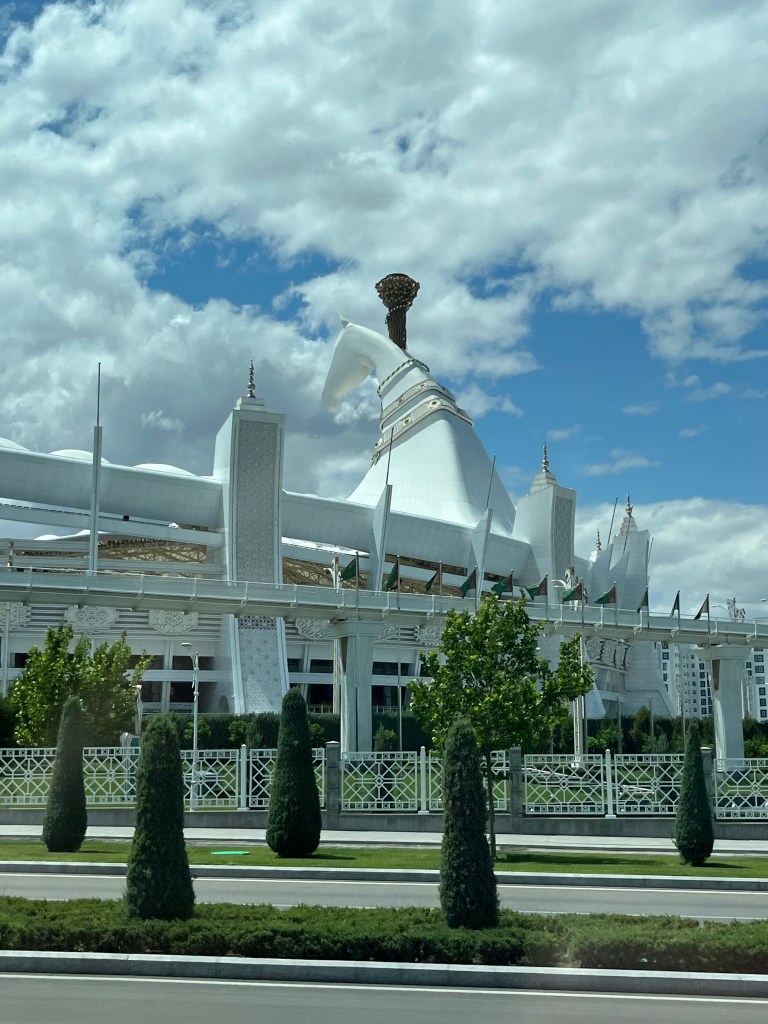
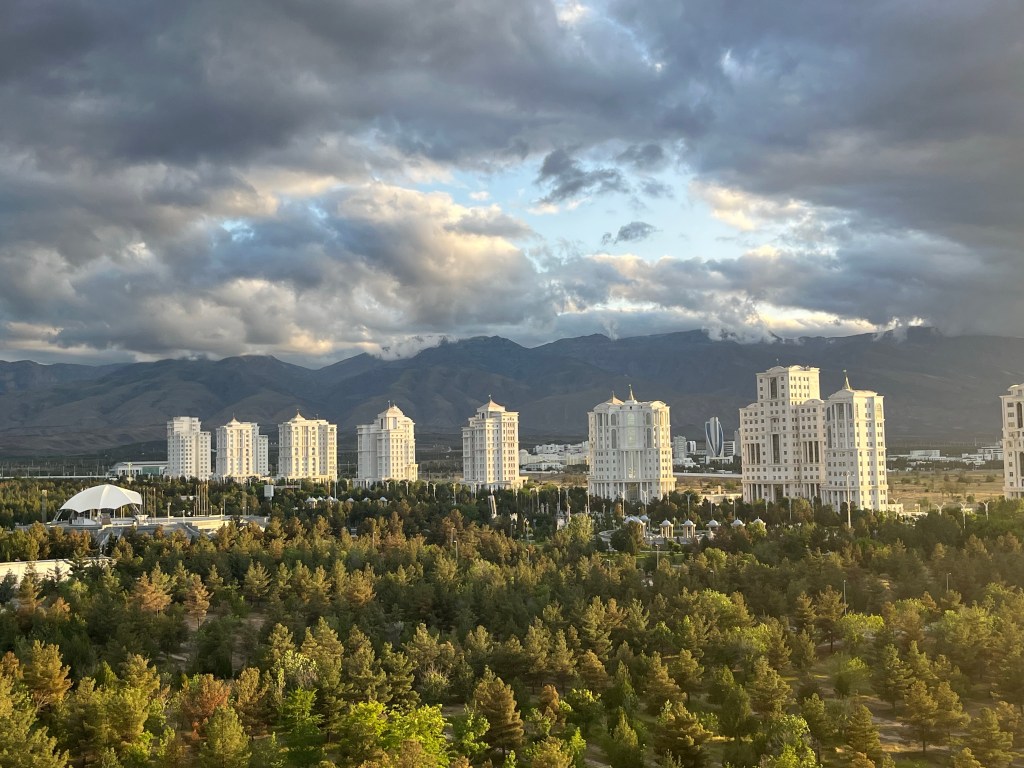
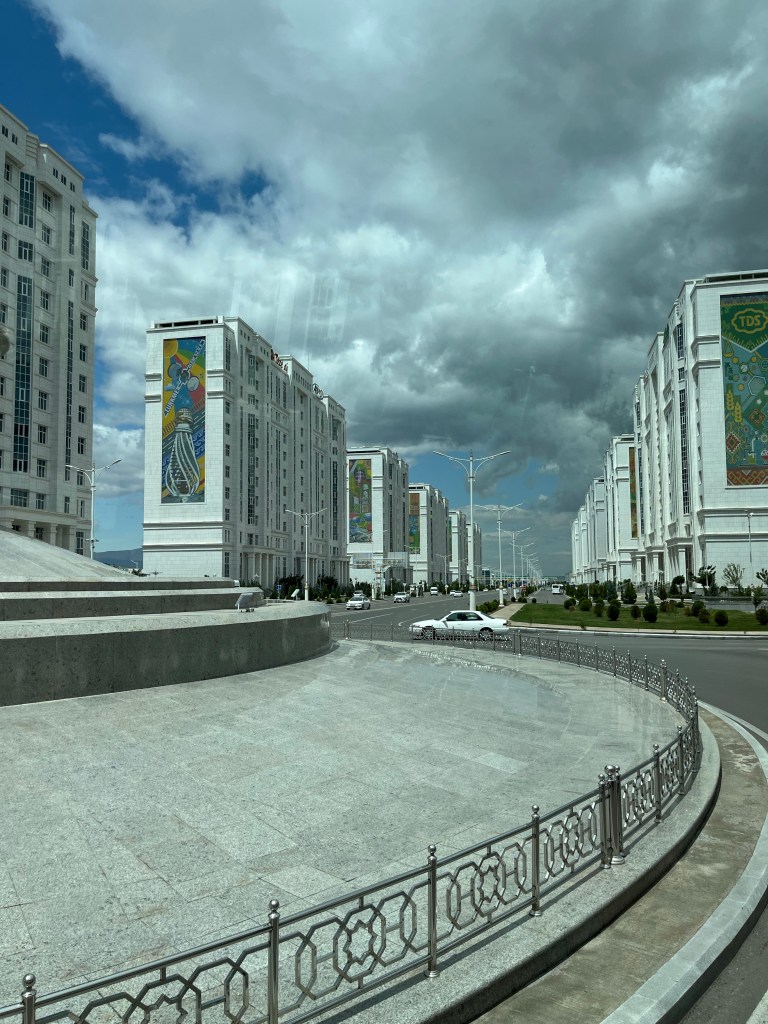
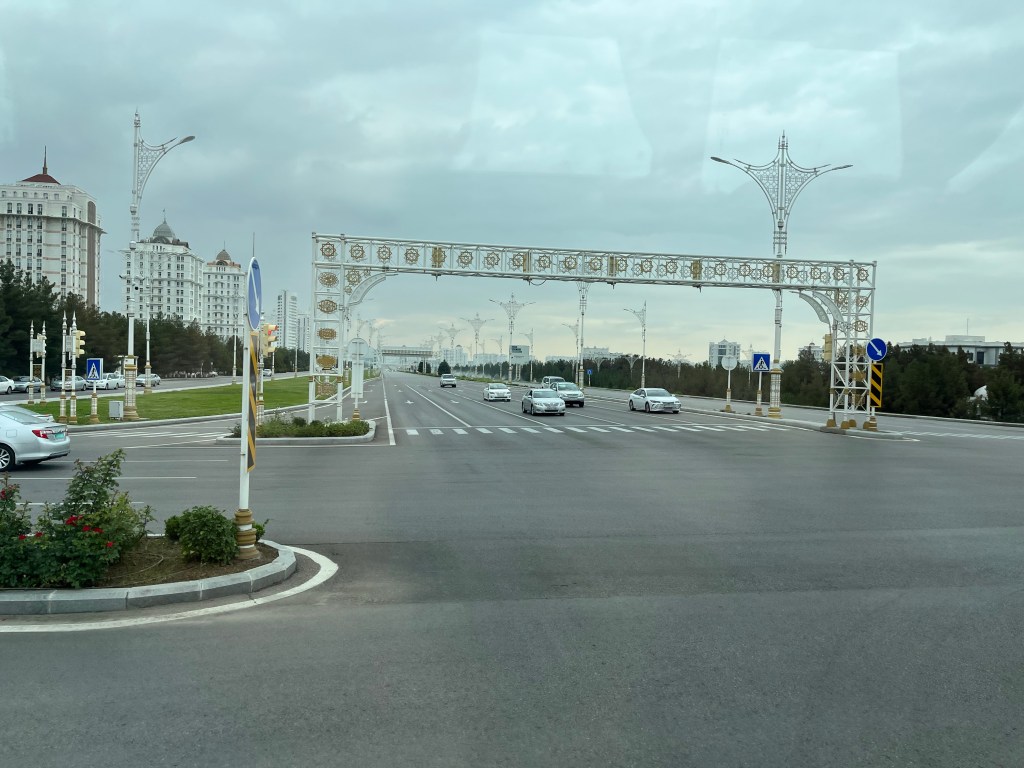
Naturally the highway improved as we neared the capital until we found ourselves on some of the most pristine roads on the planet, lined with trees and lawns, controlled by elaborate white or stainless steel traffic lights, connected by roundabouts home to wonderful pieces of architecture, and lit by thousands of streetlights with their white metal posts bent into sweeping curves of grandeur. Every car was white or a light shade of silver, any other colour is forbidden by the president in order to maintain his vision, whatever that may be. The buildings in the new part of the city are all white, the majority lined with marble. The city had been devastated by an earthquake back in 1948 and rebuilt during the Soviet era, but since independence there has been a drive to reinvent the city, replacing Soviet concrete with approximately 550 buildings to date, all decked out in marble ranging from government buildings to residential tower blocks. There is no doubting the amount of marble on show, but ‘show’ is the key word here. Knock on a lot of the marble, say the marble pillars in a hotel lobby, and it sounds hollow, but knock on marble associated with something important, like a dead president’s mausoleum and the knuckle is likely to shatter as the marble is so solid. Everything about this city is for show, and at first you want to believe its unique, but it’s no different to many cities all over the world, and especially cities with plenty of gas and oil at their disposal. Ashgabat has the most marble buildings in the word, one of the highest flag poles, the largest construction of a horse’s head, the largest indoor Ferris wheel, the list goes on of records it holds or held. It is a vast city; no single attraction is easily accessible despite the numerous empty multilane highways leading to each. There are acres of newly planted trees everywhere which I should be impressed with, but the water usage must be phenomenal. Vast open spaces full of monuments, trees, flowers, and brick pavement are void of people. The new residential tower blocks spring up all around but look empty of life, and stunning polished government buildings glisten in the sun but no one can be seen. The country with a population of around six million makes a huge deal about being officially neutral, but its defence ministry takes up an entire city block and sits right next-door to the presidential palace. The city is beautiful, like Dubai, but completely void of what we may term normality. There is no atmosphere, no character, just an illusion of grandeur that is easy to distract.
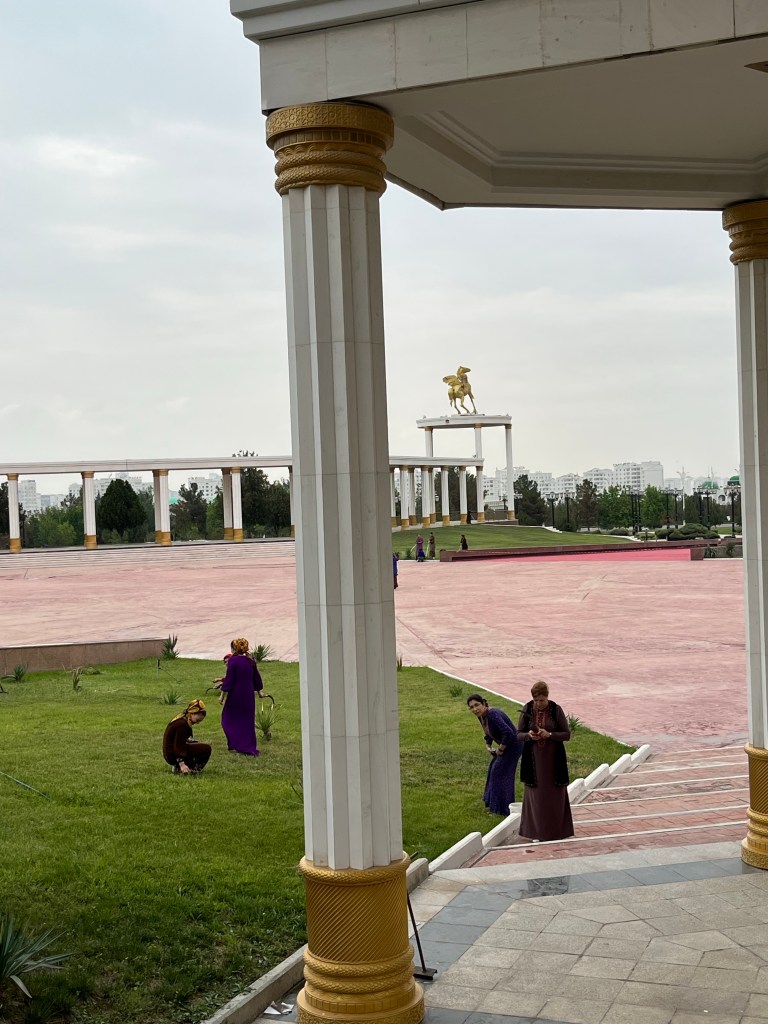
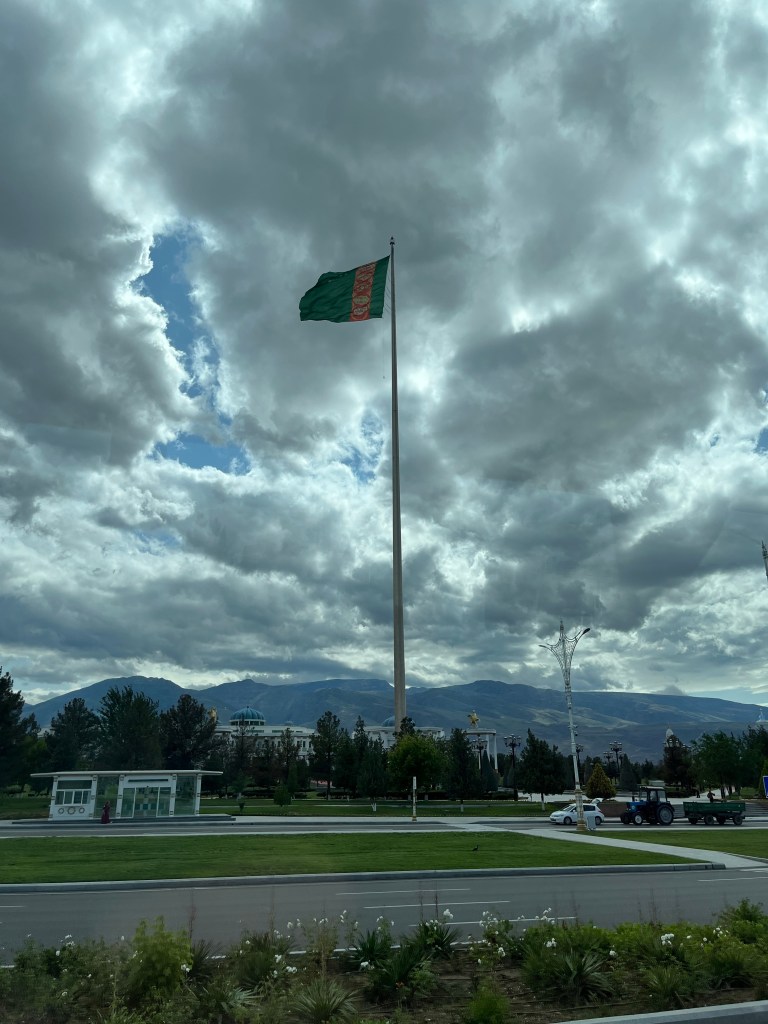
Our hotel was predictably away from anything interesting although not completely out of the way. Yet again it had not changed since the 80s and felt like it was empty. It wasn’t because on the way to breakfast the following morning I saw a man working out with an exercise rope in the hotel lobby next to the restaurant as though he was in the gym. Mysteriously we were all on the seventh floor and the elevator skipped the first, second, third, and fourth floors with the indicator going blank as it passed them. The afternoon we arrived we headed over to the National Museum where a gang of women tried to look busy caring for the gardens out front and where the 133-metre flagpole stands. A man was up a ladder reapplying gold paint to a sculpture, another group of men were power washing the pine trees. Even here I don’t think this is a usual occurrence and had a little to do with a national day just around the corner, but then maybe not. We entered the stunning museum, three stories high with a huge marble atrium and were immediately greeted by a cute guide that would be showing us through the exhibitions. The museum was empty except for two other tourists and a guide, and what appeared to be two locals. We were followed everywhere by another lady who hung back from the group maybe to stop us daring to look elsewhere, maybe to ensure no one took pictures other than the people in our group who had paid to do so. Either way, she did a splendid job of tidying up after me every time I tripped over the power cables that were not so conspicuously run across the floor to light exhibits. It was interesting, all centred around the ancient civilisations that resided in the area and with plenty of information written in Turkmen, Russian, and English, not that we had time to read it. There was no modern history, but there was a ruddy huge carpet hanging on the wall that had been gifted to one of the presidents. An hour later the guide pronounced the tour complete and ushered us out the door with a huge smile of relief as she appeared to relax for the first time during our visit.
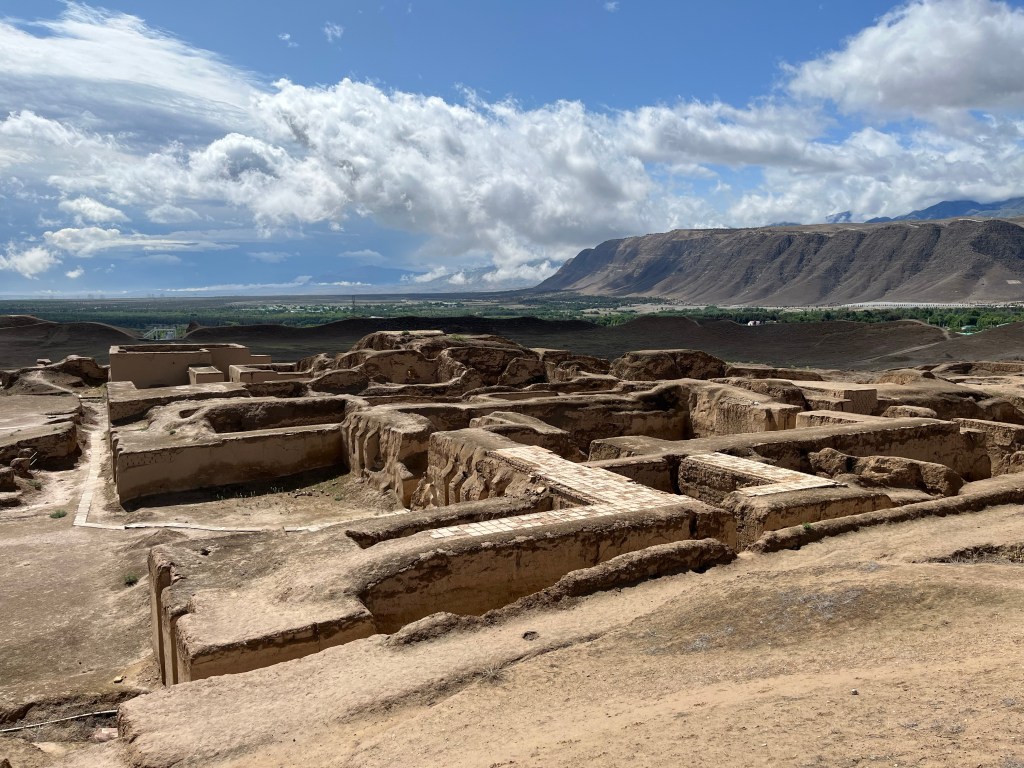
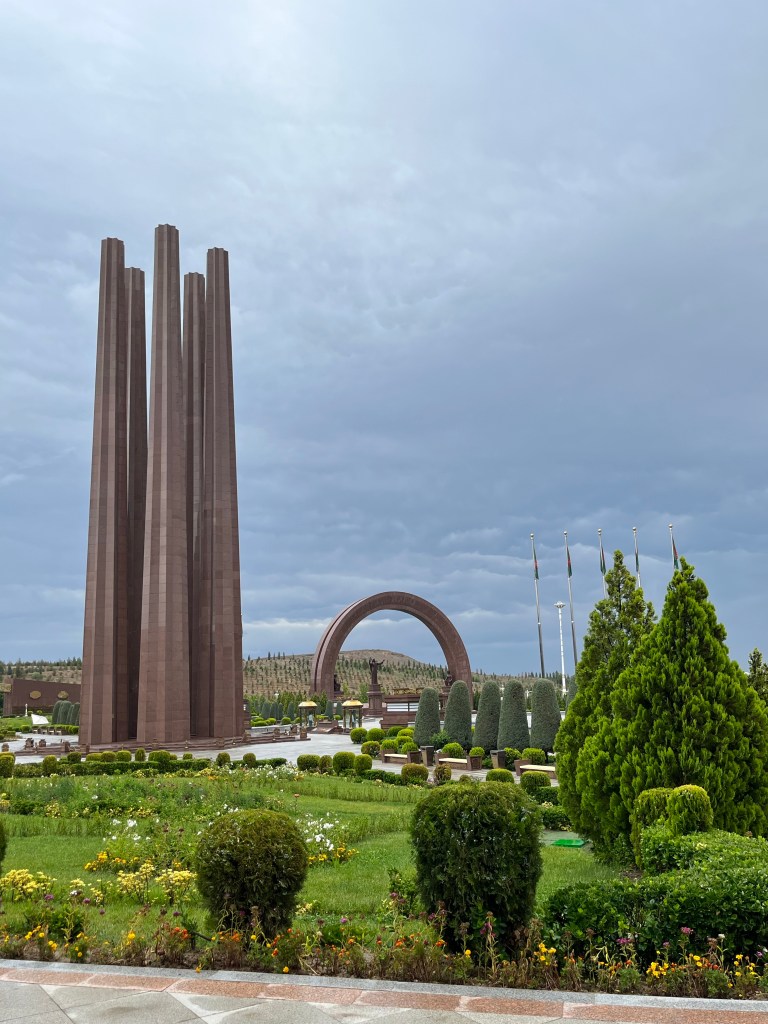
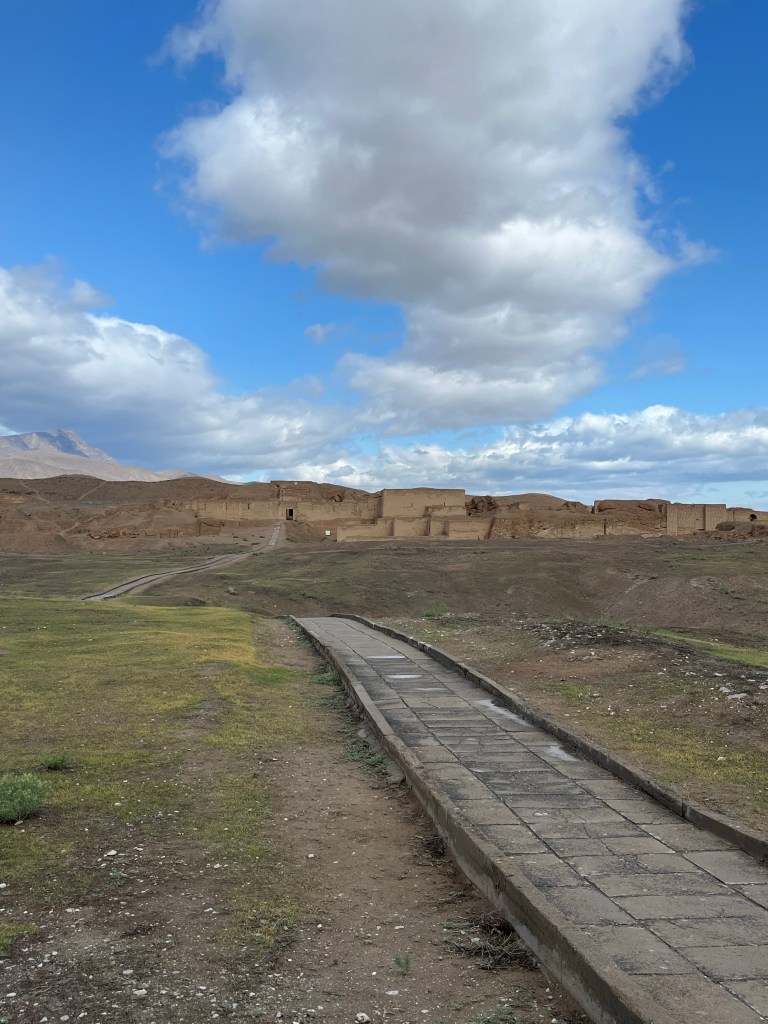
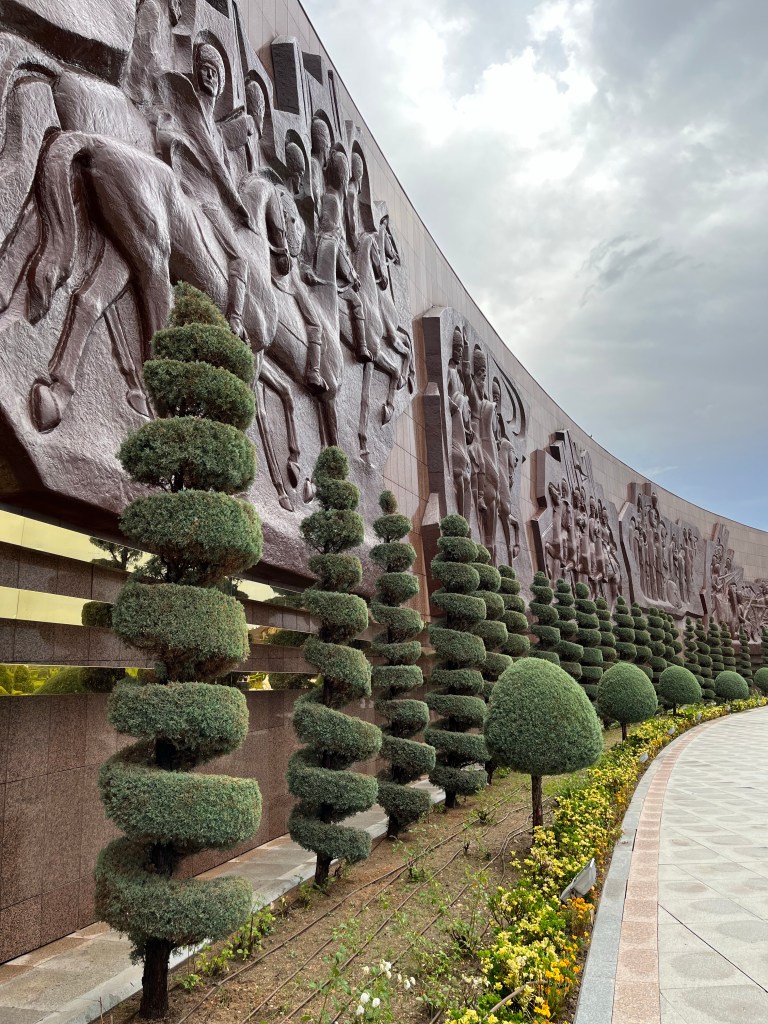
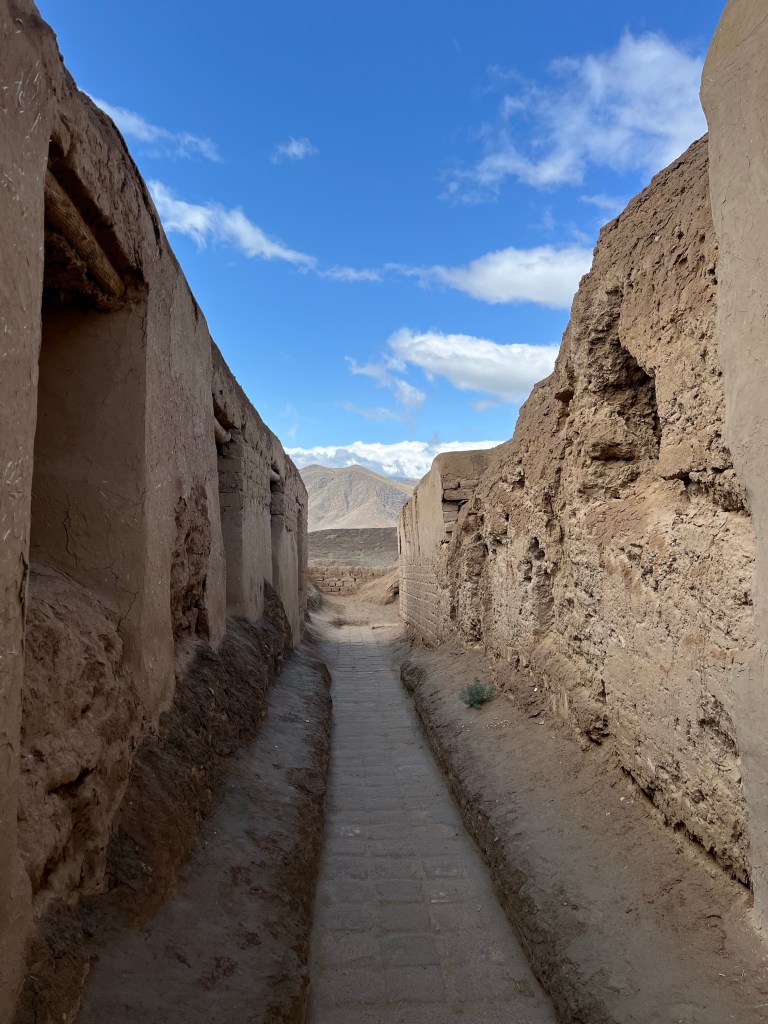
The following day turned out to be jolly wonderful. It started at the earthquake and Second World War memorial which appeared to be miles out of town but in a spectacular location in the shadow of the mountain range that separates Turkmenistan from Iran, just 90 minutes’ drive away. It was huge, made of polished marble, and empty except for the two ceremonial guards, a soldier ensuring we didn’t take photos of them, and a solitary man on his mobile phone quite literally standing in the shadows at a distance. A small group of school children came and left but otherwise we were alone to explore the vast memorial complex. The next stop, Nisa, was a pleasant surprise. A UNESCO World Heritage site believed to have been founded over 2,000 years ago, the town and its surrounding walls are little more than ruins but fascinating nonetheless and made a change from the modern-day grandeur. It was of course empty apart from a man on the gate and another man on his phone. We had to pay to take photos at a ticket office further back down the road but from what I could tell there was no way of telling who had paid, who hadn’t, and how they would check.
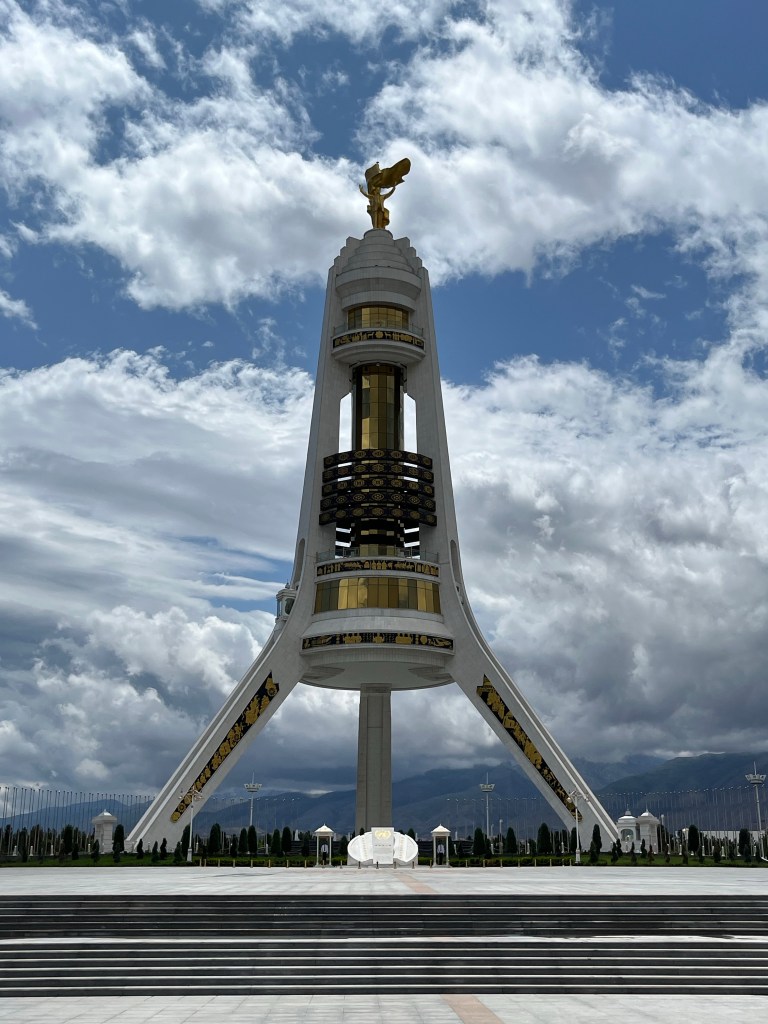
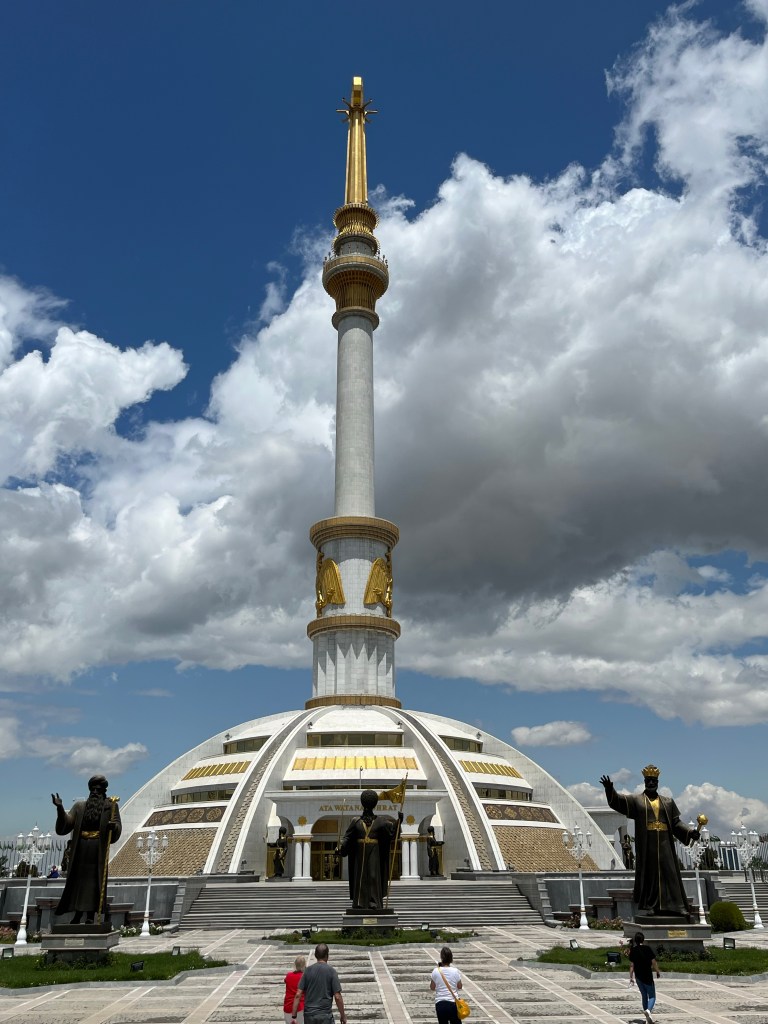
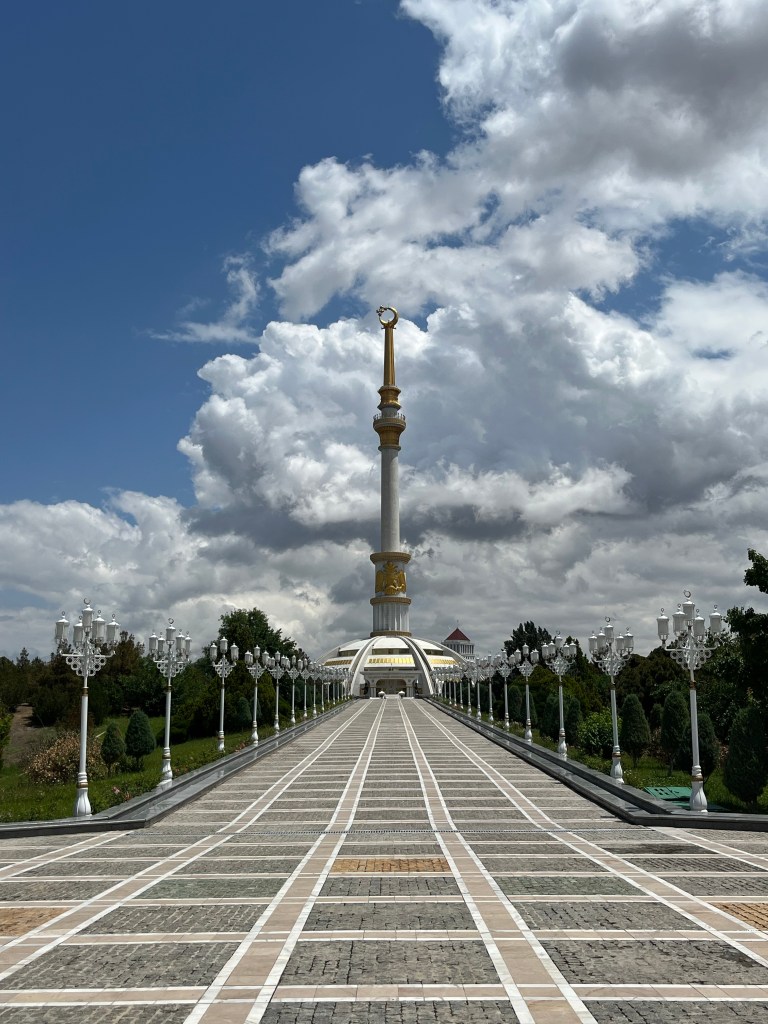
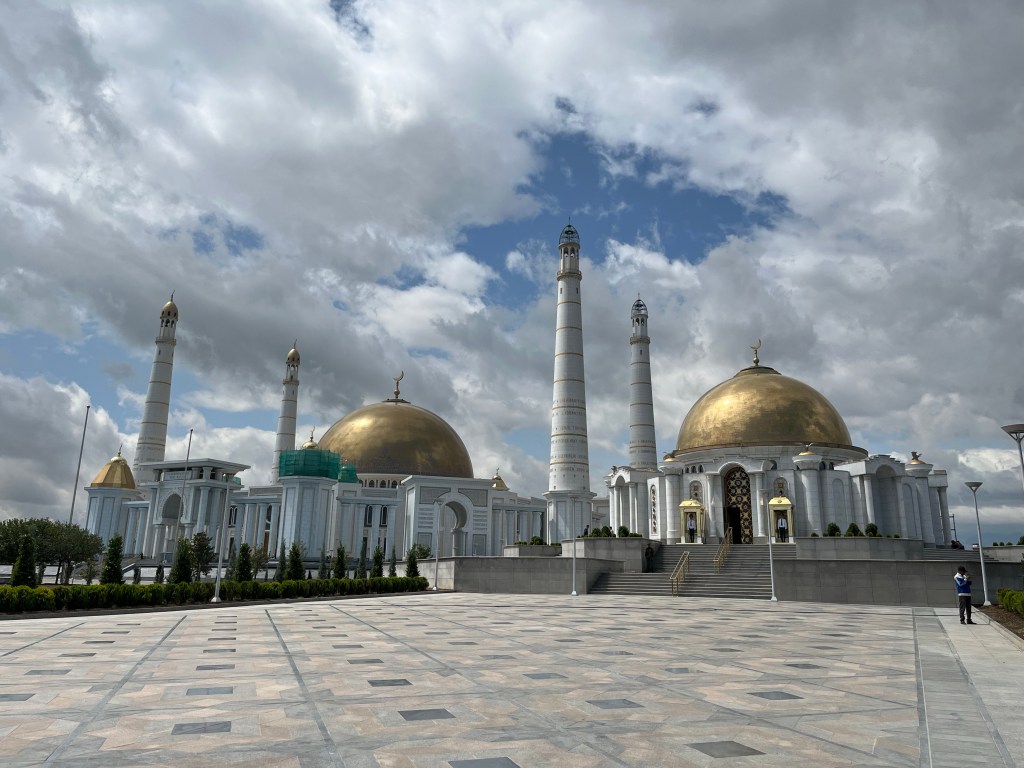
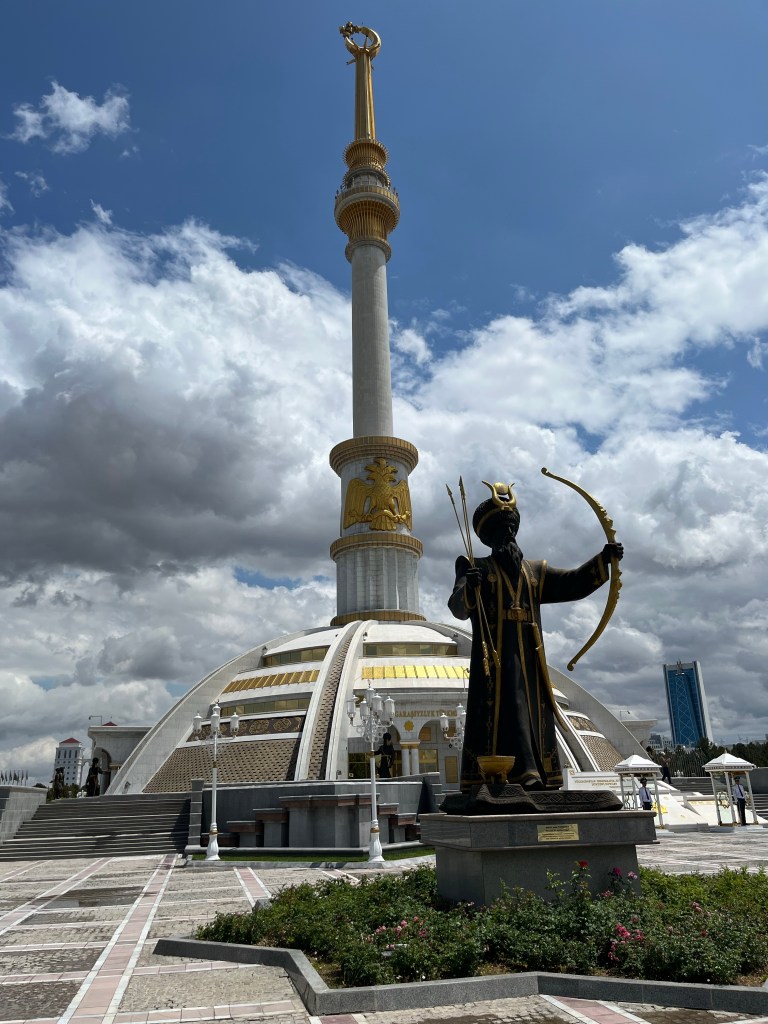
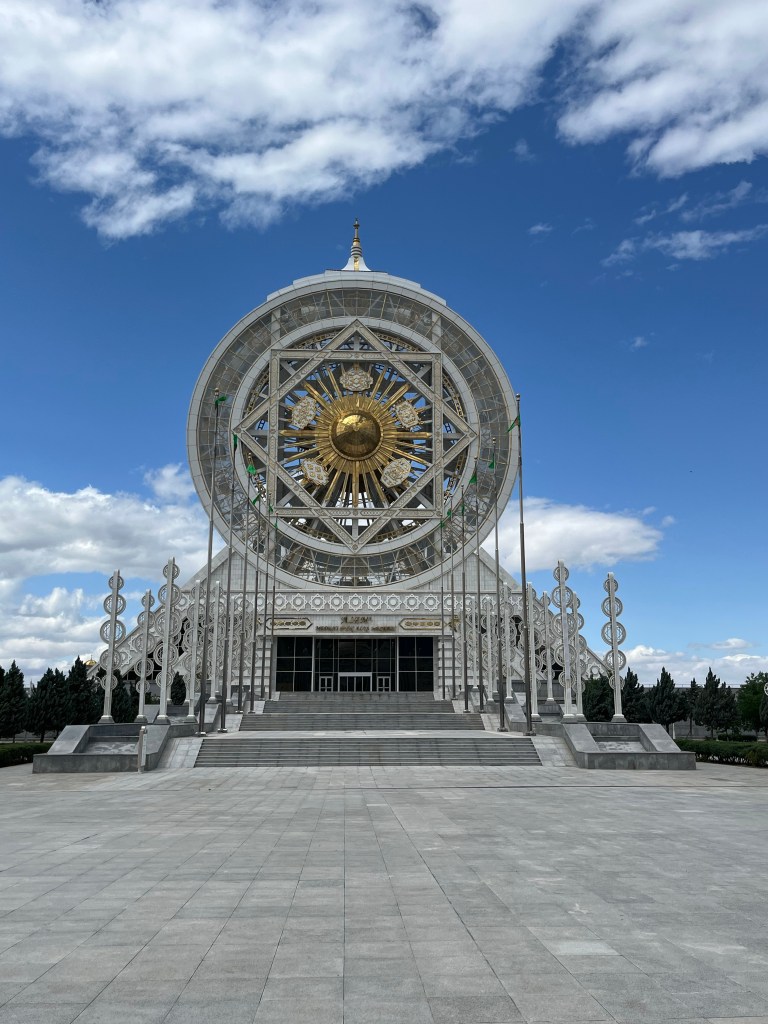
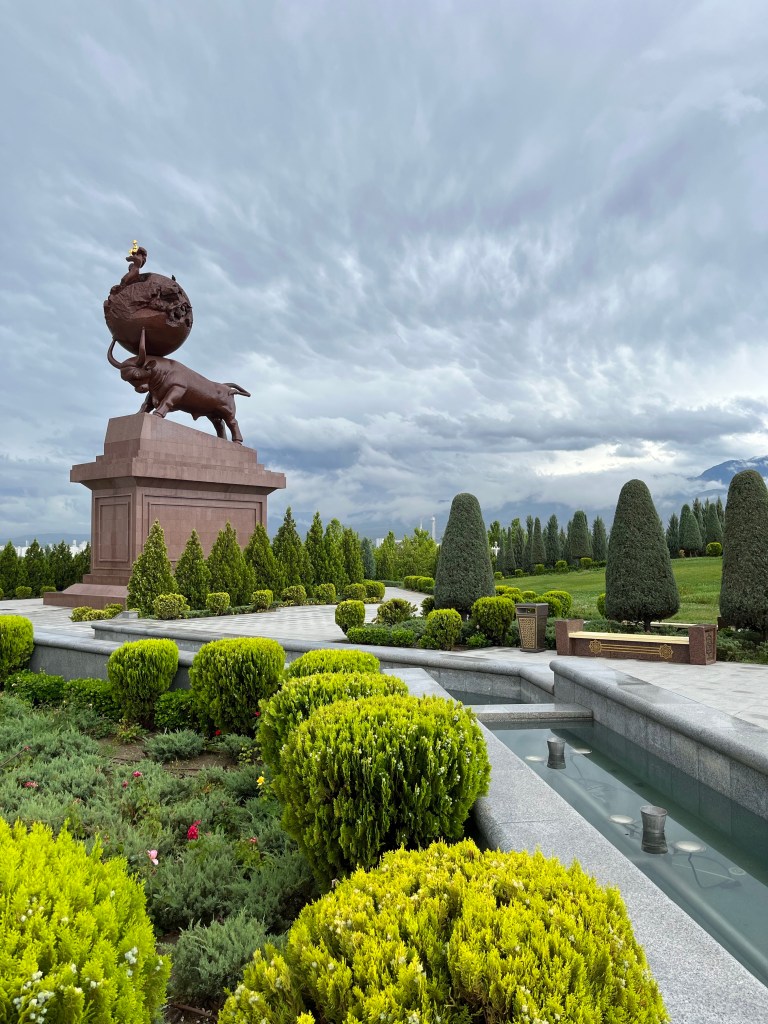
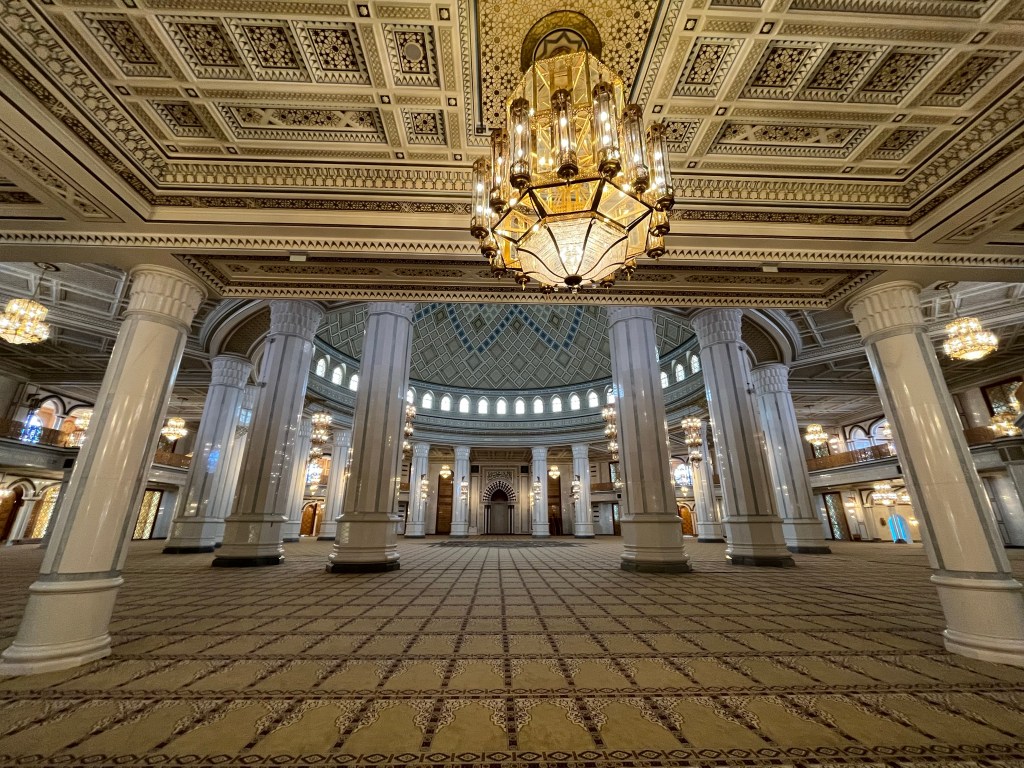
The day continued on to one of the biggest mosques in the world with a capacity for 10,000 worshippers, built at a cost believed to be around one billion US dollars, built by the French, and done so in name of the first president after independence. It was built in his village several miles out of the city and as a result it was empty except for one man on his telephone (no joke, although on this occasion I genuinely believe he was there to protect the mosque from any misdemeanours). Next to the mosque was the president’s mausoleum, made of gold and solid marble. There he lay along with his mother, father and two brothers. It is obviously unnecessary but if it helps, his story was a little sad. His father died in WW2 and a few years later his brothers and mother were killed in the earthquake. The president-to-be married well to a Russian which led him to power as the first president of an independent Turkmenistan. A few colossal monuments marking the country’s neutrality and its independence took us up to lunch. The sun had replaced the morning rain and despite all the oddities we had seen or made up in our heads we sat down content with the morning’s activities. There was one final place I was keen to see, one place I had randomly heard on NZ radio years ago, the largest indoor Ferris wheel in the world. What does that even look like? I imagined a huge Ferris wheel in a huge shopping centre, but I couldn’t have been more wrong. Once again, a drive to nowhere delivered us to our destination and revealed a Ferris wheel as expected, but one that was simply in a case. It made no sense whatsoever, like building a conservatory and then lining it with a brick wall. It made no difference to me, the strange feeling of excitement bubbled within and I marched inside to grab my ticket and join the queue. It was empty, the Ferris wheel turned off. It didn’t matter, a lone cleaner sent us through the arcades and towards another solitary person who directed us into a lift, the doors closing as we realised our tour leader had stayed behind and looked back at us with a suspicious glint in her eye. We were committed, this was it, jail, or a ride on a Ferris wheel. Unsurprisingly it was the latter, we hopped aboard and the nice wee chappy fired up the world’s largest, most pointless, underused Ferris wheel, and boy was it good fun. I think the definition of ‘indoor’ has been a little stretched on this occasion but in between all the garb that gave it such a title there was actually a half decent view to be had. It was a delightful whacky end to a delightful wacky day.
My time in Turkmenistan came to an end at their beautiful international airport. With only six flights departing for the entire day, I was confident the 3.30am flight to Istanbul would take off with few delays. Also, with only six flights it meant only a couple of departure gates were required making the rest of the airport terminal bloody pointless, apart from providing a job for a stern looking security guard to prevent idiots like me going walkabout. There is obviously a serious side to this country, one that is in the grip of dictatorship, one that is extremely censored, and one of the bottom three countries in the world for a free press. I don’t know how much we were controlled and monitored but it sure felt like there was purpose to everything we did. I have spoken little of the people because we simply saw so few of them, I know little of the country partly because I never listen, but partly because so few people know. All I know is what I see, and that is the purpose of Ashgabat.
Check out the tour here


 Trig Tales
Pingback: Not a typical family Christmas – Trig Tales