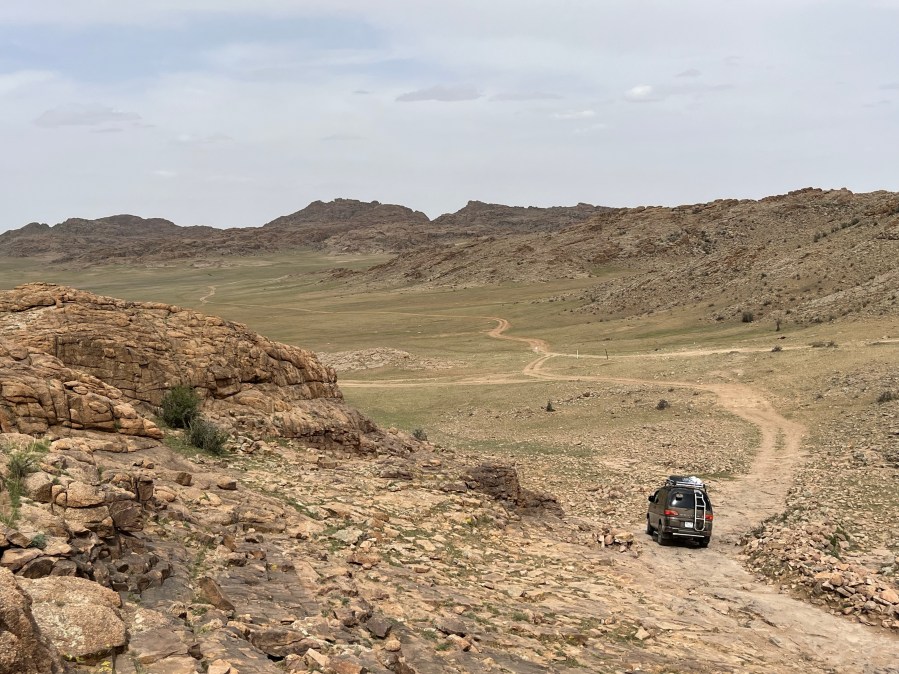
Ulaanbaatar – Mongolia
Maybe it was the shock of spending £14 on a pint of beer at Istanbul airport keeping me awake on the overnight flight to Mongolia, maybe it was the lack of wine, it certainly wasn’t the endless epic movies on offer. It wasn’t that I couldn’t sleep but simply that I had forgotten to bother until I noticed half of the 10-hour flight had already passed. I crammed in two hours before breakfast and made do.
Visas are one of those complex oddities that shouldn’t really exist in today’s technological world. It is improving and becoming easier through online applications and the eTA (simply a modern-day word for visa) but finding out what you need and how to get it is a minefield; many of the embassy websites look to have been designed by five-year-olds. Crosschecking projectvisa.com with the British FCDO travel advice appears to have got me by nicely so far but that doesn’t eliminate all doubt, especially when checking in and being asked if I have a visa. I say no, ‘it’s visa on arrival’. They look at me suspiciously, make a call, put the phone down, look at me and say with a smile, ‘it’s visa on arrival sir’. I then land at the other end and see nowhere to obtain a visa and so I queue with the rest of the passengers at immigration. I’m getting close to the passport booth, I look behind me, and see a visa on arrival sign which I’m sure couldn’t be seen when approaching from the other way. I bottle it, jump the queue and head to the visa office where a man with a British passport is filling out a heap of paperwork muttering that he didn’t realise he needed a visa. The officer takes my passport, scans it, looks seriously at a screen, and then tells me to go back to the immigration line and get on with life as I don’t need a visa. A fingerprint, a photo (standard everywhere these days it would seem) and a stamp got me into Mongolia in around two minutes. So don’t bother asking me if you need a visa or not for Mongolia because I still have no exact idea!

My lucky run with the bag continues as I picked it up off one of two carousels displaying one flight’s luggage and I headed out through customs into a melee of annoying people demanding I use their taxi. One guy was particularly annoying, I firmly said no and headed off to the ATM to work out yet another currency with too many zeros. With a wad of cash in hand I turn around to see the same annoying man standing right behind me ready to pounce for the sell. His persistence prevailed over mine, I caved, asked how much, he gave a sensible answer and so I agreed to jump in his car and risk my life once again. I figured little could happen at 9am in the morning not that thoughts of being robbed and left to die in the middle of rural Mongolia didn’t cross my mind. After all, I had no idea if we were heading towards the city or the middle of nowhere and being Mongolia, everywhere is the middle of nowhere outside of the city. Pold was a talkative chap and I slowly warmed to him in the otherwise frigid, damp, and generally miserable weather I had been dropped into. A fresh layer of snow was sitting on the tips of the barely green landscape. We were cruising down a relatively new six lane highway and I realised Pold had a righthand drive, as did most drivers, but they drove on the right. I soon discovered that all buses and some other cars were lefthand drive, and maybe half of all the cars on the road were Toyota Priuses. This was quite ironic as we entered Ulaanbaatar (to be known here as UB for ever more), one of the most polluted capitals in the world, evident by the coal fired power stations that sit well within the city limits. I’m not that old but the chimneys belching out their smoke gave a certain feel to how Victorian England must have been, and I may have been over observant but I’ sure you could taste the tangy air when walking around the city. UB sits in a valley which allows the smog to linger and being the middle of May I guess this was nothing compared to the depths of freezing winter when everyone is trying to keep warm. Pold delivered me to the hotel unscathed and I headed to the reception to be delivered some of the best news anyone in my position at the time could receive. Firstly, I had my own room and would do so for the whole tour as I was the only single guy travelling in the group. Secondly, at 10am, the room was ready for me. After a quick shower I promptly went for a five-hour nap.
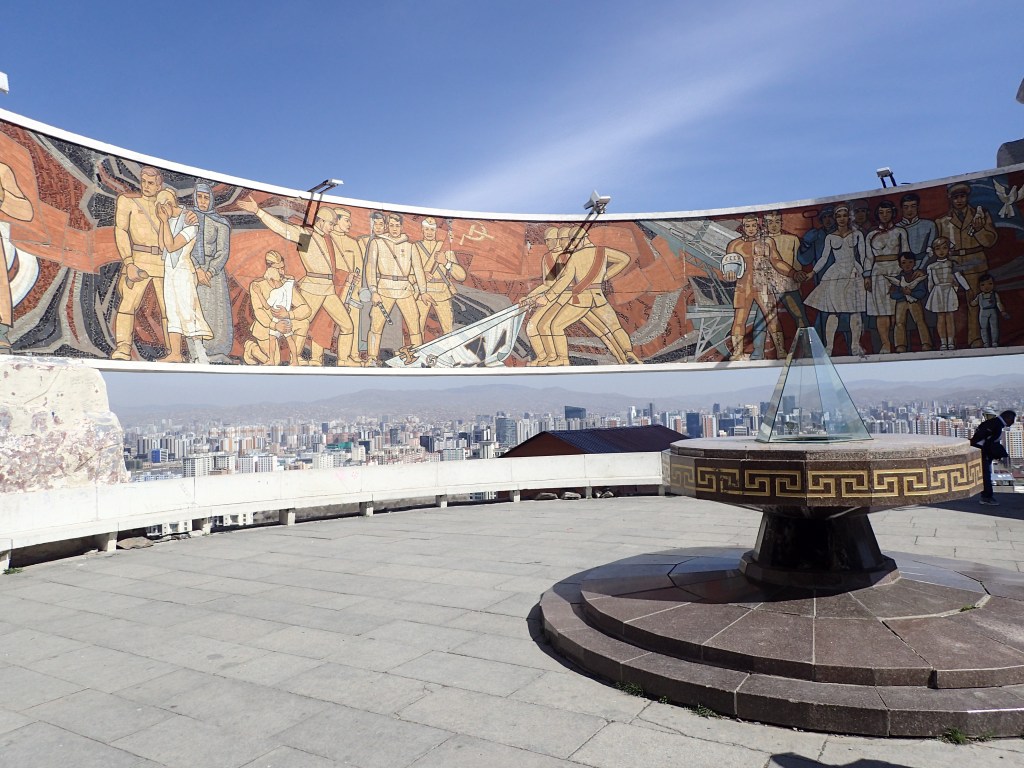
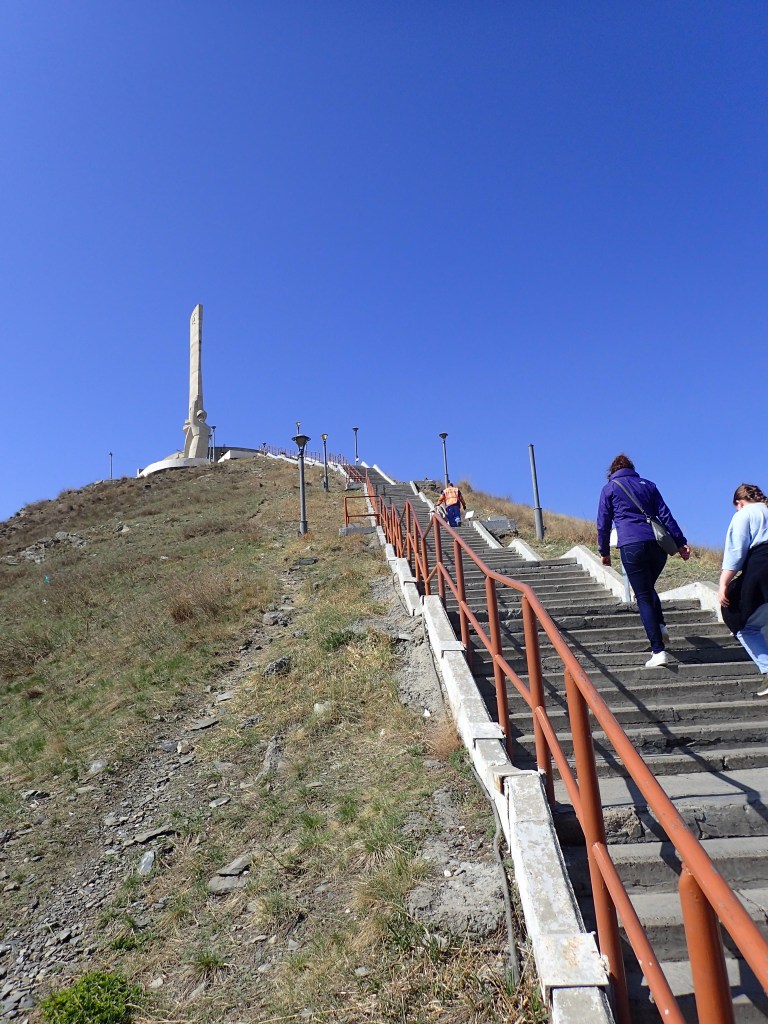
The following morning we visited a Soviet memorial sat atop a hill overlooking the city. As is the pace of construction here, a tower block had been built between the original staircase entrance up to the memorial and the memorial itself. We therefore had to walk up into the building, take an elevator up a few floors, cross a fancy new bridge, and then continue with our uphill slog back outside. I had no idea what the Soviets had done to deserve a memorial but apparently they liberated Mongolia from China. Luckily, after the memorial we visited a very informative little museum which helped to develop my understanding, that is it’s complicated. Obviously, Mongolia was a huge empire at one time, China got involved, Russia dismissed China but didn’t incorporate Mongolia into the Soviet Union but did remove Mongolian royalty and had a good go at killing as many Buddhist monks as possible and destroying their monasteries. My conclusion is that Mongolia was a Soviet Union puppet state up until around 1991 when communism came crashing down and Mongolians decided to head towards something a little more democratic. There appears to be no anger towards either the Chinese or Russians partly I suspect because they are such good customers for natural resources, but otherwise Mongolia looks to have embraced relationships with South Korea and Japan, which in such a messed-up world would appear a wise and sensible thing to do.
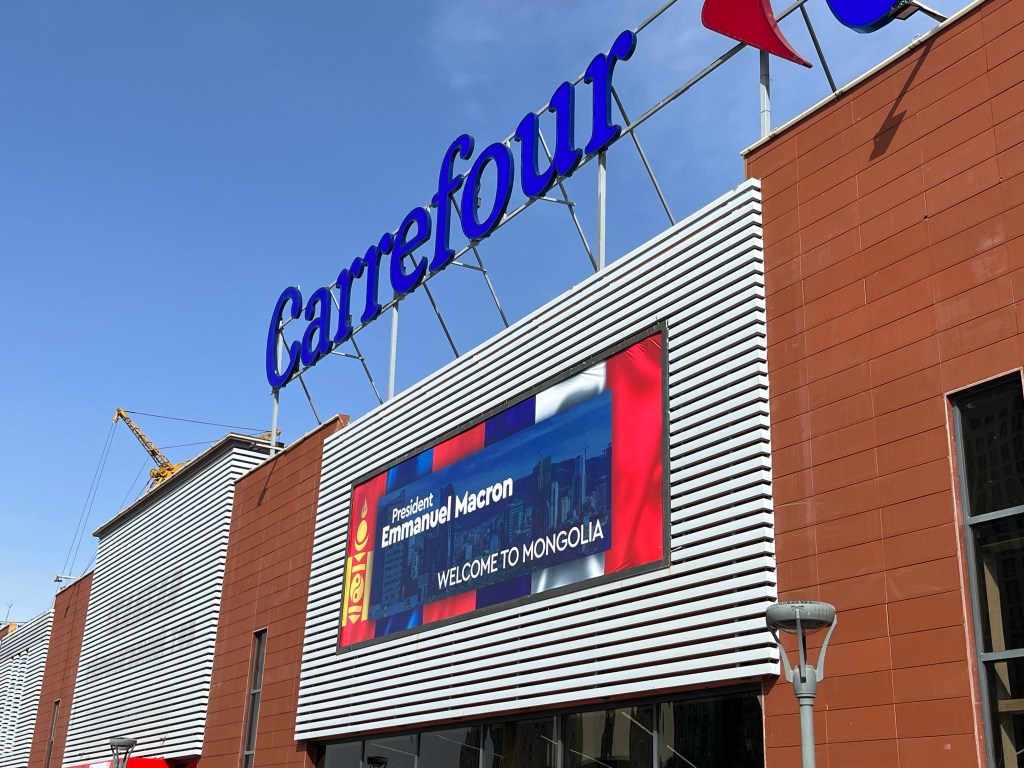
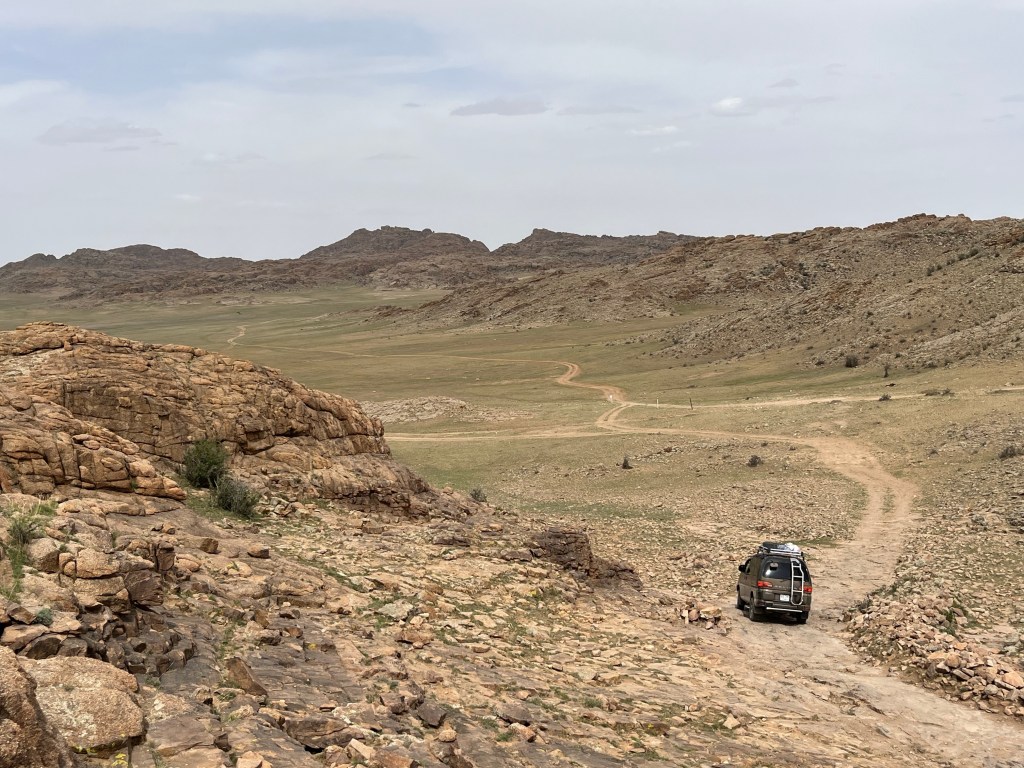
Despite being well rested in Baku, for some strange reason the morning we were due to head out into the Mongolian wilderness I woke with annoying grumbling signs of a cold, annoying because I thought 3 days R&R would help prevent any such weakness. Hoping it was just the smoggy air, we piled into our cars and battled our way through the rush-hour traffic, taking well over an hour to get to the French enclave of Carrefour on the edge of town that sported a huge electronic billboard welcoming President Macron to Mongolia. He had landed the day before on his way back from a G7 meeting in Japan and few could explain why he was here. My assumption was it being part of his continued quest to be our world leader, but a more likely reason was floated, uranium. The reason for us visiting a supermarket was to top up with unnecessary goodies we may want to nibble on over the next few weeks, the essentials, like Haribo, Oreos, and beer. All the crap I tend to buy in such a situation and never end up consuming. Back on the road, we headed out of the city and picked up pace that provided so much excitement I fell asleep. I woke an hour later in a completely different landscape, that of low-lying rolling grassland with herds of cows and horses, flocks of goats and sheeps, and a constant stream of rubbish along the road. The land looked bare and haggard, as did a lot of the cows, and every few miles a hollowed-out carcass could be spotted. In all honesty, I guess livestock will look worse for wear after a long harsh winter and it is obvious that spring probably doesn’t happen here for very long with the grass growing season going off with a bang around July and August for just long enough before the cold returns.
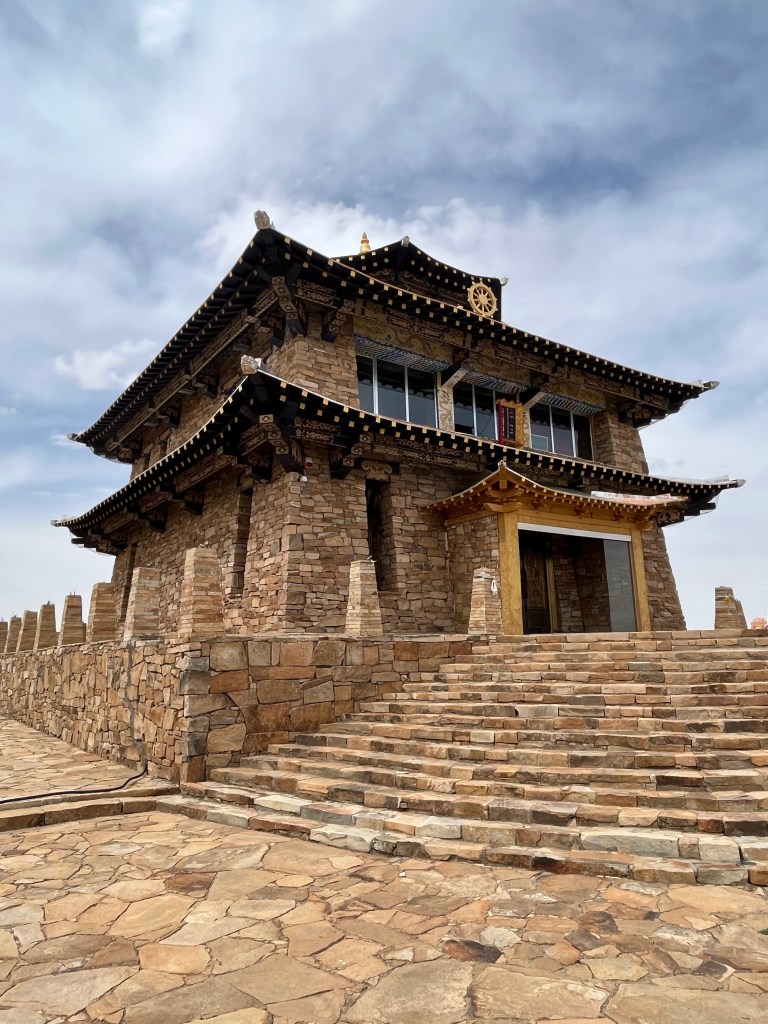
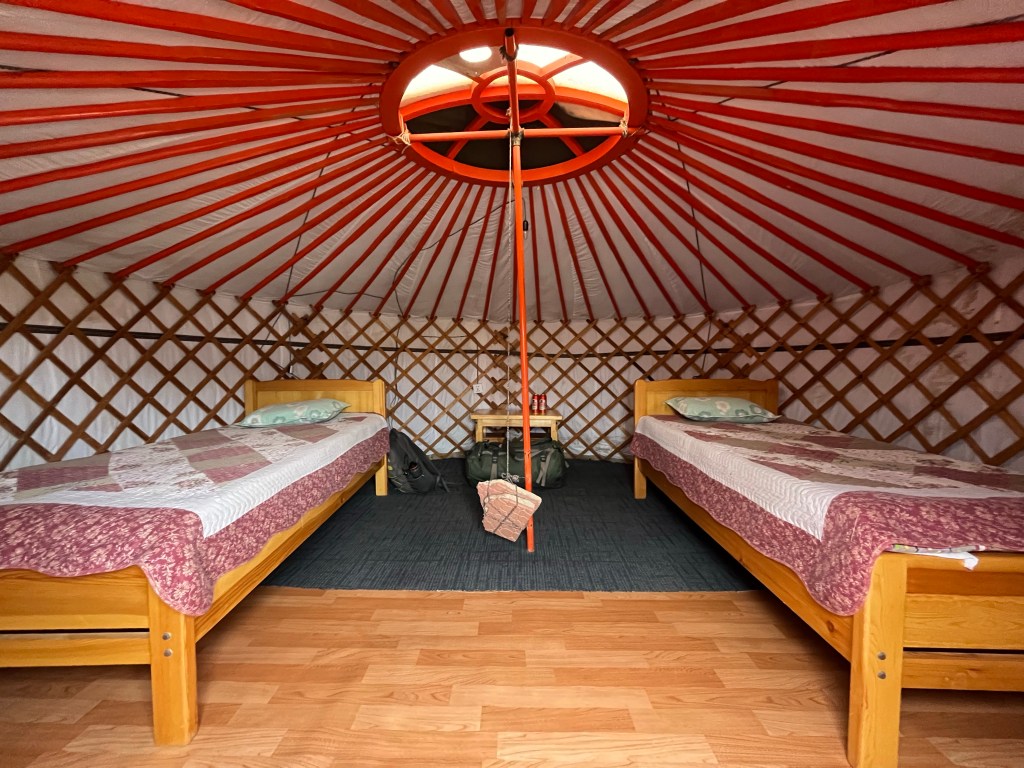
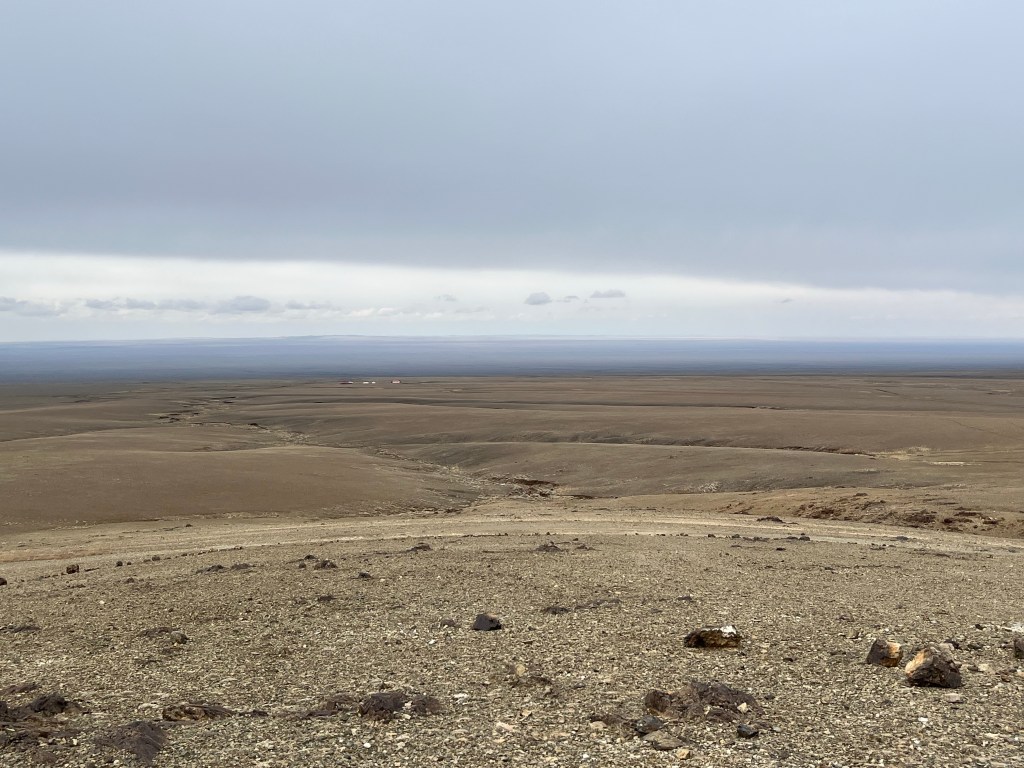
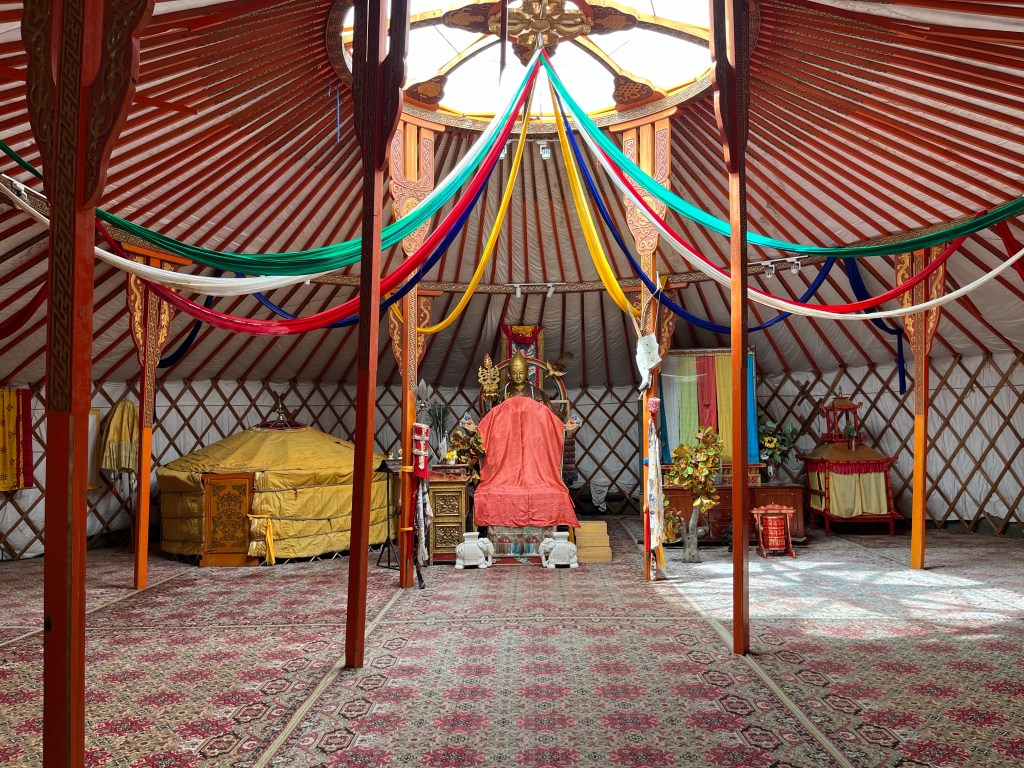
We turned offroad and headed to a random monastery in the middle of nowhere that had been rebuilt after the Soviets had destroyed it. It was an odd spectacle as we parked up in the designated carpark and awaited a monk to invite us in to see a small ramshackle collection of gers, destroyed dwellings, and a solitary grand building made of stone. A ger is what they call a yurt in Mongolia, a very comfy tent with a wooden frame that can accommodate whole families and can be constructed or deconstructed within two hours. One large ger here was basically the monastery full of all the Buddhist regalia. The grand stone building revealed an unlikely scene of something I imagine the inside of a 1920s gentleman’s club would have looked like during the days of empire. Wooden pillars coated with gold leaf, a large fish tank full of large fish, leather bound lounge chairs, incredible ceiling paintings of mythical dragons, plus an apparent library upstairs and a museum downstairs that were yet to be opened to the public. I suppose eight Buddhist monks need something to keep them occupied when living on the edge of the Gobi Desert. For us, the Gobi would be our home for the next week.


 Trig Tales