The Gobi Desert – Mongolia
Our first real day in the Gobi Desert wasn’t quite what I had in mind. Wind and rain had battered the ger all night at our camp in the grasslands and the bad weather continued as we made our way back to something that resembled a road where I naturally fell asleep. As is becoming the way on this tour, I woke up around an hour later to see a complete change in scenery. The crap weather persisted but grass had given way to stones and sand, and conventional livestock had given way to two-humped Bactrian camels, most of which were sat with their backs to the wind. Before I had fallen asleep the land was becoming marginal not that it stopped the large herds and flocks scratching an existence. It’s hard to work out if it’s just the time of year or if the environment is becoming seriously degraded due to over-use. Unfortunately, it’s probably the latter due to massive demand for cashmere wool in China that has driven up prices and encouraged Mongolian herders to increase goat numbers that have a reputation for eating everything. As well as cashmere, Mongolia is home to a wealth of minerals including coal, copper, gold, and silver, and as we headed deeper south past a mining area the roads miraculously became brand new with mile upon mile of comfortable driving. The Gobi is the sixth largest desert in the world at around 1.3 million square kilometres and there isn’t always a visible reason for a town or village, yet every few hours one would appear on the flat horizon like a mirage. Most would have a new looking school and local government offices but other than that the towns would be made up of a collection of rickety wooden huts and gers.
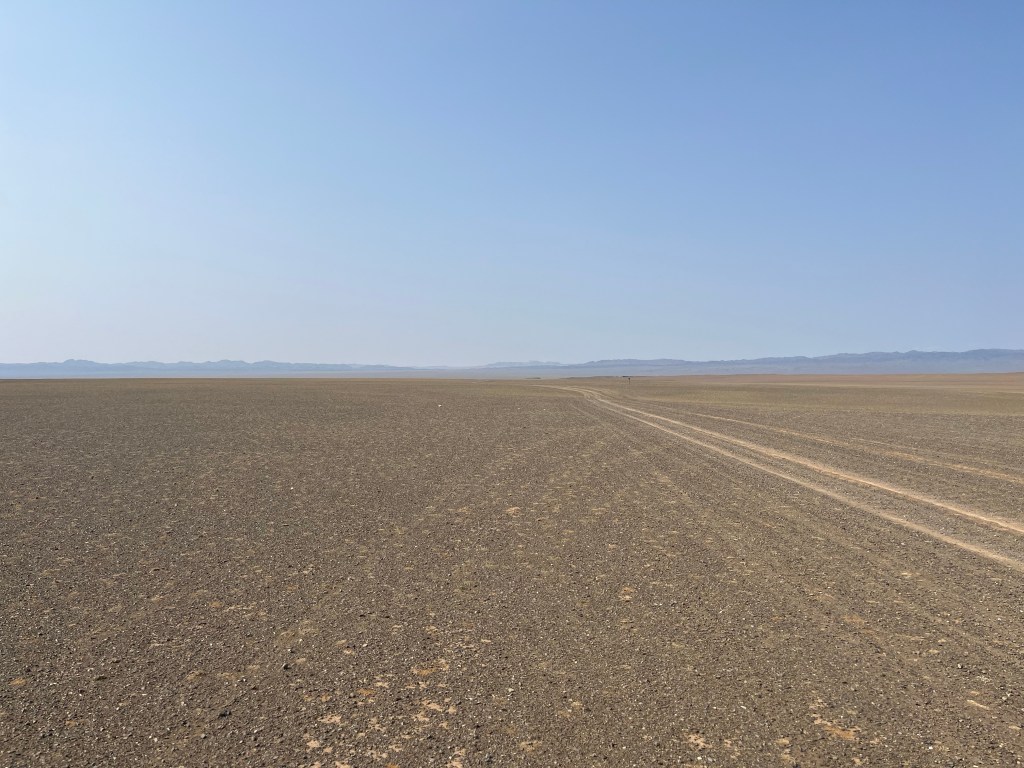
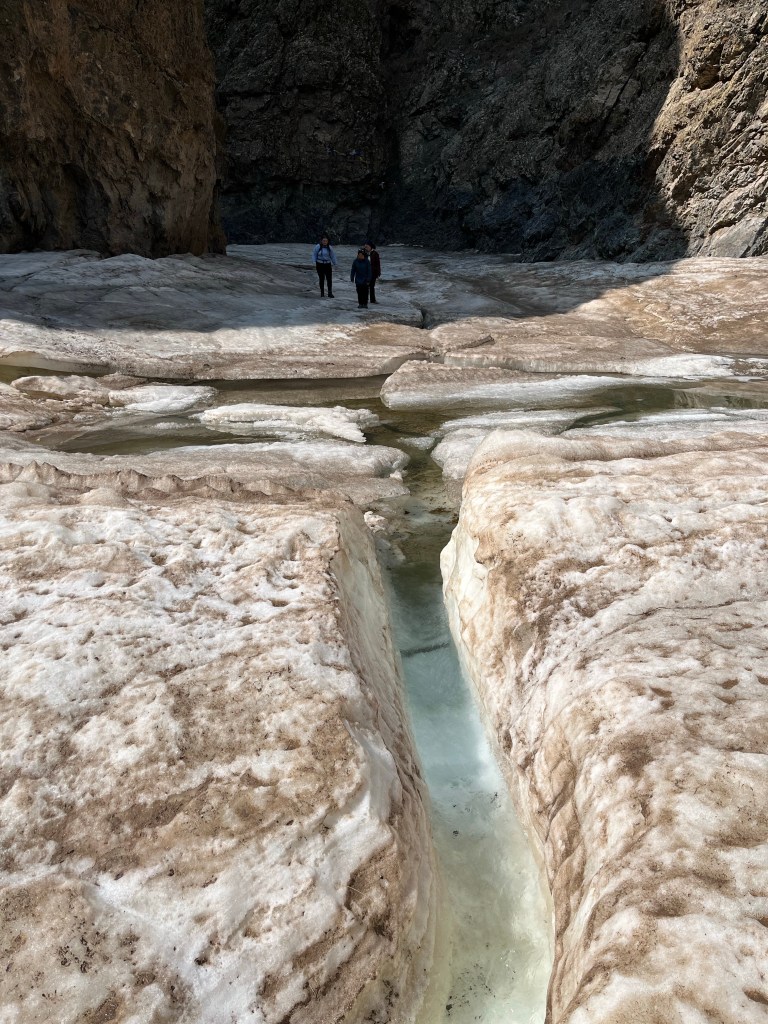
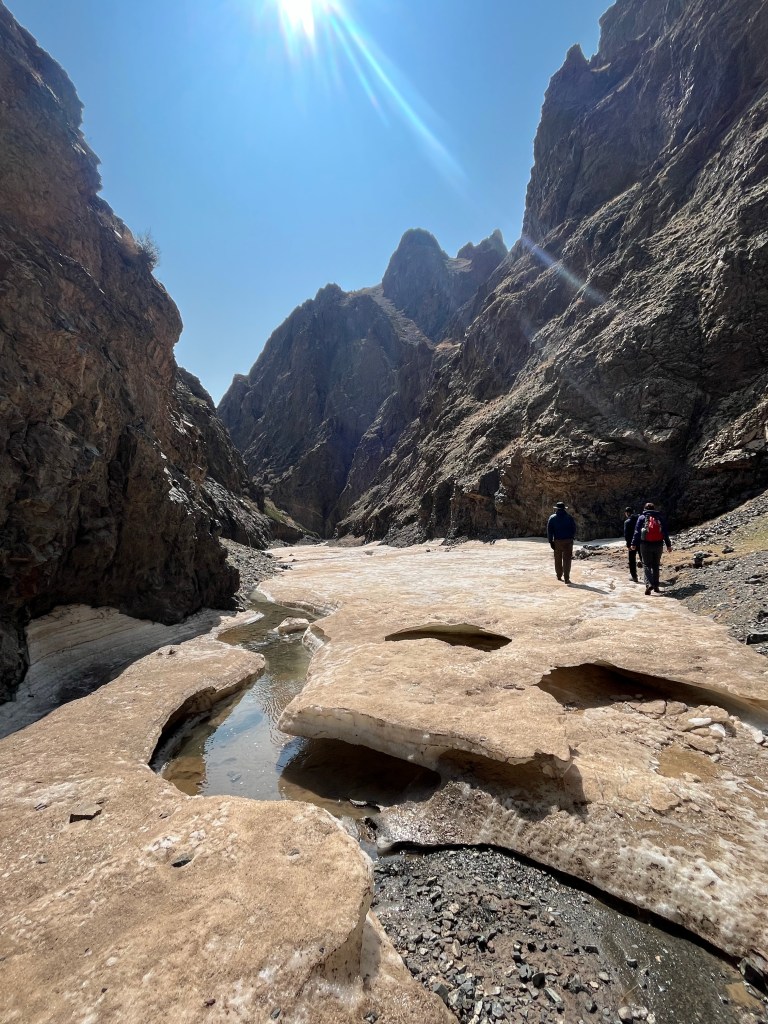
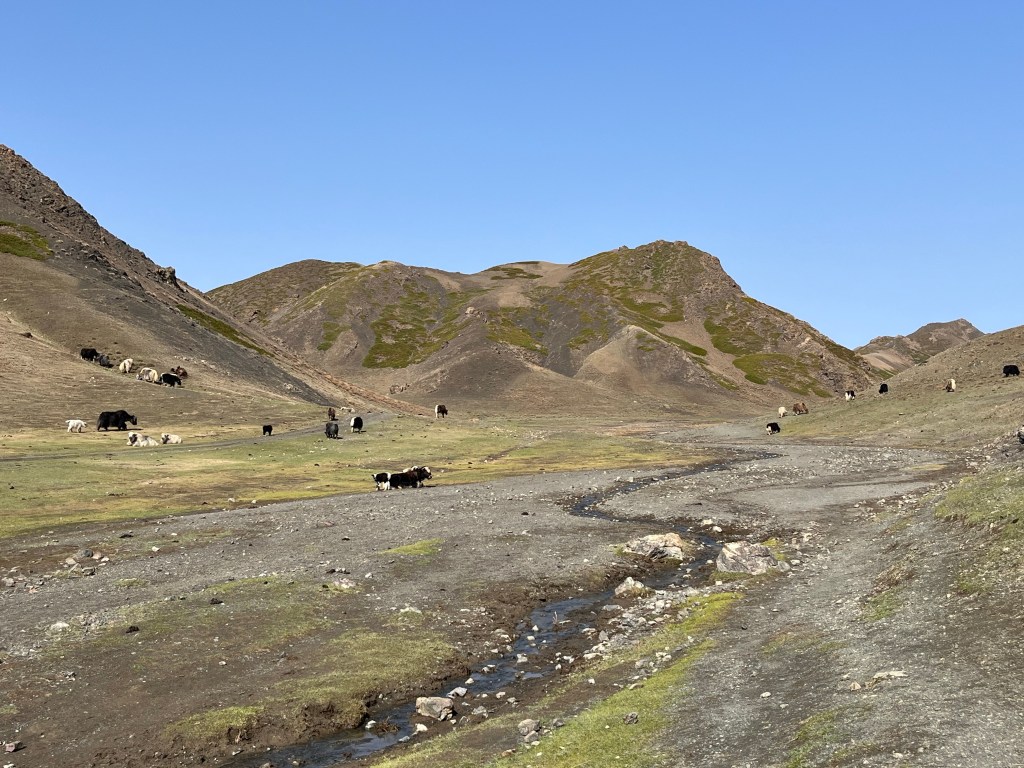
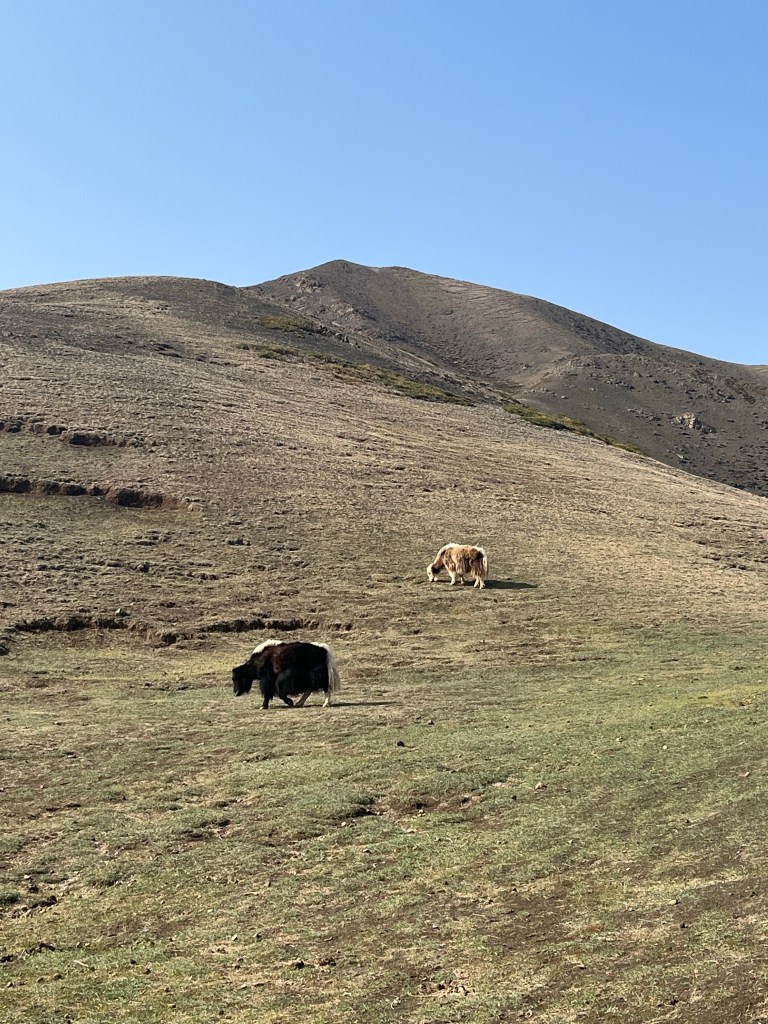
The Gobi is difficult to describe. It was flat, but before long we had driven into the feet of the Gurvan Saikan Mountains and found ourselves camping up on a windy bit of rock that overlooked a large dry riverbed that ran down into the expanse of nothingness below. If we hadn’t have just driven through it, one would be forgiven that the view below looked more like that of a calm ocean than a baren desert. The mountain range didn’t break the 3,000-metre barrier yet that was no excuse not to experience another little surprise, ice. We set out on a hike through the Yolyn Am gorge under clear blue skies that finally revealed themselves after a few cloudy and wet days and inspired a fightback against the niggling cold that hadn’t finished bothering me yet. The very start of the walk was most exciting as we stumbled upon a herd of yaks, the first we had seen. They are simply cows with long fluffy coats but having never seen them before I found it quite novel and dare I say, a scene I expected to see in Mongolia. In the valley grass had begun to grow and the yaks were giving birth; it was all very springlike until we delved deeper and deeper into the gorge. We were warned to expect a little ice, but I hadn’t really prepared mentally or physically for what could almost be called a glacier. It wasn’t, but when it comes to hiking, I see no difference in walking on a glacier, and walking on a frozen river running through a gorge. The river was barely a stream, but it cut its way over and under the ice creating magnificent formations like mini versions of the great lakes and rivers that are created in Greenland every year. We would sometimes slip or put a foot through a particularly weak piece of ice but ultimately we could always find a way to keep exploring further down the gorge. An hour later the stone walls began to open up again, yaks and grass reappeared, and the heat of the sun encouraged us to keep walking despite knowing we had to turn around at some point and scramble back up the frozen riverbed. Luckily when the time came, the sun had melted the ice at quite a terrifying rate that made hiking back much easier but a little more precarious. The icy water looked delicious and I took the opportunity to fill my water bottle as my travel companions looked at me inquisitively. They were worried I would die due to the copious amounts of animal crap lying at the top of the gorge where we first met our yak friends. I reassured them that my bottle had a filter and besides, the fast-flowing water at the lowest reaches was surely fresh ice melt from that day. Surely? The further up the gorge I progressed the more poo I saw by the side of the river and on the ice, I started to tremble, maybe I was already sick? I’d look a right dick if I started gushing from both ends now. This trail of thought continued for two days as I refused to tip the water away and drank the lot in the ultimate test as to whether my water bottle works. So far it would appear that I survived, and the bottle has once more passed with flying colours. Then again, the water probably was super fresh ice melt and cleaner than that from a London tap.
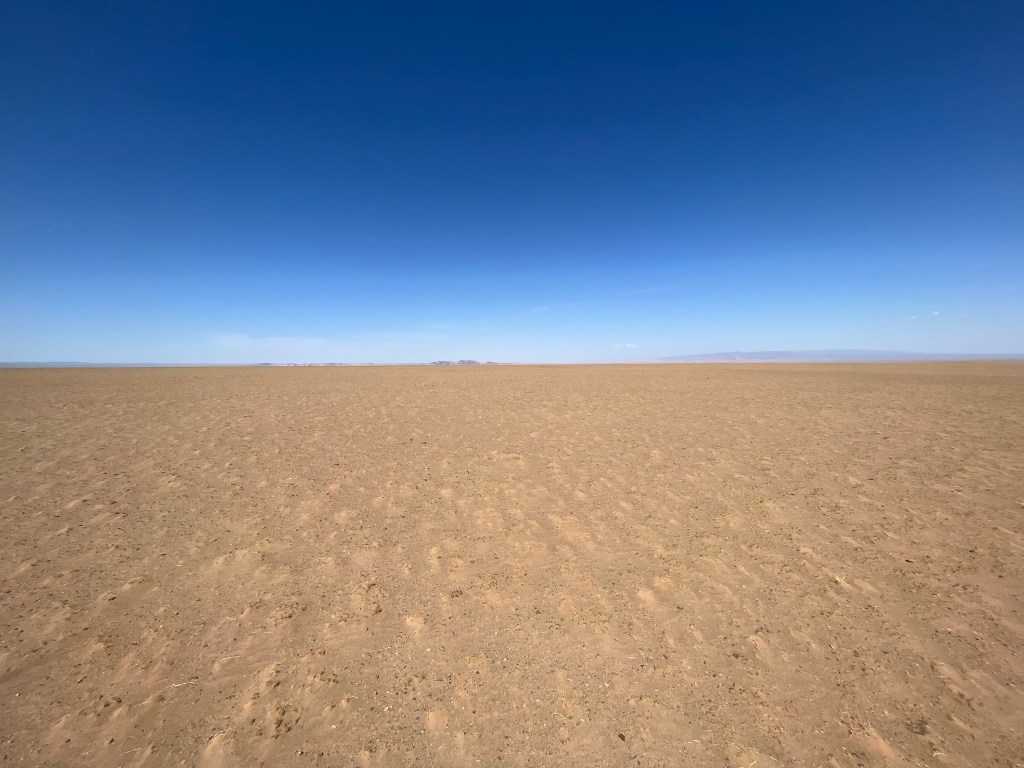
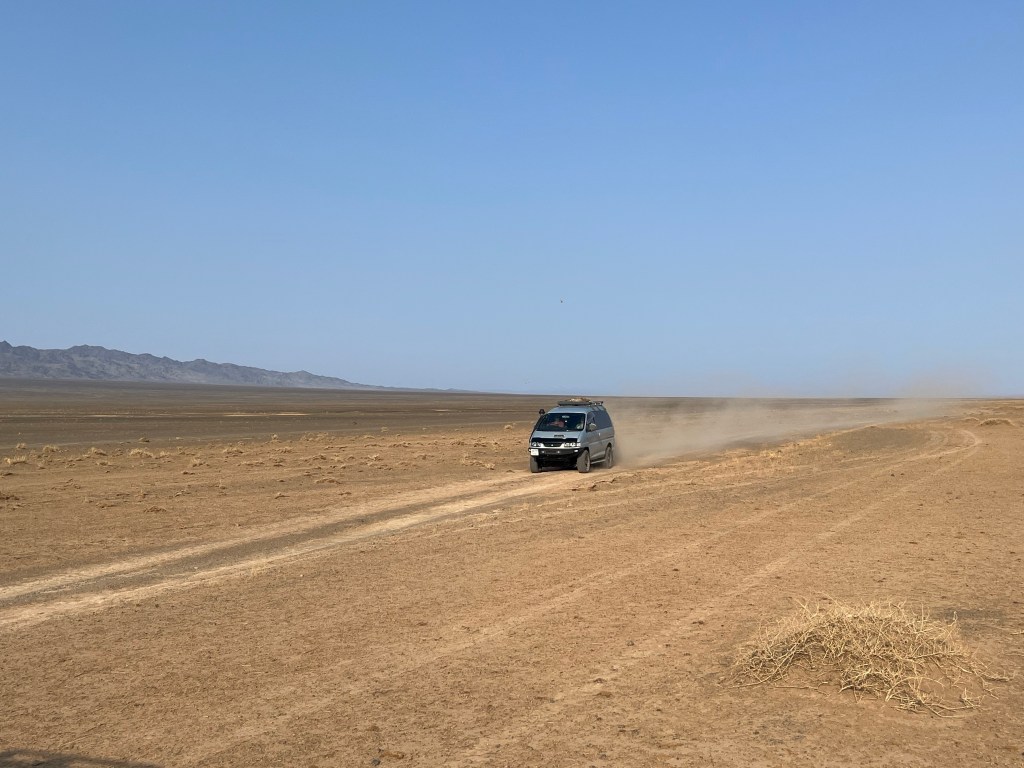
One lunch stop in a random little town was extended due to a technical issue with one of our two Mitsubishi people carriers. Don’t be fooled by the description of ‘people carrier’. Minivan could be another description but still doesn’t do it justice. Whatever they are, they have four-wheel drive, beefed up suspension, and come with a three litre V6 engine. Unfortunately, the radiator had sprung a leak in one of the cars and so the two drivers whipped it out, rectified the cause, glued the radiator up, and put it all together after having a spot of lunch. We meanwhile sat around drinking a beer and watching a random tree planting ceremony despite the fact we were in the middle of a desert, and the guy with the boring machine couldn’t get it to go through the dry rocky earth. With the afternoon’s maintenance and entertainment finished with, we took off into the setting sun and some of the best views we had yet experienced in Mongolia. We cruised down no obvious road, driving more or less wherever we wanted along the almost empty desert that showcased sand dunes to our distant left at the foot of a mountain range. To our right the desert floor appeared to rise until disappearing into the horizon. The setting sun produced a unique display of contrasting colours but softened into pastel shades of green grass, golden sand, black mountains, and purple sky, creating a wholly unique and visually stunning experience. It’s hard to trust what you see in Mongolia. Look across the landscape and it appears to be carpeted in thick green grass but look immediately down and what appeared to be a lawn is in fact just a few blades of green amongst an ocean of sand and rocks, especially in the Gobi.
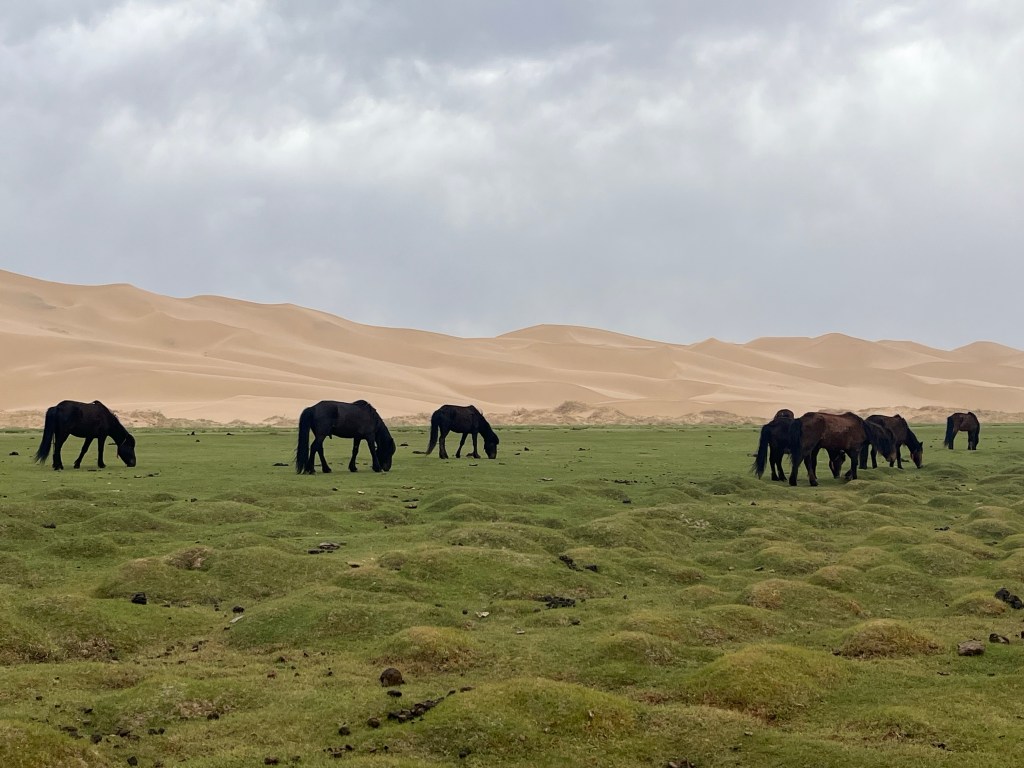
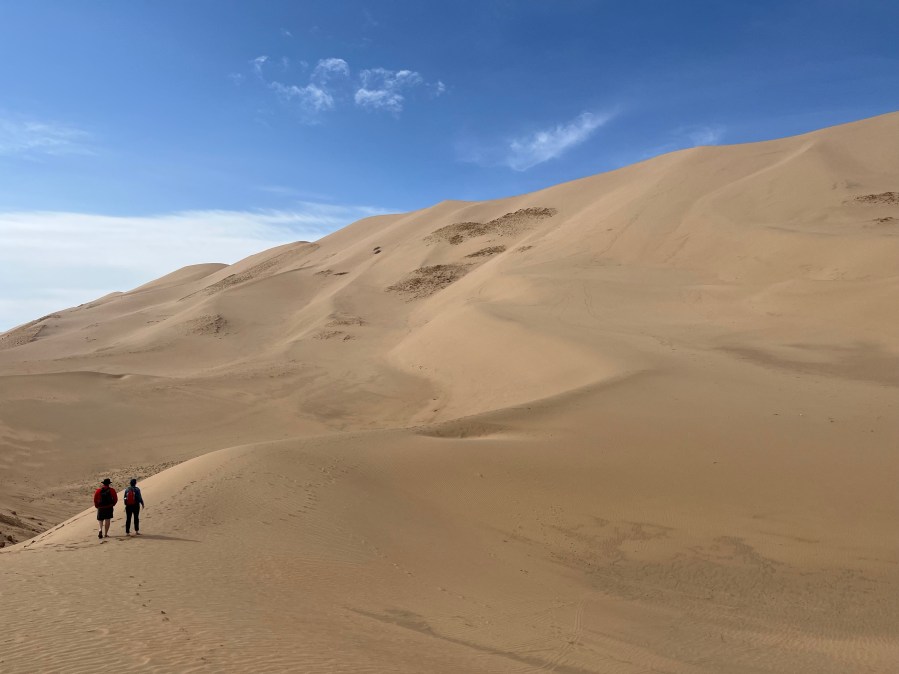
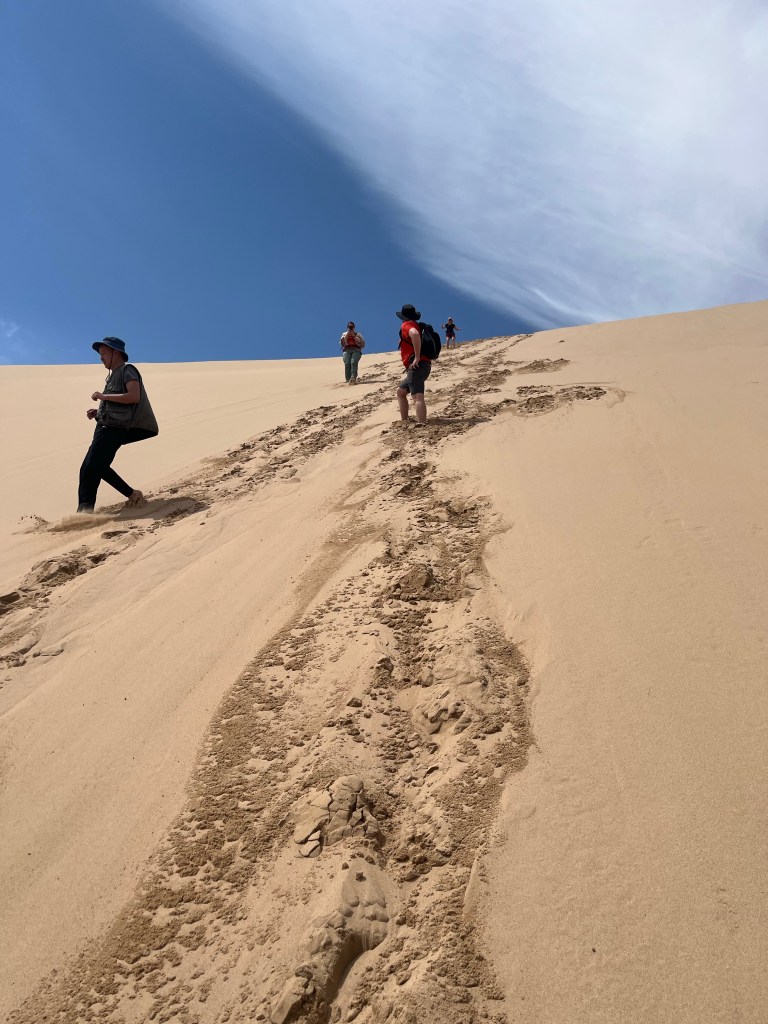
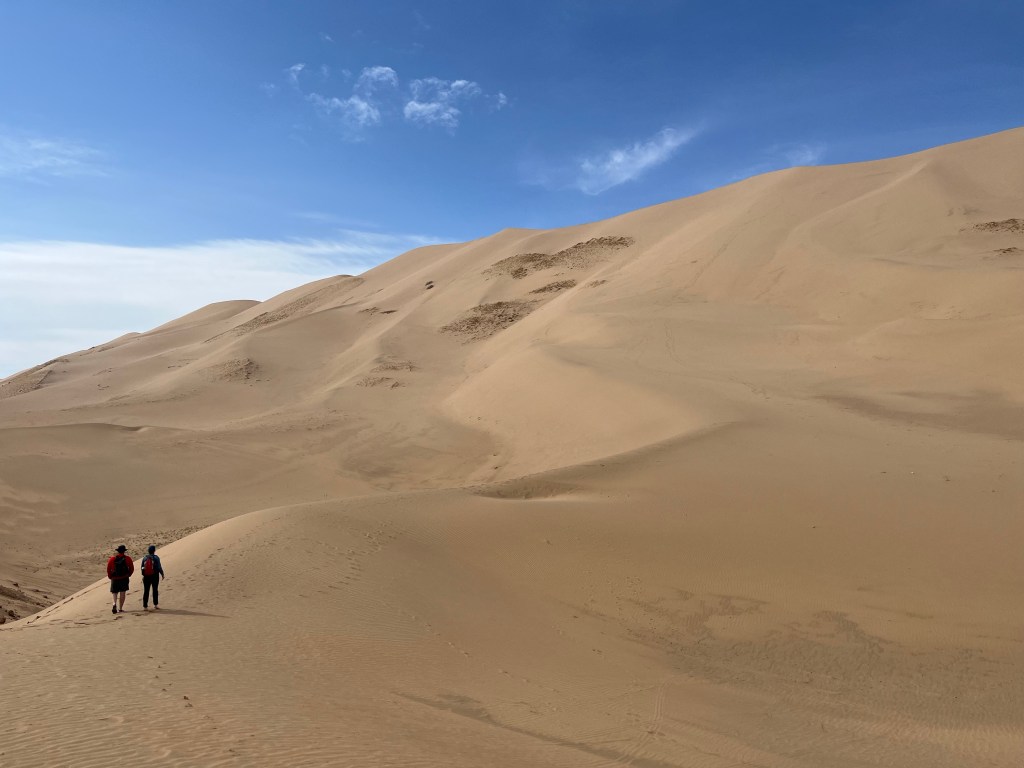
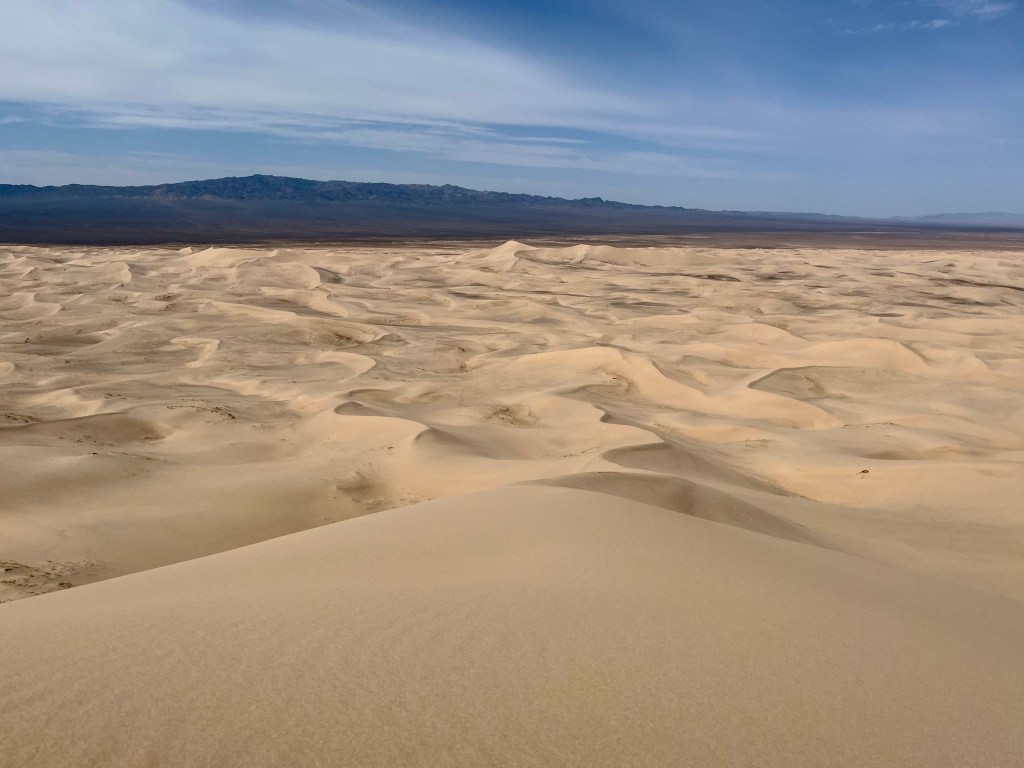
After five days of waiting, I finally awoke to a day that was sunny and warm enough for shorts. It was a wise choice of clothing as the activity for the morning was to hike up one of the largest sand dunes that we had passed the evening before. Our guide said zigzagging up would be the best option and so we duly began to pick a route up through the mountain of sand. Meanwhile, our guide went against his own advice and began scrambling straight up the dune, taking two steps forward and sliding one and a half steps back. That said, climbing sand dunes isn’t easy no matter how one tackles it, and as ever brute force and ignorance finally delivered me 160 metres up to the peak and without my heart exploding. Upon reaching the crest of the dune I was met with a vista of smaller sand dunes reaching into the distance that could not be seen from the side we had come; looking back was the stoney plain we had driven along the evening before, and a random strip of blue and green blossomed at the foot of the sand dunes where a small stream had come to an abrupt stop and created a little grassland oasis where horses grazed contently. It had been less than 24 hours since we had been hiking on ice through a rocky canyon, which would have been surprising if not for the variety of landscapes that lay in front of my eyes from the top of the dune.
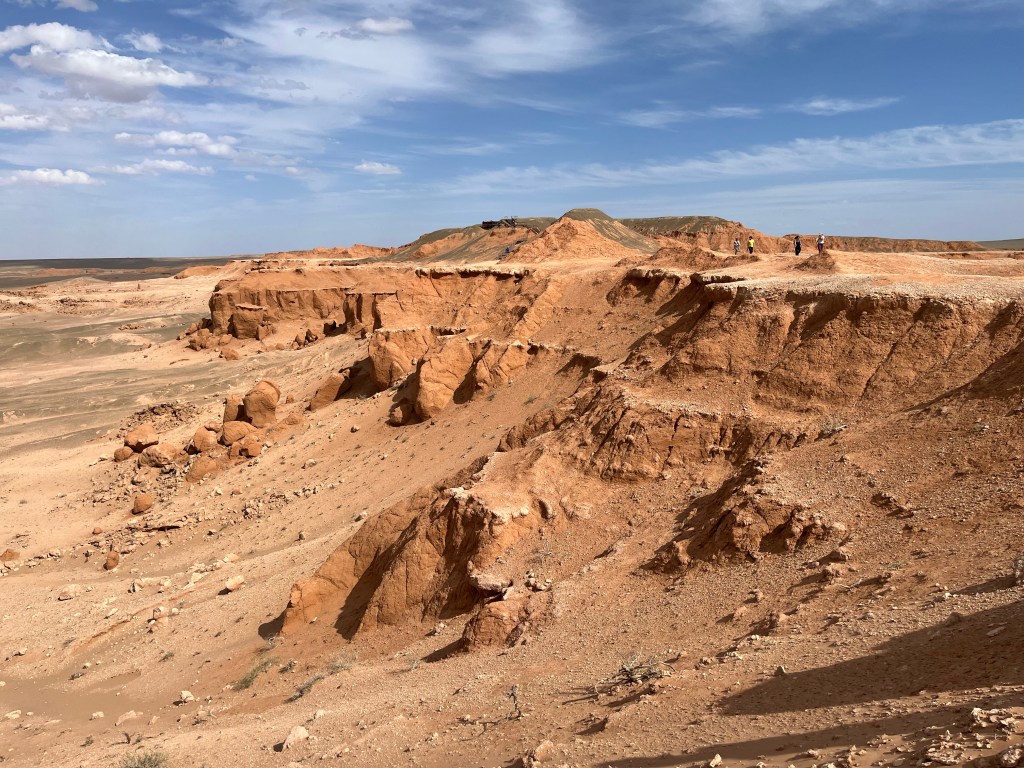
From the sand dunes we spent almost a day driving through a vast expanse of emptiness until we almost drove off the edge of a cliff. The cliff in question was part of the Flaming Cliffs, a beautiful bit of geology that appears to split a desert plain in two, separating them in altitude by several hundred metres. They are worthy of mention for that simple fact, however they are famous for being the first place in the world where dinosaur eggs were discovered during an archaeological dig in search for the origin of humans back in the 1920s. Turns out humans originated on a completely different continent, but as it was an American expedition and they discovered heaps of dinosaur eggs and fossils instead, we’ll let them off this time. We returned to the Flaming Cliffs for sunset to experience their namesake, but it wasn’t half as spectacular as watching a group Gen Zedders running around attempting to fill colourful plastic bags with air so that they could use them as somewhere comfy to sit and to provide a colourful picture. Apparently it’s a thing, and I admit I’m a little jealous I’m no longer travelling at their age. I therefore allowed myself to enjoy the daftness of it all instead of falling into the hideous trap of thinking they were complete idiots too lazy to stand and enjoy the beautiful environment I assumed they had come to see. Acceptance is a wonderful thing.


 Trig Tales