Ulaanbaatar – Mongolia
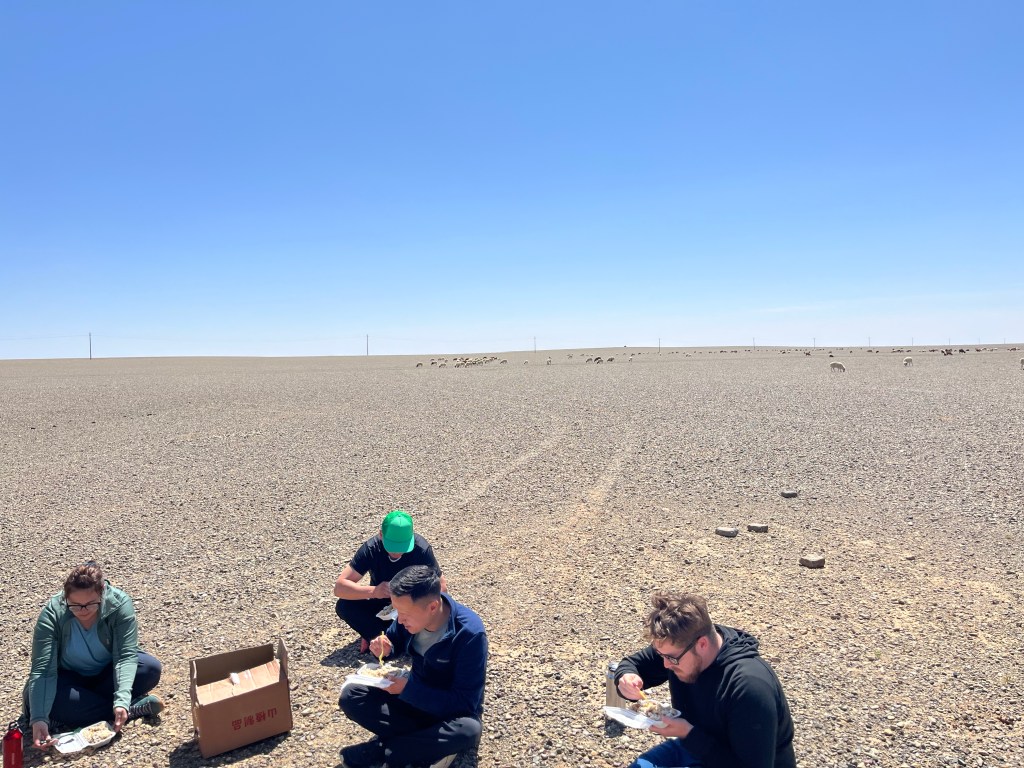
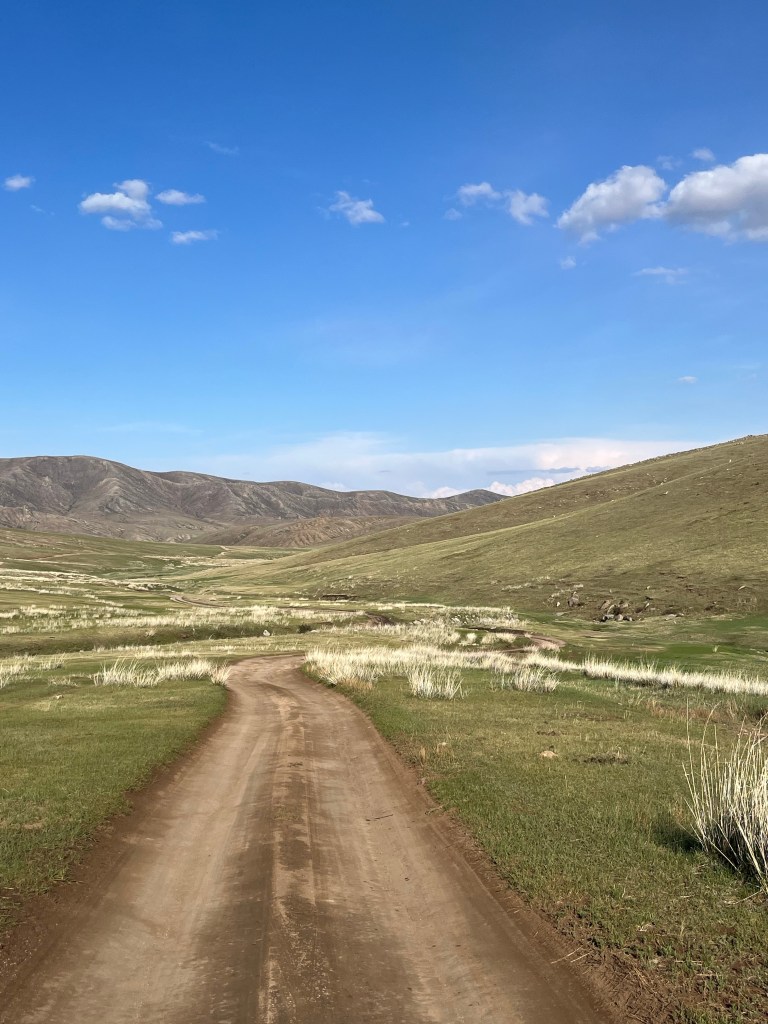
As we drove away from our nomad camp, I returned to being impressed with how our drivers navigate through a terrain with no roads, signs, obvious physical features, or sat nav. The Gobi Desert was particularly flat and featureless with almost constant wind that was strong enough to carry off pee before it had a chance to hit the ground, such are the practicalities of travelling in the middle of nowhere. I shouldn’t be that impressed by the drivers because for the majority of human existence we have navigated overland rather well will little technological assistance but still, in today’s modern world, resisting phone apps and having confidence in memory and asking locals for help is admirable. The lead driver is usually the most experienced although after a few years of going nowhere due to the pandemic, memory had apparently become hazier than normal with several U-turns required during our trip, not that it made much difference to me as I rarely know where I am or where I’m going. Our drivers were epic from navigating to butchering, repairing cars to serving up vodka, but there was one thing they did that terrified me on several occasions. The cars were righthand drive which meant when we were driving on highways – on the righthand side – overtaking trucks could be a hair-raising experience as the driver had no way of seeing oncoming traffic. This was fine if the person in the passenger seat was awake, the chances of which were usually fifty-fifty.
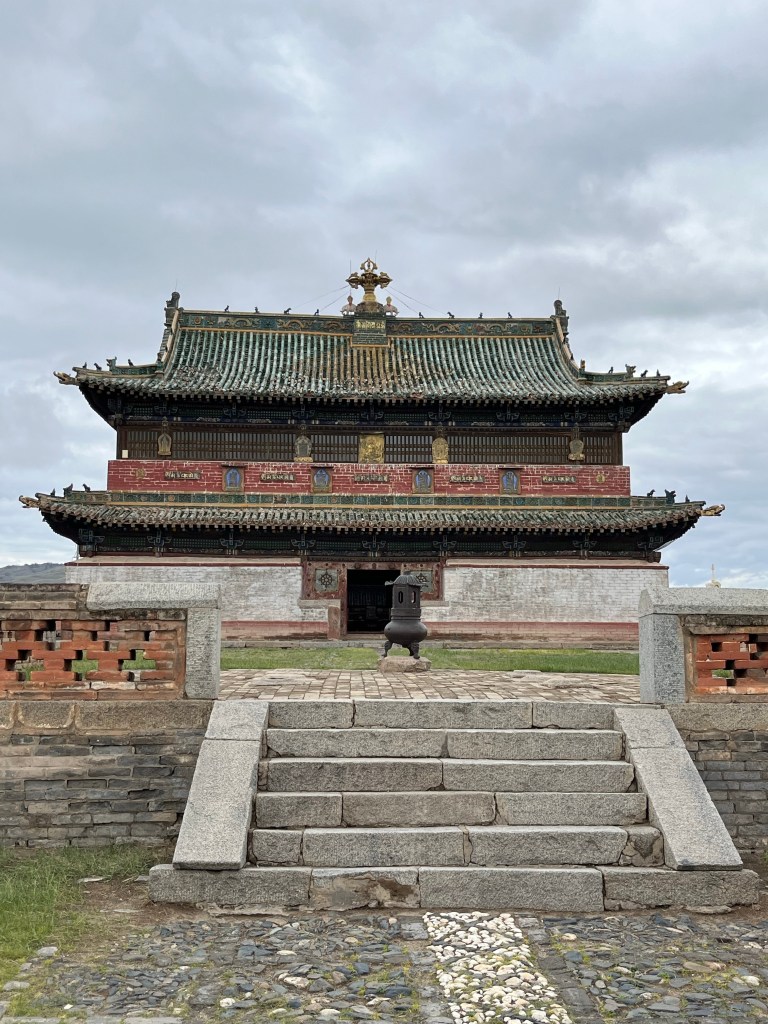
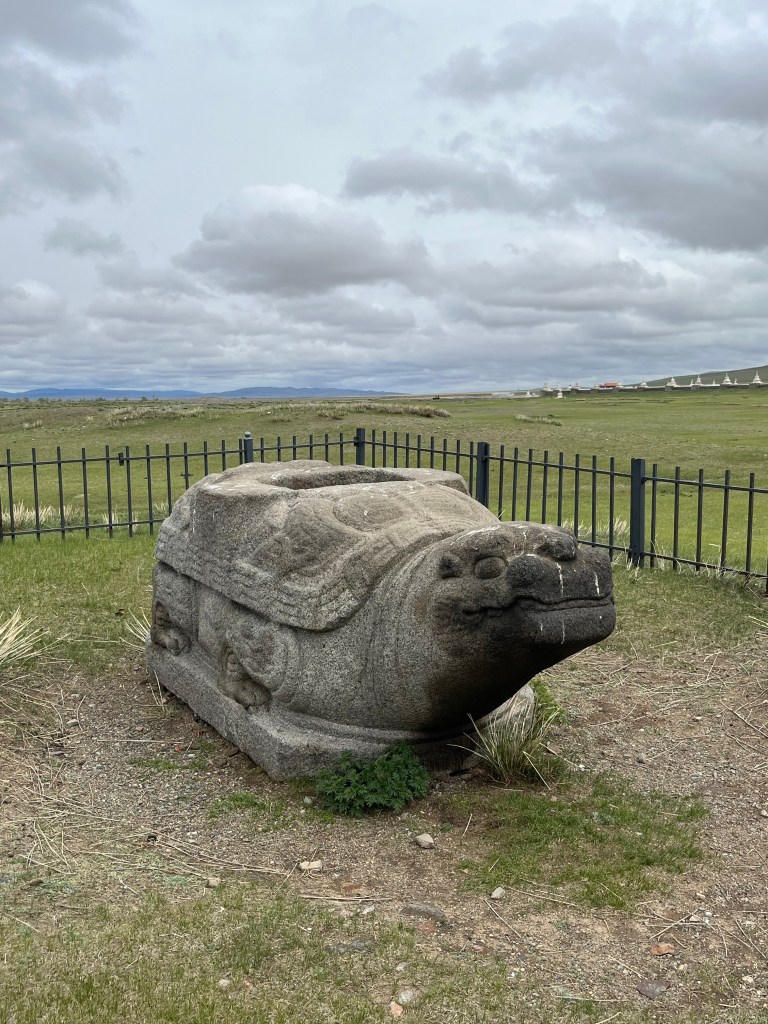
Before we knew it, we were heading north back towards Ulaanbaatar and the landscape started to change with large American sized fields fenced off to grow crops, and livestock relegated to scavenging whatever they could around the periphery. Such agriculture is a necessity yet from a completely selfish traveller point of view it was sad to see we were returning to the modern world and the disruption it causes to traditional ways of life. Surprisingly, little history featured on this tour and I heard more about Genghis Khan and his misdemeanours in Uzbekistan than in Mongolia but that provides an extremely unbalanced picture of one of the most renowned people in history. We did stop in the town of Karakorum which was the capital of the Mongol Empire in its heyday, but today little remains other than a small museum that offers an hour or two of interest, and the Erdene Zuu Monastry and its impressive walls. The only thing I knew about Mongolia before arriving was the colossal statue of Genghis Khan which I assumed would be on any itinerary, however it wasn’t on ours and unfortunately it lay too far out of UB to make a visit before leaving.
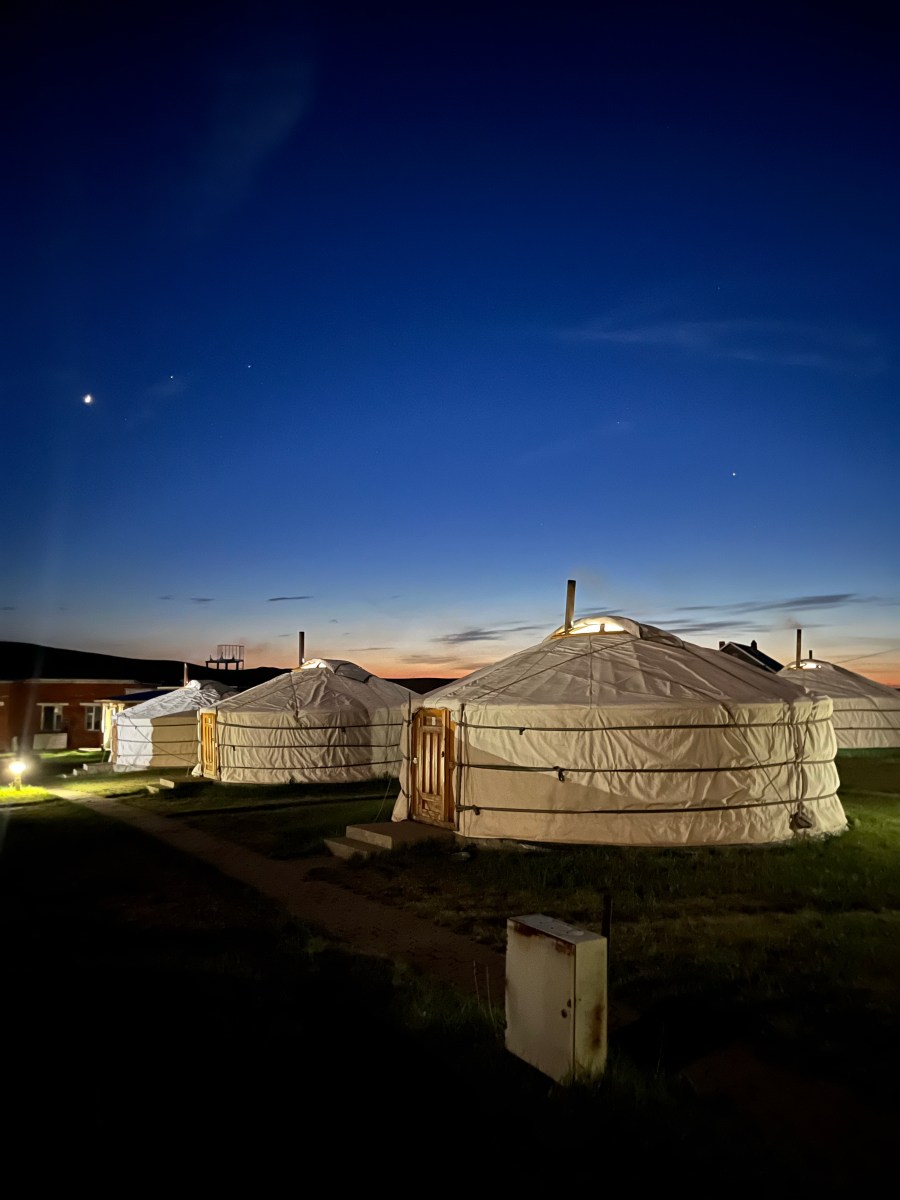
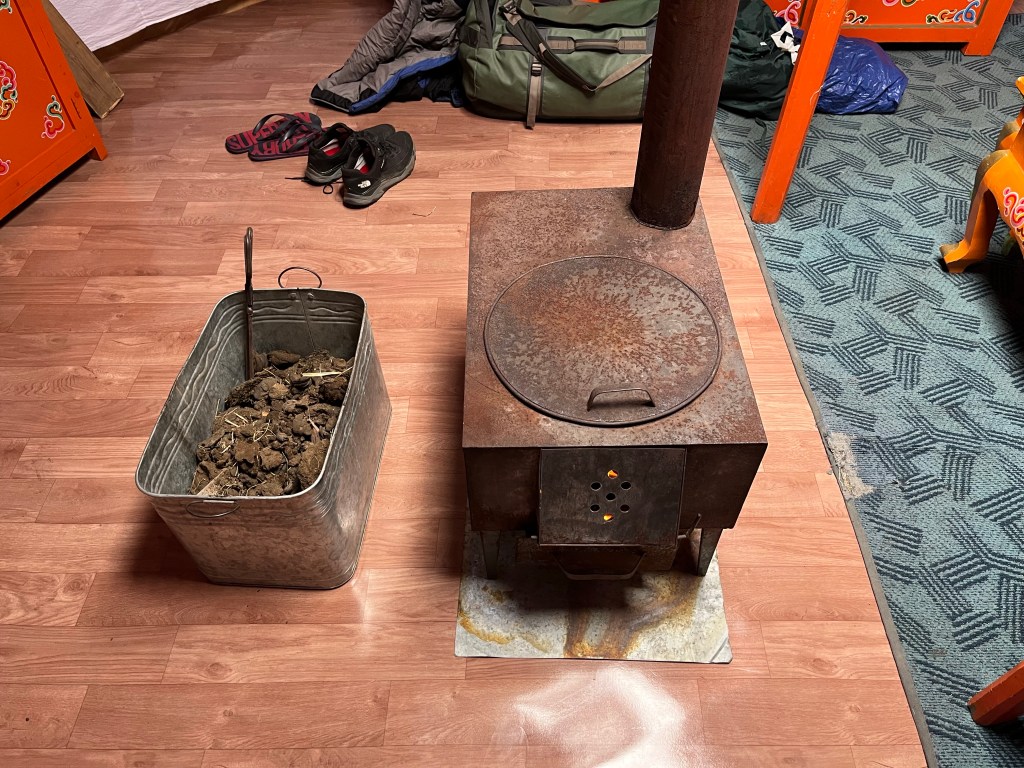
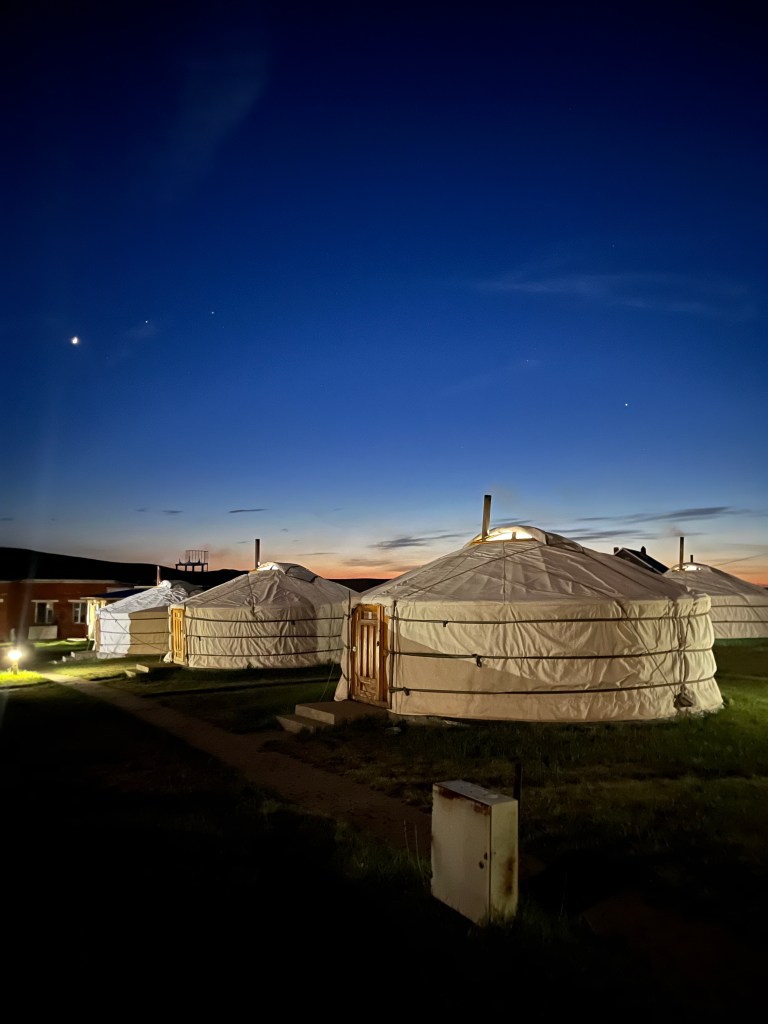
We did make it to Hustai National Park which is famous for reintroducing wild horses to Mongolia which turned out to be rather unexciting. The park is bordered by huge corporate arable farms, menacing flocks of sheep, and once in the park it looks no different to any other grassland in the country although it’s supposed to be full of wolves, wild boar, falcons, eagles, and furry little marmots. There is only so much time one can spend looking at horses from a distance and although the marmots offered entertainment potential, they never hung around long enough, no doubt because they were better at spotting eagles than I. In a nutshell the park looked degraded and was nothing like the promotional video full of wildflowers, forests, wildlife, and lush grass, but let us just assume it’s a time of year thing. We returned to our camp at the entrance of the park and settled in for our final night sleeping in gers. Gers or yurts have now been associated with glamping, and rightly so, for it is an incredibly comfortable way of spending time under canvas, although it’s hardly a new phenomenon with the West yet amusing themselves and adopting something that has worked rather well for centuries elsewhere. All the camps we stayed at in Mongolia provided comfy beds in large gers, backed up with shower and toilet blocks providing spotlessly clean facilities and hot water despite appearing to be in complete wilderness. The gers could all be fitted with stoves which when lit provided sauna like conditions and I am yet to discover if there is an art to temperature control. Our final night was particularly confusing for the body as we had requested the stoves be lit in our gers despite not being too cold, and we had consumed a couple of bottles of vodka. Drinking vodka in this part of the world is in itself mindboggling for a body used to drinking vodka elsewhere, especially the UK. To begin with, downing a shot of vodka in Central Asia is a pleasant experience, it glides smoothly down the throat without a hint of burning or misery that is usually associated with a shot in Britain. You wait for that nasty sensation but it never comes and so you have another shot, and another, and before you know it you are feeling warm and fuzzy inside with a hint of dread lurking in the background. The only way I can describe the following morning is that the head is mentally prepared and almost demanding I be hungover, yet my body is telling me I’m virtually perfect, maybe a little dazed, but otherwise surprisingly operational.
Arriving back in the capital provided mixed feelings. We had covered 2,200 kilometres in under two weeks covering a vast area and a multitude of landscapes, yet at the same time I felt liked we had barely seen anything of the country. It was an introduction at best, a fantastic one, but an intro nonetheless. It had taken me a few days to warm to the country; Ulaanbaatar is not one of the classier cities of the world, the weather was cold, warm, dry, wet, windy, snowy, and my damn cold persevered for the entire two weeks. It felt like we saw a lot of landscape but spent little time exploring it, although this wasn’t a fault of the itinerary. The reason for visiting Mongolia is its sheer scale and the fact that few people live there. To have any chance of seeing just a fraction of it requires plenty of offroad driving, and once you have arrived somewhere, it is likely to be in the middle of nowhere and thus optional activities are unlikely. Instead, it’s important to breath in the location, the desert, the mountains, the sand dunes, the grasslands, to lie in a comfortable ger and read a book, to embrace not having access to the internet for almost two whole weeks, or to play an odd local game using the ankle bones of deceased sheep. That is reason enough to travel in Mongolia, to slow down and enjoy the simple things in life without having to hike long distances, sleep in tents, and go with no bathroom for a week.
Our final night brought about a couple of surprises. The first was a cultural show, an event I had zero interest in and actively avoid wherever possible unless everyone else is going and so I tag along like a well-behaved sheep. On this occasion, I’m glad I did. It was wonderful and I was little sad it ended after one hour. The orchestra pumped out some excellent traditional tunes, failing at the last hurdle by playing a few Western samples for some unknown reason. There were a few entertaining dances, and a couple of gymnasts that bent into shapes and displayed superhuman strength that apparently well practiced geometry can provide, including balancing on a metal post using nothing more than the trusted grip of a good strong jaw. The highlight had to be the throat singing where men of all sizes pumped out a variety of sounds from deep within their lungs that ranged from deep to high pitched and made little sense to someone new to the spectacle. I encourage you to search online as although it’s an odd way to sing, it is certainly unique, impressive, and above all, entertaining. From the Mongolian culture show we were surprised with a table at a very nice Mediterranean restaurant as our guide was obviously used to his passengers getting tired of mutton and the local dish Tsuivan. I was, although Mongolian food is generally rather tasty, and I was more than happy to eat Mongolian on my last night in the country; after all who knows when I’ll be back. But that said, I very much enjoyed my couple of glasses of Argentinian Malbec as I tried to keep the sheep theme going with lamb tagine. The following morning was blissful, not having to leave for the airport until 9am and with only a three-hour flight to contend with. I had arranged for Pold, the taxi driver who had demanded my custom at the airport when I first arrived, to return me to the airport. He duly arrived at 9am, collected my bag from reception, walked off and disappeared out of sight leaving me to wait for a friend who was coming with. He didn’t return, and as per usual I was left to worry that maybe I should worry more about trusting people under such circumstances. Then again, Mongolia is one of the places where such worries are unnecessary.
Check out the tour here.



 Trig Tales