Ouidah to Ganvie – Benin
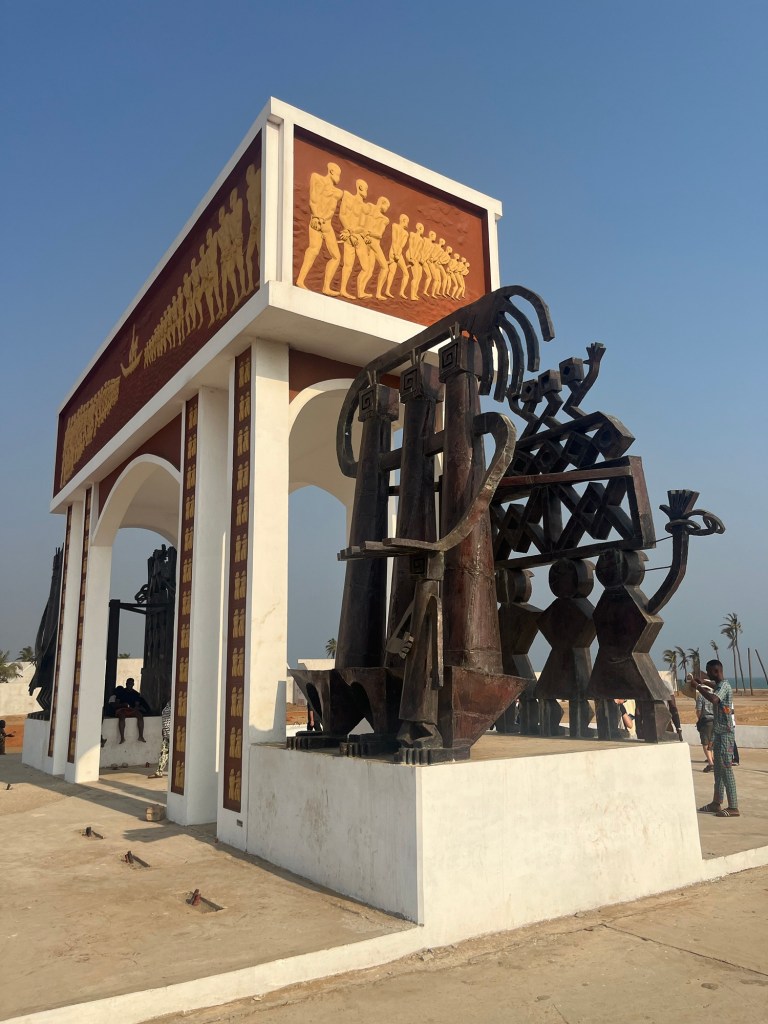
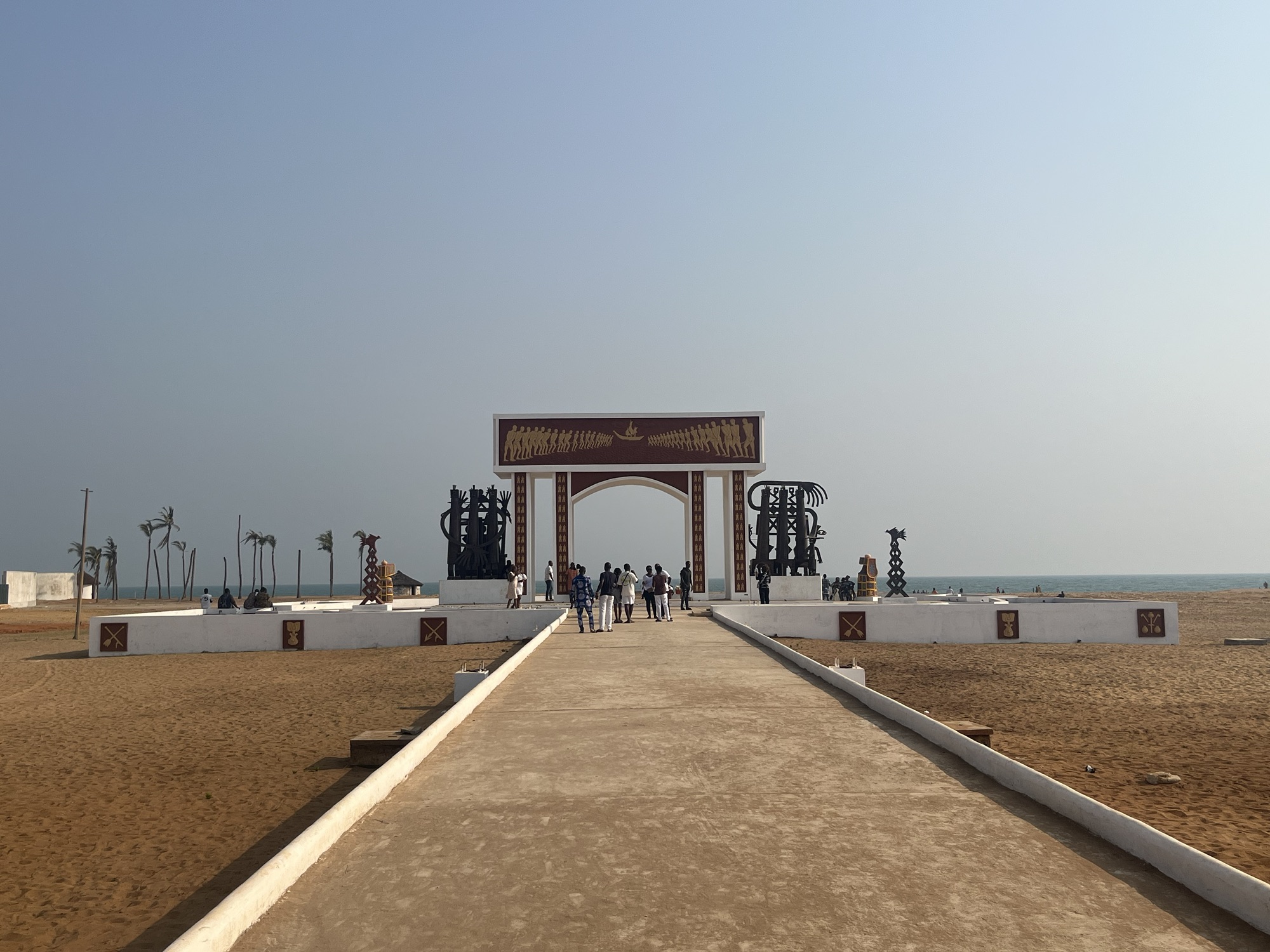
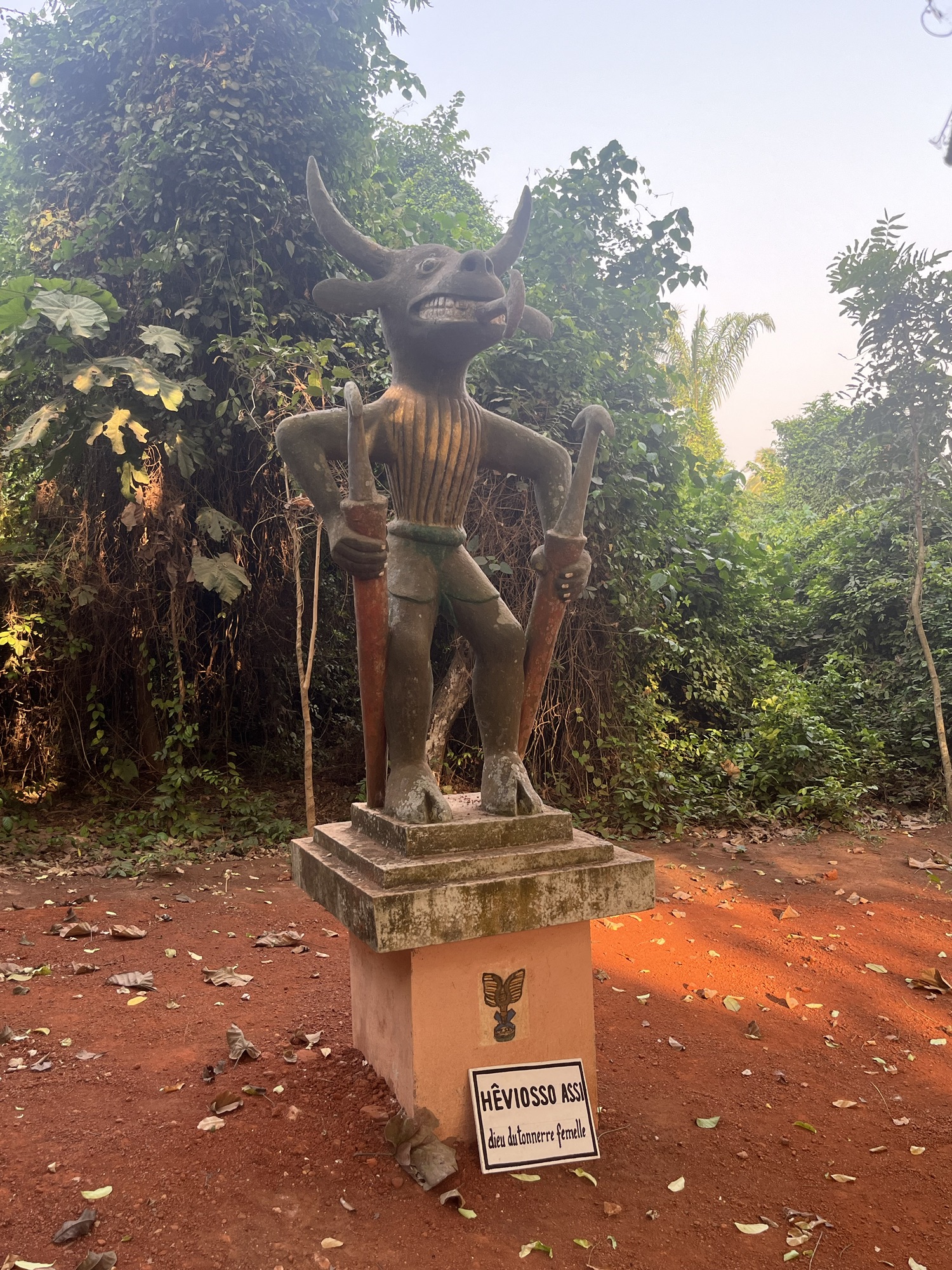
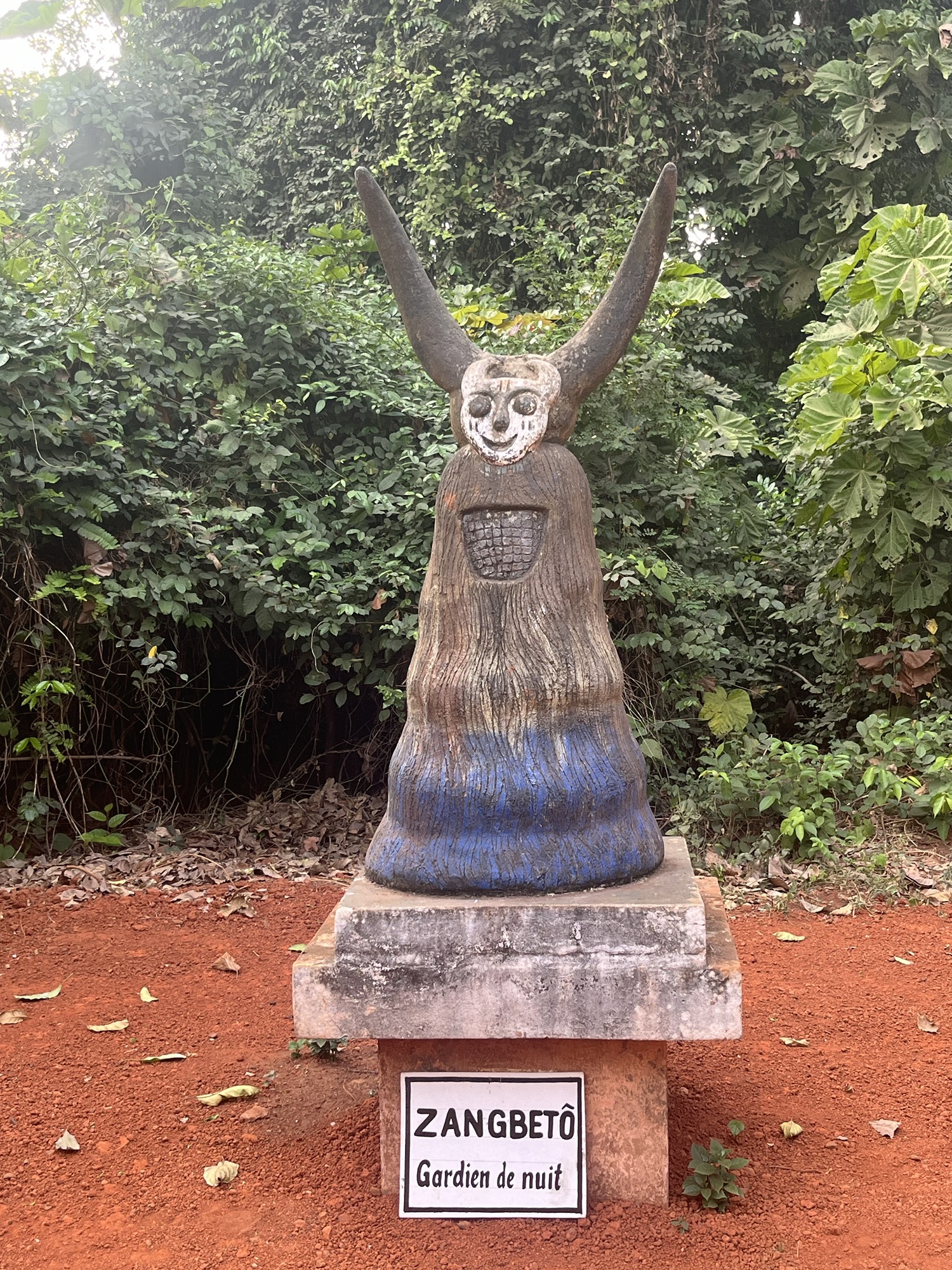
Down the road from Grand Popo we did a whistle-stop tour in Ouidah, a town popular with tourists known for its significant role in the slave trade and its ancient Voodoo Kingdoms. Our afternoon began at the Temple of the Pythons which is exactly as you imagine although likely much less impressive. It was merely a collection of small buildings used for shrines, priests, and snakes centred around Voodoo beliefs, where in this case, pythons took centre stage as a spiritual animal. There was one room full of the critters, none of which looked very animate. I struggled to understand, but I left under the impression that the snakes are released into the wild from time to time to feed before returning home to the temple. However, I may have completely misinterpreted the fact. Opposite the temple stood a huge catholic church, home to an institution seemingly immune to its colonial past. Although on saying that, the current uptake of Islam in West and Central Africa is in part driven by the history of Christianity and colonialism. Also ironic, considering Islam’s history of conquest. Apparently, in Ouidah, many people follow both Voodoo and Christianity and are free to practice both religions which is a remarkable display of tolerance that should be encouraged, although I have little doubt it will end up supressed one way or another. Our next stop was the old slave market where nothing remains except for a huge tree and some new, expensive looking paving and well-polished stones. Clearly a lot of money had been spent yet look further in any direction and the streets soon returned to dust among windowless houses with limited utilities where investment is evidently needed. I am the biggest fan of history out there and wholeheartedly believe that a solid education of our past goes a long way in understanding the present. Through that reasoning alone we must commemorate the past but, investment in the past cannot be at the expense of current needs. In fact, financially speaking, the very statement of ‘investing in the past’ is surely a paradox? Ouidah sits several miles back from the ocean. Slaves would leave the market and follow a track stopping at several spots along the way including a tree where slaves were allowed to ceremoniously circle it several times before continuing down to the waiting transport ships. Nearby is another smart monument dedicated to everyone that died before even making it to the coast. Down by the ocean, another huge monument marked the ‘Door of No Return’ commemorates the final departure point of countless Africans to the Americas from what was one of the busiest slave trading ports of all at its height. The memorial is a beautifully crafted but poignant reminder of the past, now a bustling place for street sellers and tourists.
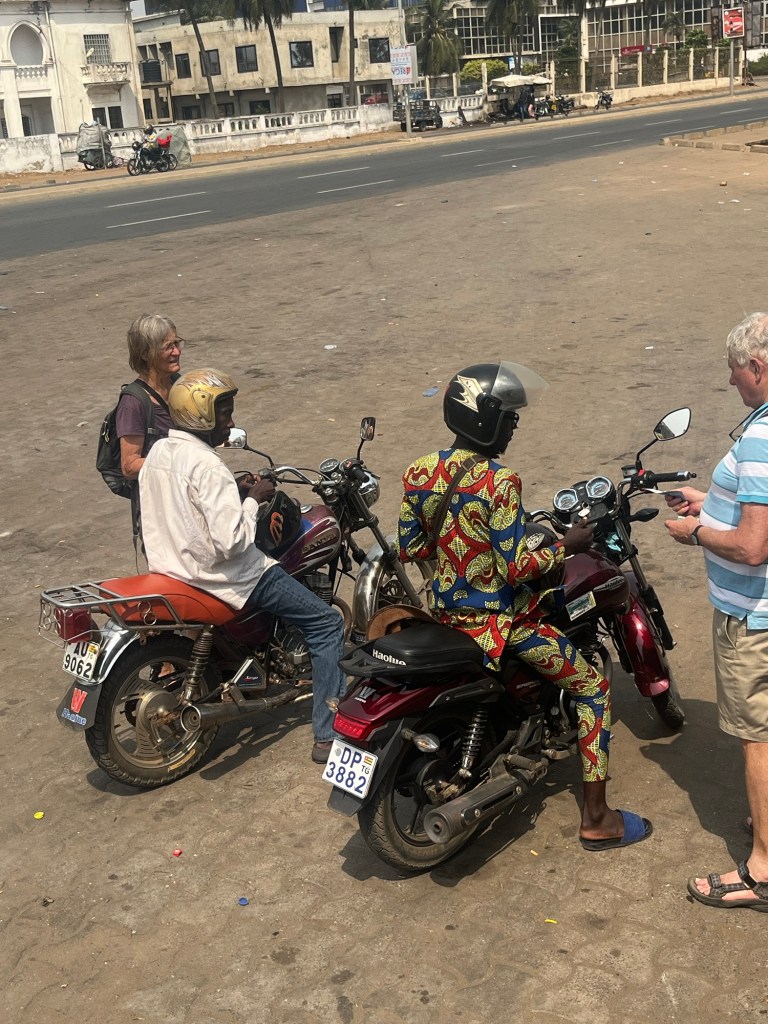
We nipped into Cotonou, the largest city in Benin, with its capital Porto-Novo sat to the east near the Nigerian border. Cotonou is an African Hanoi, choc-a-block with motorbikes driven by people wearing yellow t-shirts that indicate they are taxi-bikes. Every driver wears a helmet, but their passengers sat on the back do not. Unlike when we arrived into Monrovia, Cotonou is saturated in an atmosphere of positivity and friendliness that makes you want to go walkabout. There isn’t a great deal to see but the streets, as with Benin in general, is full of smartly dressed men in their traditional suit-like clothing of a pair of trousers and a loose-fitting top in matching jazzy African print. The women of Benin are the most beautiful I have seen in West Africa with eyes and smiles that could weaken the legs of an elephant. We spent only a few hours in the city, the highlight for me being an air-conditioned café serving great chicken shawarmas, pizza, and ice-cream.
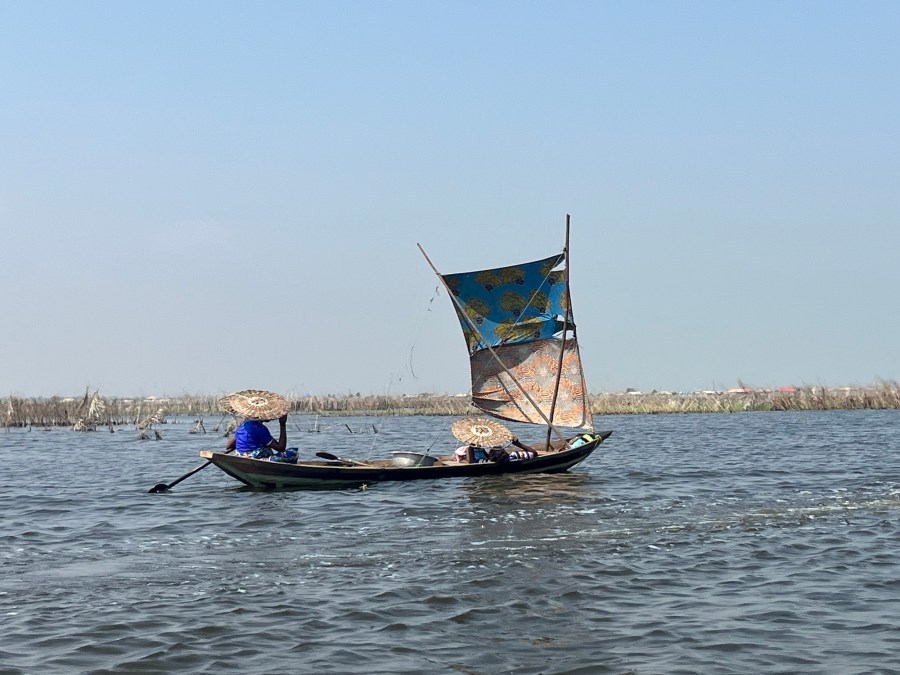
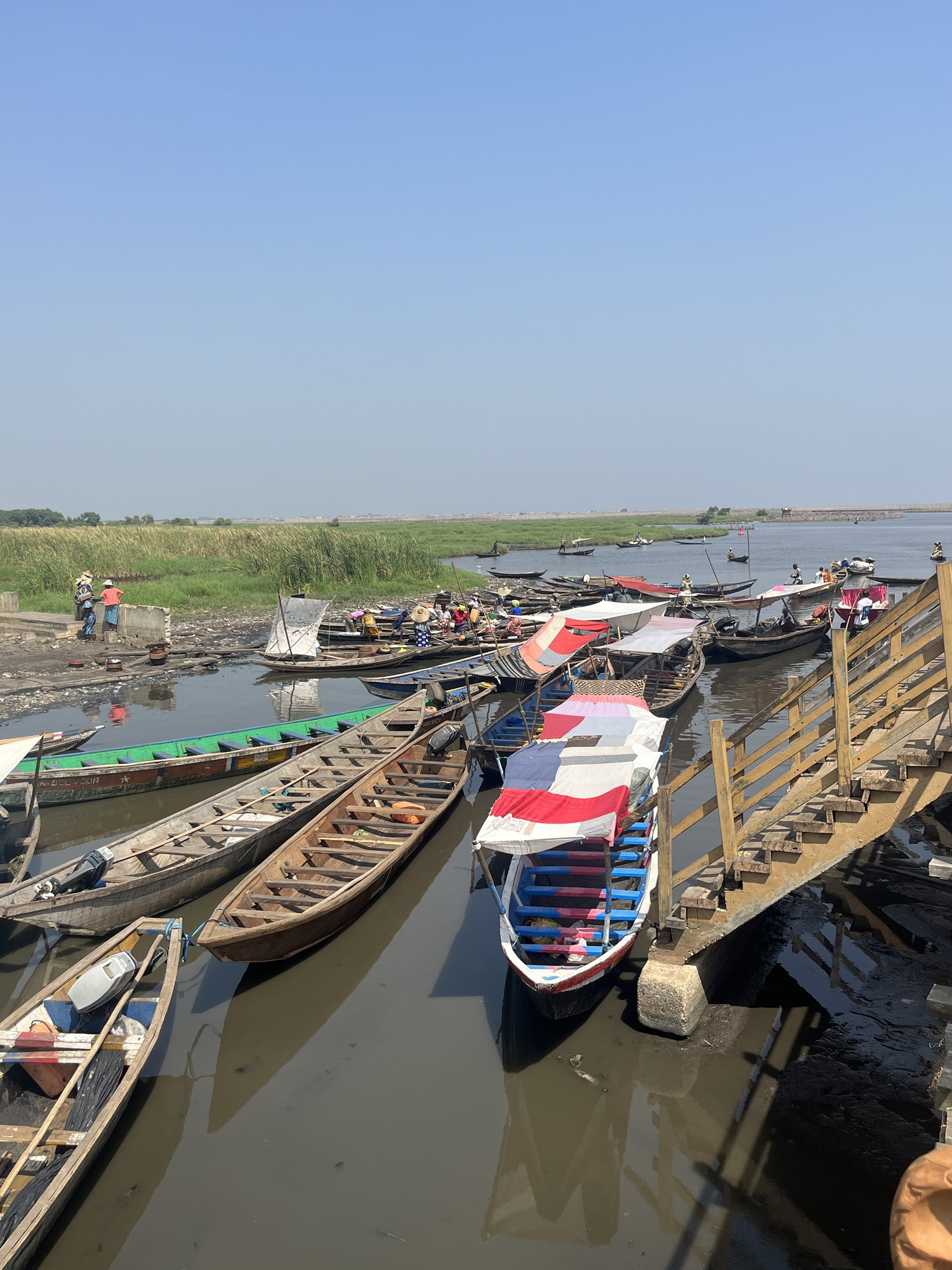
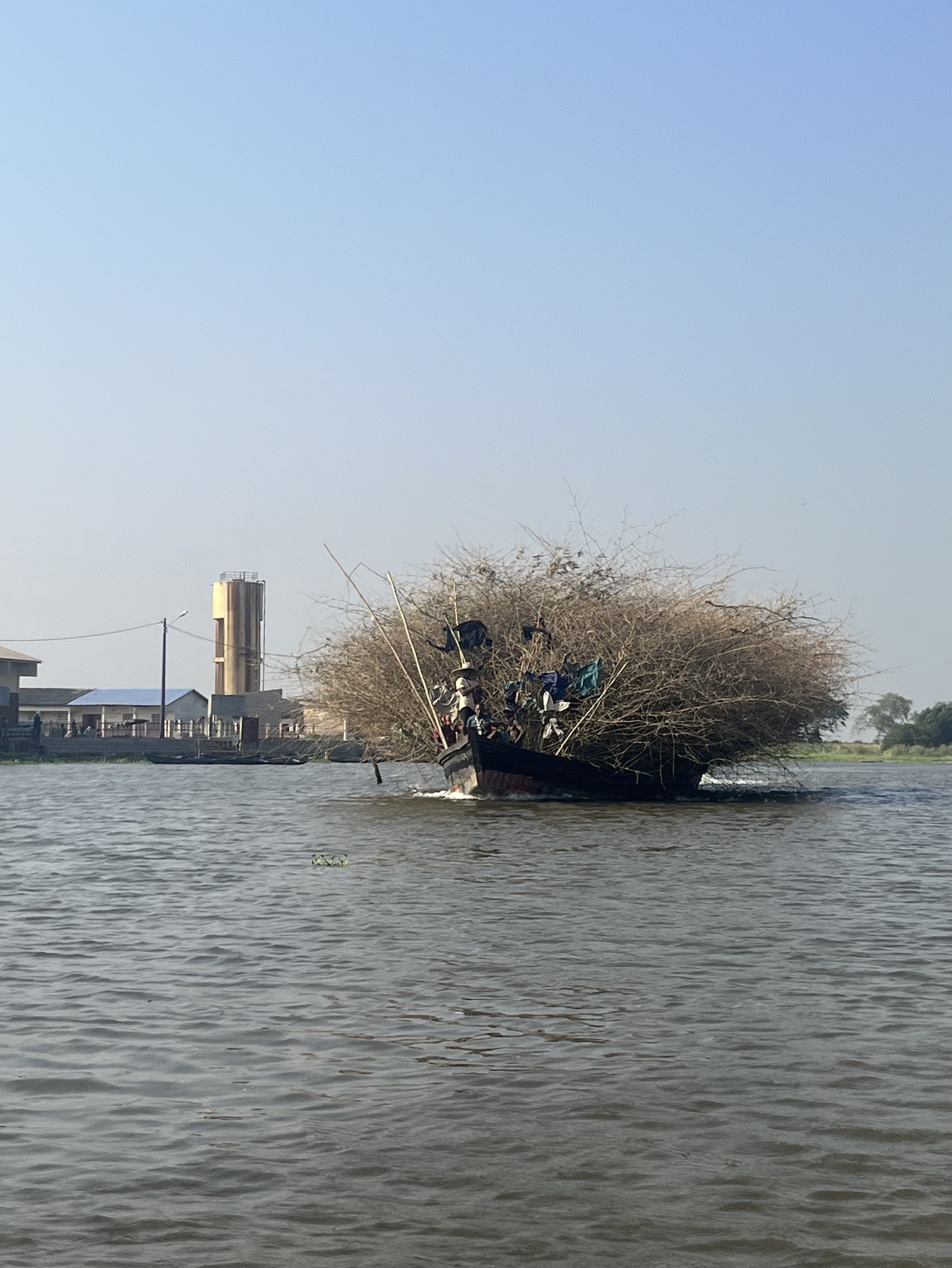
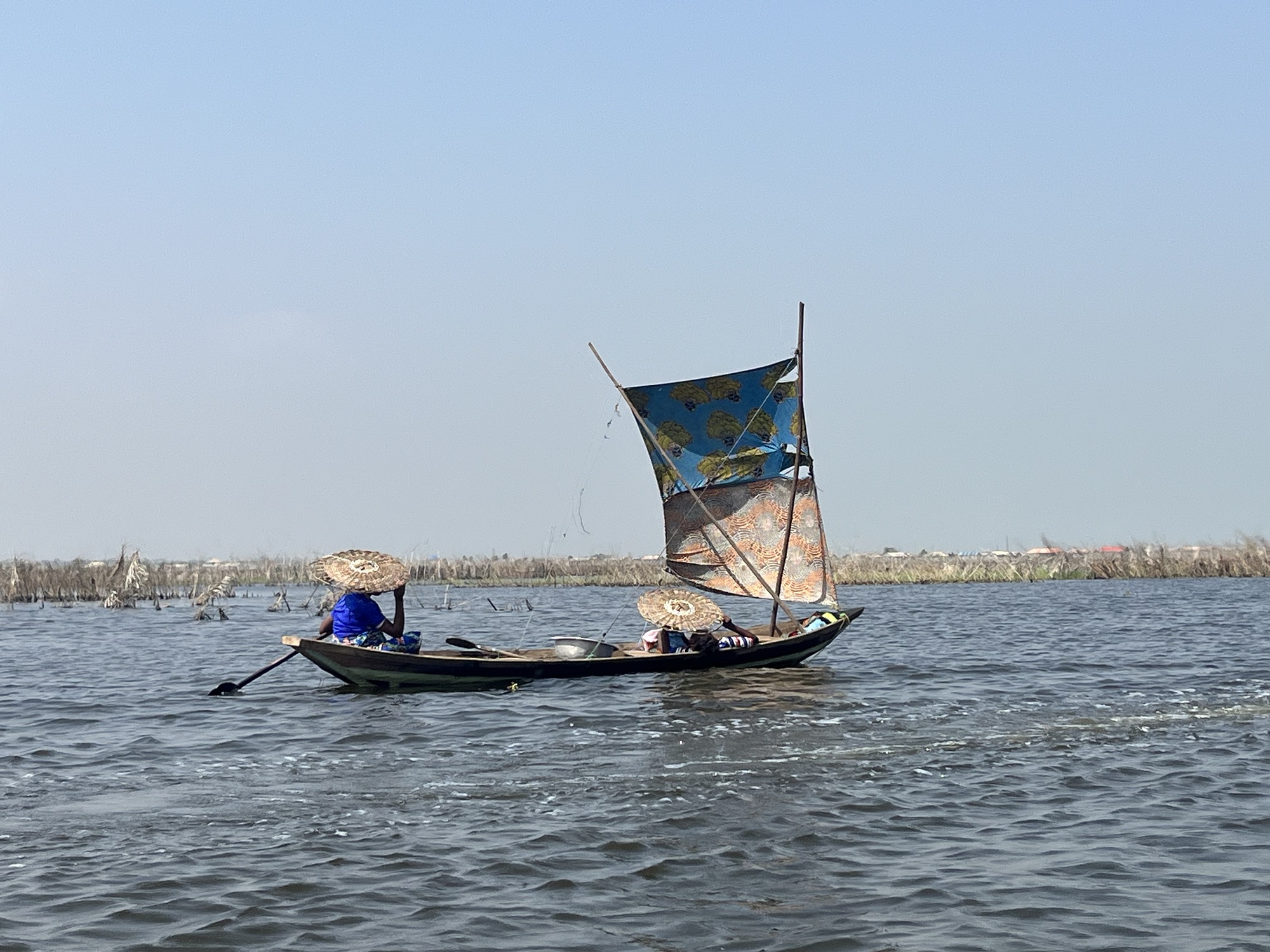
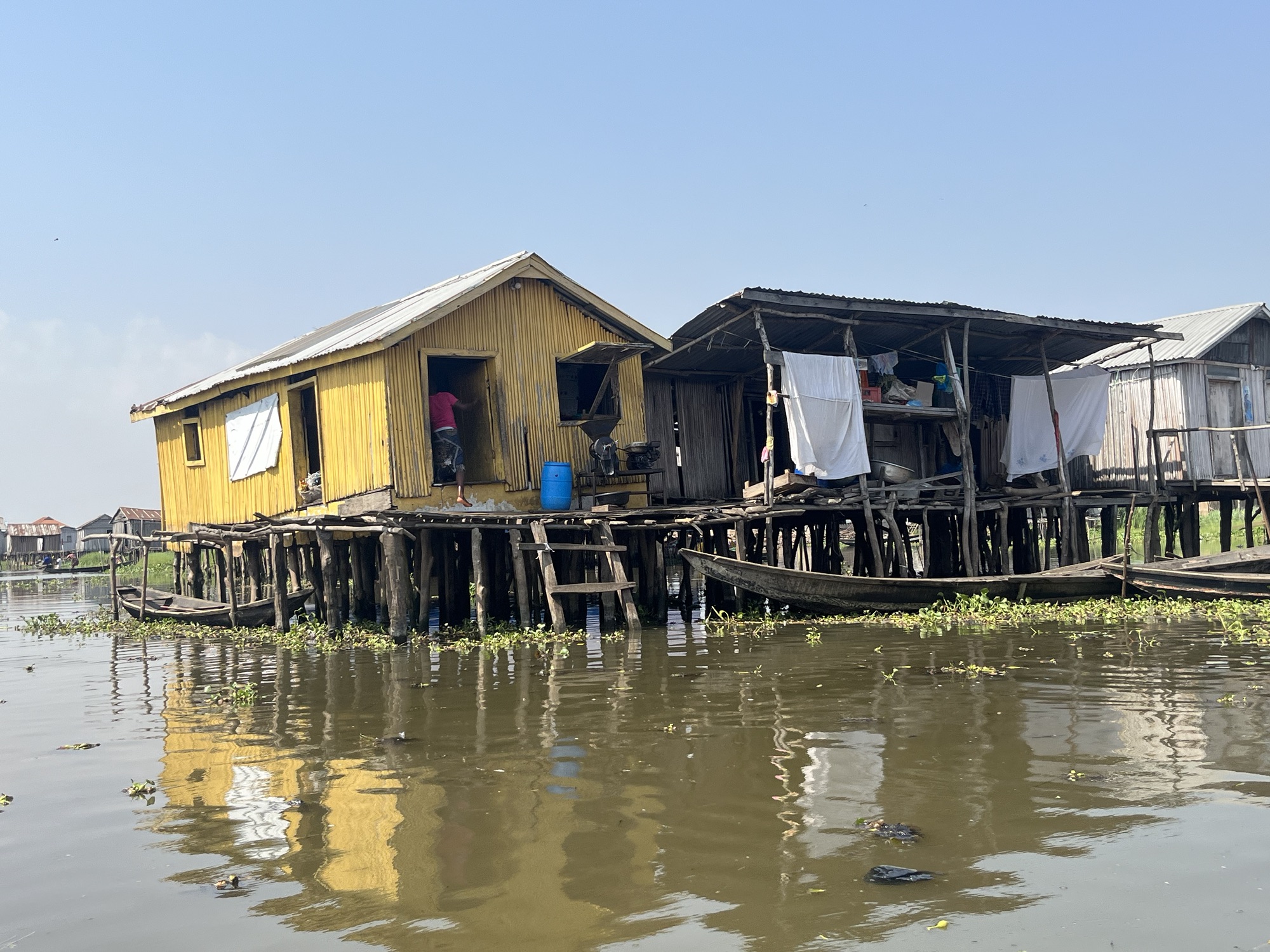
Ganvie sits on the northern shore of Lake Nokoue directly opposite Cotonou. We had visited a village on stilts in a lake back in Ghana, but Ganvie was next level. A town with a population between 20-30,000 depending on who you want to believe, it really is like a medieval Venice, and although touristy, it’s a much more delightful place to visit assuming you don’t care for grand European architecture. As you would expect from Africa, there is little sense to Ganvie in that it springs from the lake to form an apparently random network of waterways, stilt houses, and islands made from actual land. What is consistent is the form of travel. No cars. Only boats of varying sizes from one-man wooden dinghies with plastic bags for a sail, large dugout canoes powered by hand or outboard motors, all the way up to large barges that transport bulk goods. A short boat ride took us into the middle of it all and we found ourselves staying at a hostel on an island which was a little disappointing not to be staying directly over the water, but I doubt the experience changed much. For a second night running there was only a bucket shower available, and whatever went in the toilet you could hear going straight back out into the waterway that ran behind the bathroom. Assuming this is standard practice for the entire town, I struggle to comprehend why the waterways don’t resemble something more of an open sewer.

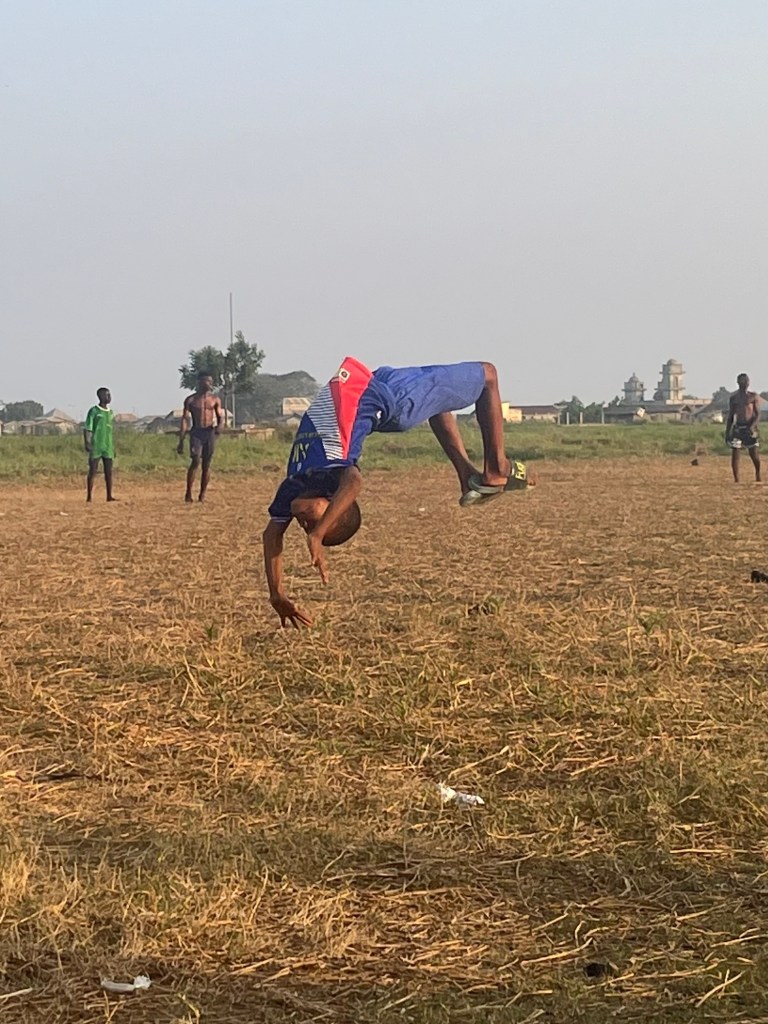
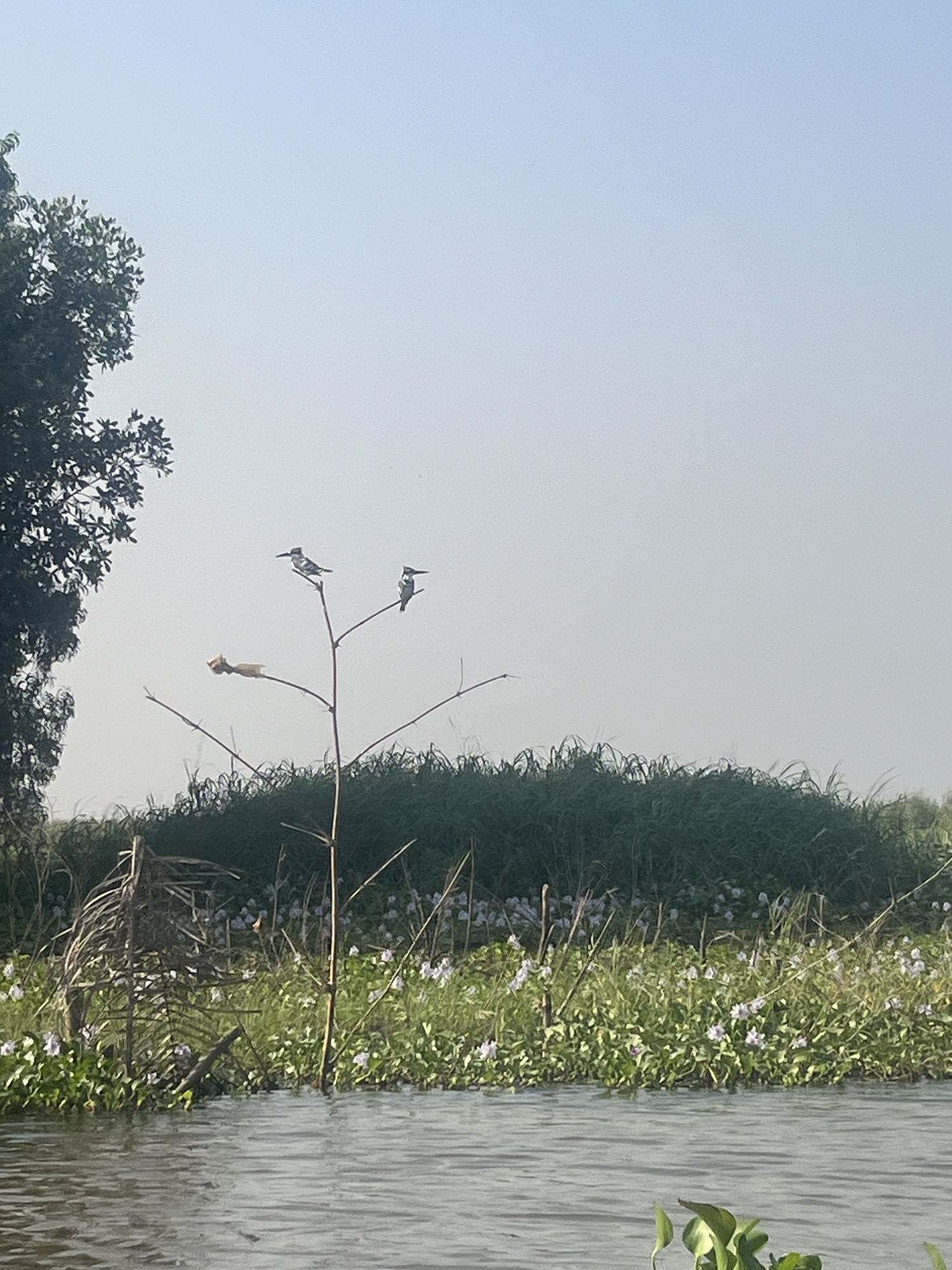
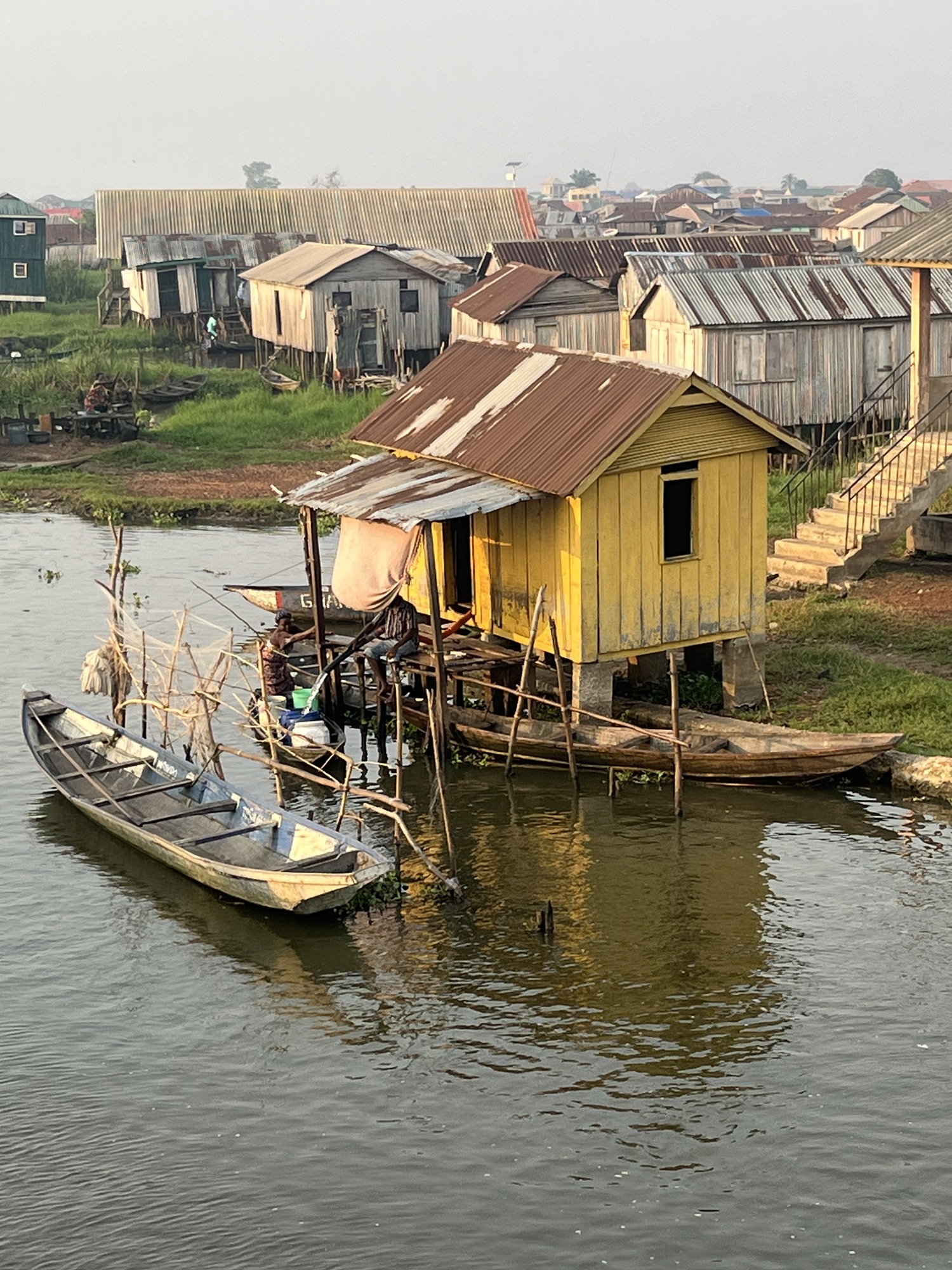
From the vantage point of a second-floor dining area, spectacular views of the town appeared and, I found it almost meditative to lean on a windowsill and watch the world go by. Opposite, women queued in wooden canoes stacked with blue and yellow plastic water drums of all sizes, waiting for them to be filled with fresh water delivered for a fee by a man with a pump and a hose. One woman standing in the canoe was bent over fastening lids to the full water containers while her baby held on precariously as it was almost staring into the lake upside down, not that the baby appeared to care in the slightest. There is a constant hum throughout, people everywhere passing each other on the water, children coming home from school, the freshwater station rapidly alternating between crowded and empty yet, the atmosphere is one of peace. As the afternoon wore on, we jumped back into the boat and headed out of town and along one of the waterways where kingfishers and swallows rested on the banks in large numbers. Our guide spotted some eagles and their nest high up in a tree and insisted we see them, driving the boat into a thicket of reeds. He jumped off the boat and, ignorant of our requests not to throw sticks at the tree, he did just that in an attempt to get the eagles to do something, but it was the eagles that had the last laugh. The sticks didn’t rouse them and, in a moment where nature tried to restore some balance, she refused to let the boat go free from the reeds without some effort. There is no sympathy for wildlife or animals of any kind in these parts as also noted the day before when a different guide threw rocks at a tree to scare the roosting bats into flight for our apparent amusement. The tour finished up with a local football match played in the setting sun on a football pitch that was bare earth in the middle and thick grass in the corners. This is an African peculiarity. It would take very little effort to slash back the overgrown grass in the corners of the football pitch, especially considering there are 22 people available to do so. Instead, they don’t. Time can’t be a factor as there is always time to play football. A cutting machine can’t be a problem because there are machetes everywhere. It can’t really be laziness because they run around the rest of the football pitch like Usain Bolt on a sugar rush.
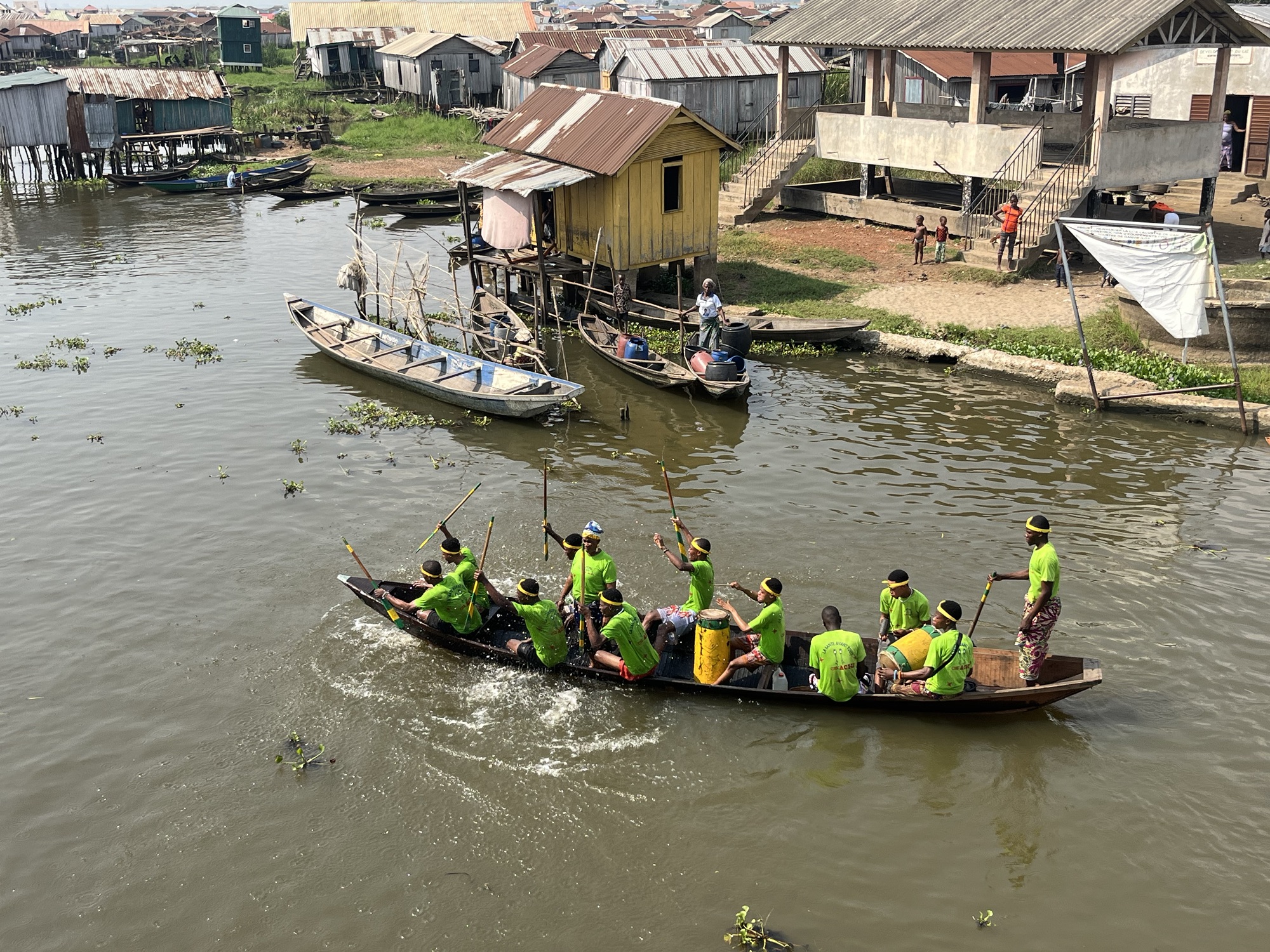
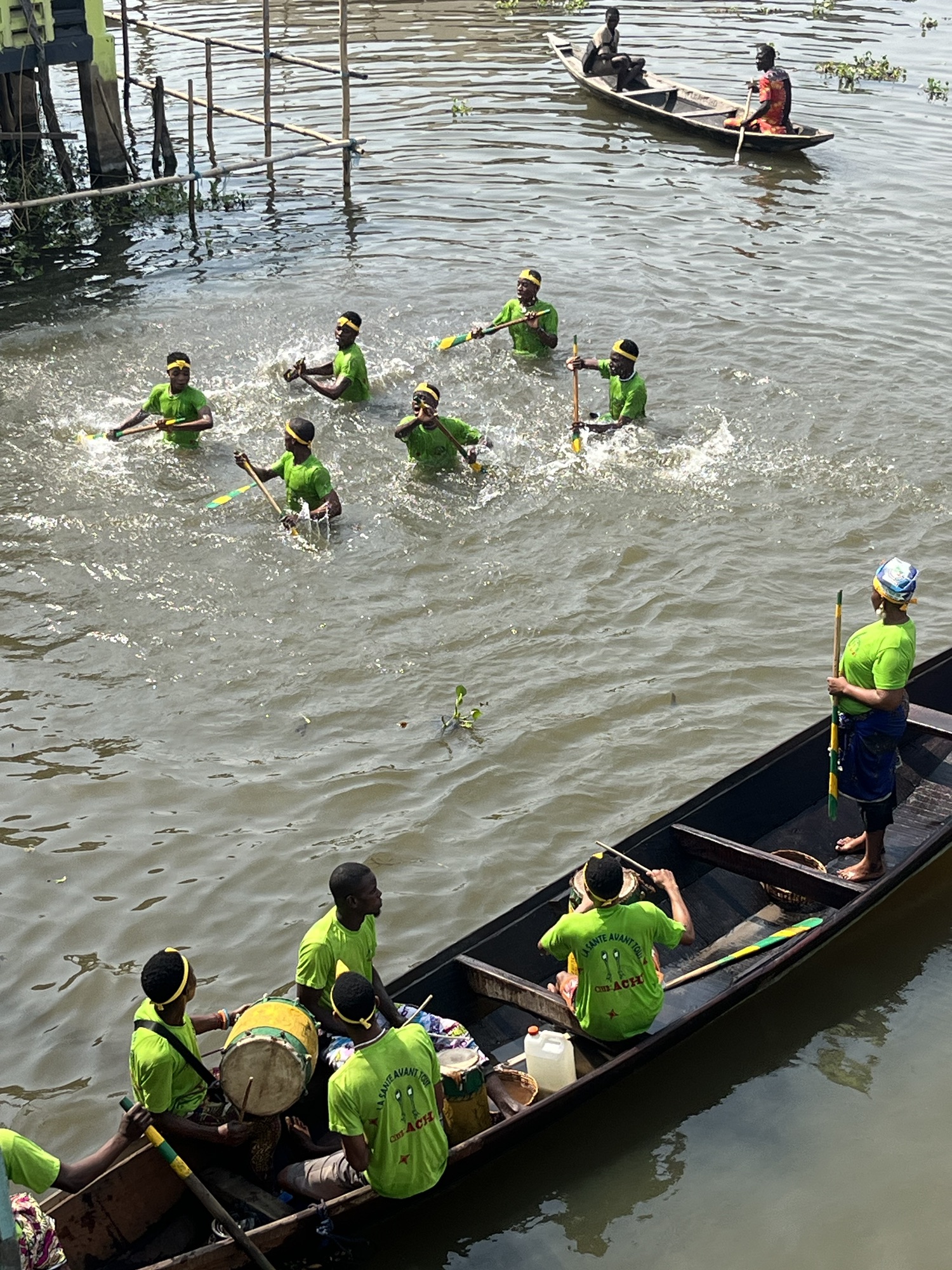
Our time in Ganvie was unfortunately short-lived. Despite the heat and me stinking of ingrained three-day old sweat, I had slept for a solid 10 hours which was incredibly welcome. I spent my last few hours in Ganvie reading and writing until I was prompted to the windowsill by the beating rhythm of drums. Down the river came a long narrow boat full of gents dressed in green, playing drums, chanting, and waving their paddles around in all manner of different ways. Was this normal? They edged closer to our hostel, the spectacle ever rising in energy and volume. The majority then exited the boat, standing waist deep in the murky water performing some kind of synchronised paddle slapping of the water. Of course, this was for tourists. Not us, we obviously had the basic package, but for richer looking tourists than ourselves who stood on the bank, some looking on in pure delight, others as though they were about to be attacked; the latter a little like me watching cultural dancing I suppose. I wished it had been a random local event if only to displace some of my pessimism but, I boarded our boat back to the mainland grateful to have spent a wonderful 24 hours in such a unique community and environment.
25th January 2024

 Trig Tales