Abomey to Kande – Benin & Togo
Landing back on the mainland after our visit to Ganvie we immediately launched into a food shop at the local market sprawled along the shore. The markets nearly always look great, that is until you need something that isn’t one of the only 10 fresh food items available between every stall, such is life without corporate, money-grabbing, agriculturally destructive supermarkets. What is bizarre is the lack of bread in Togo and Benin. With French speaking countries it is basically guaranteed that there will be good bread everywhere but not so in these countries. Whether this is a cultural thing or purely availability of raw ingredients is yet to be understood. Local markets always throw up something of interest and on this occasion a young woman was sound asleep, draped over a table, her head cushioned on her crossed arms, her young baby equally fast asleep slumped on its mothers back, arms and legs flopped to the sides like a chetah on a tree branch, yet securely attached with that magical piece of colourful cloth worn by the majority of West African mothers. Not that I would perceive sleeping as high risk, but risk is a relative concept and in this part of the world where hazards of unlimited number reside, people ironically don’t appear to stress quite so much. Take the rare heavy rain shower we experienced while on the road. A village we passed had rivers of black running through them, purging the narrow streets of accumulated filth. Also running through the rivers were children splashing around and having a wonderful time. Meanwhile, the roads in Benin are fantastic. They are fairly new and – a new observation for the region – don’t have endless roadblocks. The consequence of this is a dramatic increase in the number of car and truck wrecks by the side of the road. Several times we have passed pairs of articulated trucks that appear to have been in a head-on collision with each other. On one occasion a truck’s cab was smashed to smithereens while a second truck lay on its side in a ditch. We passed one incident where a truck had driven headfirst into someone’s house. The roads may have improved, but the roadworthiness of the trucks has not, which is proving to be a lethal combination. In-between all the wrecks there would be a steady stream of trucks broken down by the side of the road, some undergoing a complete engine change, others receiving whole new axles.

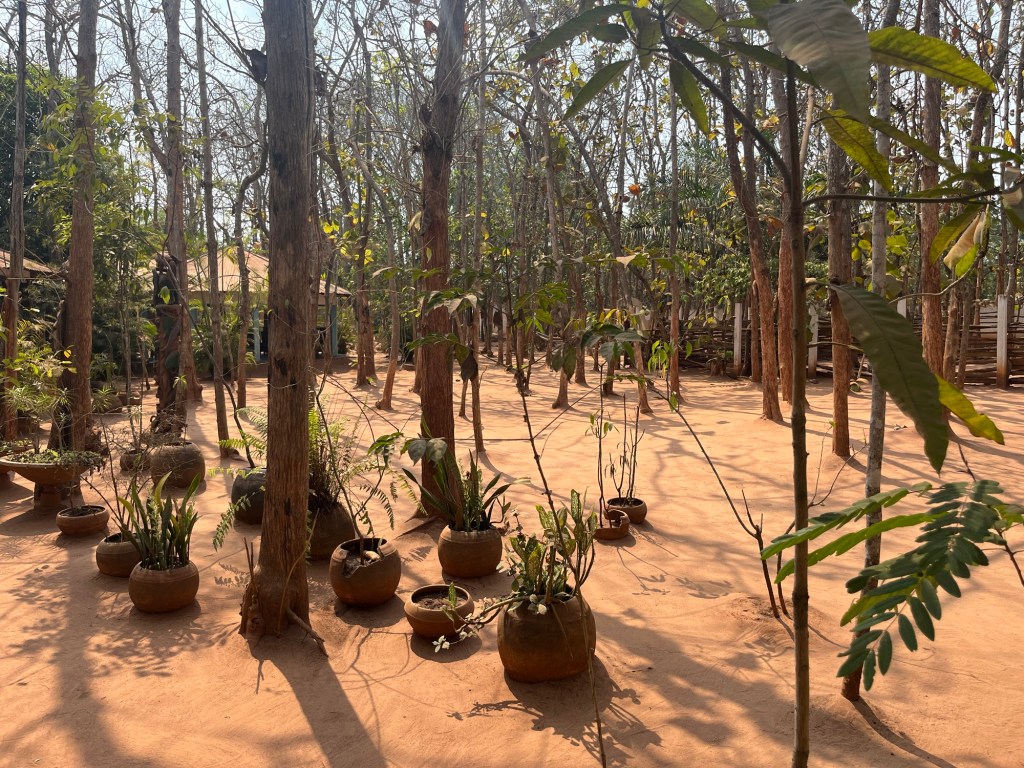
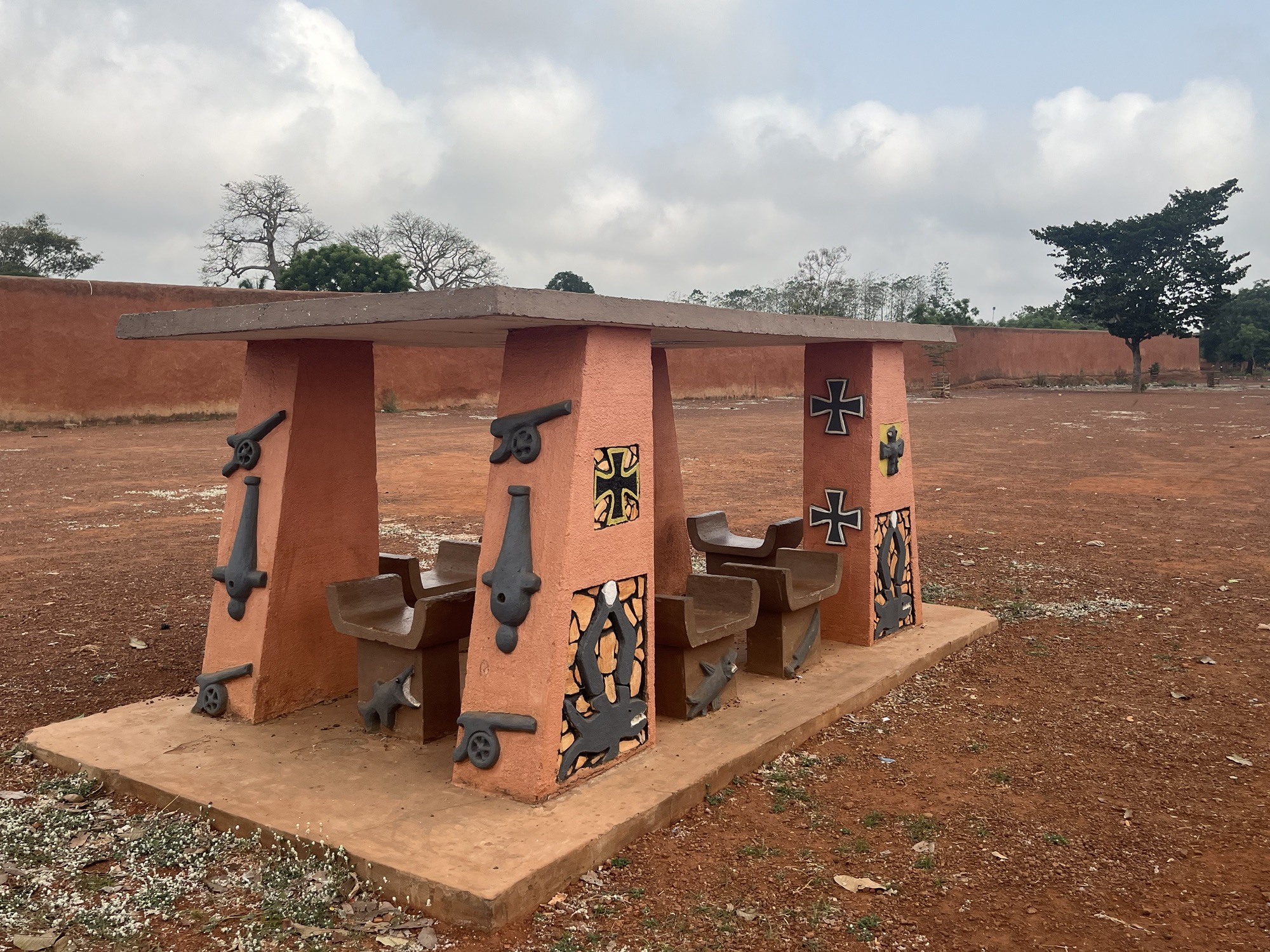
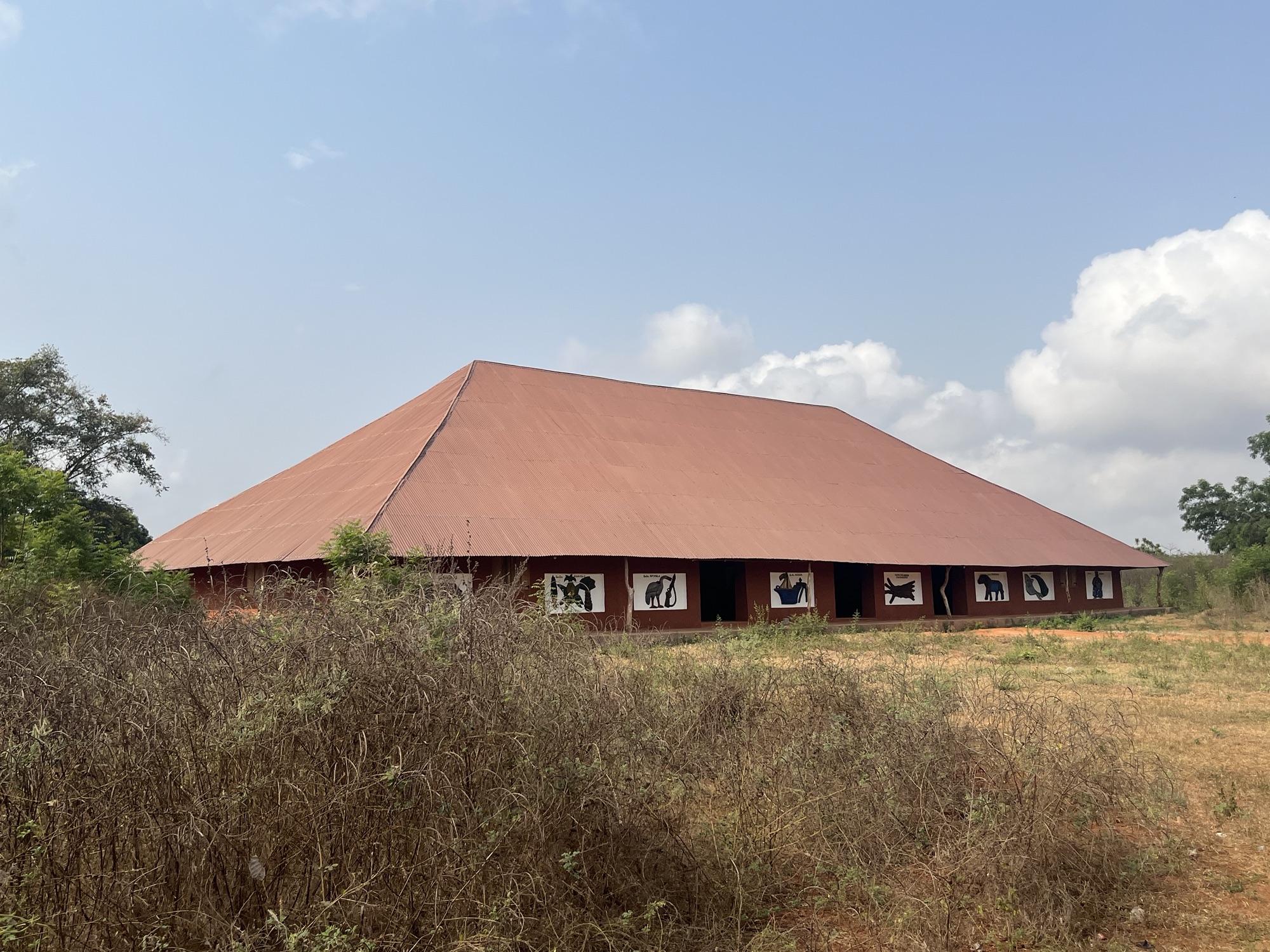
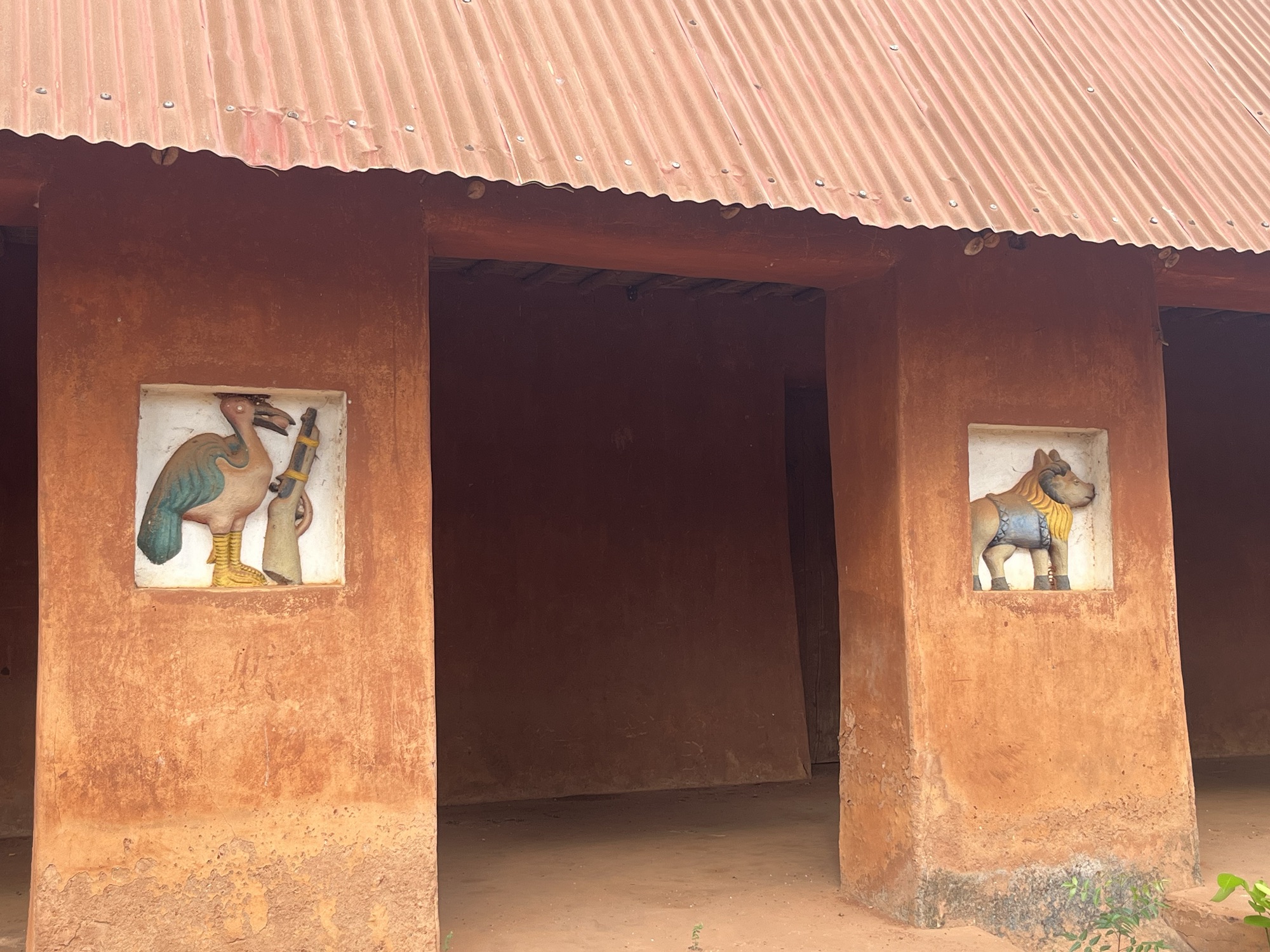
Abomey is the centre of the old Kingdom of Dahomey dating back only a few centuries but renowned as the birthplace of Voodoo. The town is like everywhere else we have been in Benin, peaceful, friendly, and relaxed. Our campsite fitted the history of its location nicely with an arrangement of trees and large, carved wooden figurines interspersed throughout the orange-red dusty soil and buildings. All that was lacking was some spooky coastal mist. Oh, and water. I was now on three nights without a proper shower, a pool, an ocean, or anywhere sufficiently wet. We had a whole day in Abomey, but a full morning was all it took before a lot of us lost interest. We visited a few old palaces, not quite old enough to be interesting, but neither were they renovated to a standard that was stimulating. Apparently UNESCO money isn’t quite so forthcoming. An experience that I definitely won’t be rushing to repeat was a visit to a fetish market. Fetish markets are part of the Voodoo religion, a one-stop-shop for all the ingredients required to make magic charms and potions to heal, curse, and protect. Unfortunately for the local wildlife the ingredients are anything non-human that moves. Lucky critters will be long dead when purchased at the market and include the dry, puffed-up corpses of monkeys, horse heads, bats, birds, snakes, pangolin, crocodile, you name it, it’s likely to be there. Unlucky critters still alive included chickens, pigeons, a monkey tied to a post, and a cage full of kittens accompanied with giant snails for some reason. A goat was trussed alive before being hauled off upside down on a motorbike. The latter isn’t so uncommon around the world, but its bleating along with the crying sounds of other desperate animals, and the entrenched smell of death and decay made for a very depressing environment. Literally a house of horrors for animals, ironically used in the belief that it eases the suffering of humans. The highlight of the whole morning was travelling in convoy to our various stops on the back of motorbikes. A second highlight was finally finding freshly made baguettes and, a final highlight was getting to have not one, but two showers.
Originally the trip was supposed to continue north and into Burkina Faso, a country now red listed by the FCDO due to military coups and terrorism. Unfortunately, that instability is flowing over the border preventing us from safely visiting north Benin. This is a real shame as I have enjoyed Benin greatly and I would love to start travelling up and around the Sahel region. We therefore crossed back into Togo and spent a night in a convent, a fact I include merely for a bathroom story. As ever when camping, I needed to get up for a pee in the middle of the night. We were in a huge open space with trees and a large perimeter wall which was a perfect place for a pee, but I chickened out, afraid that people in the tents nearby would hear me tinkle. After arriving to the wall, I turned back through the crunching leaves and stones under my flip-flops thus likely waking everyone and, made the five-minute walk past the sleeping security guards and onto the toilet block. It was an unnecessarily long walk. Maybe I won’t care about such things when I pass 40?
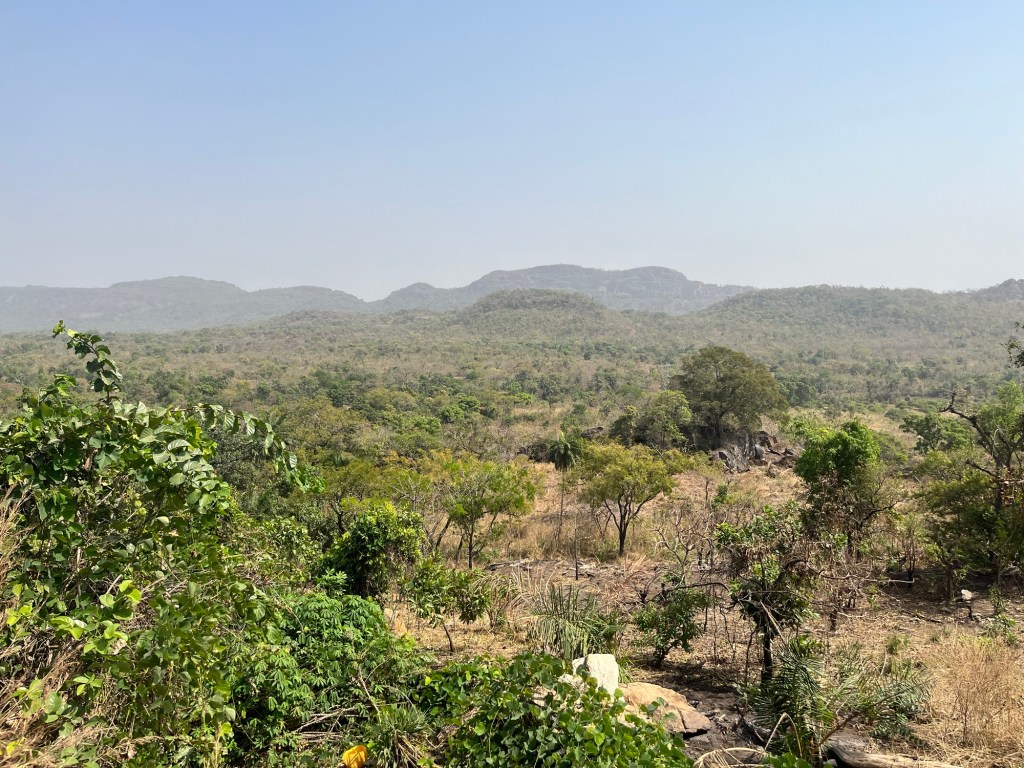
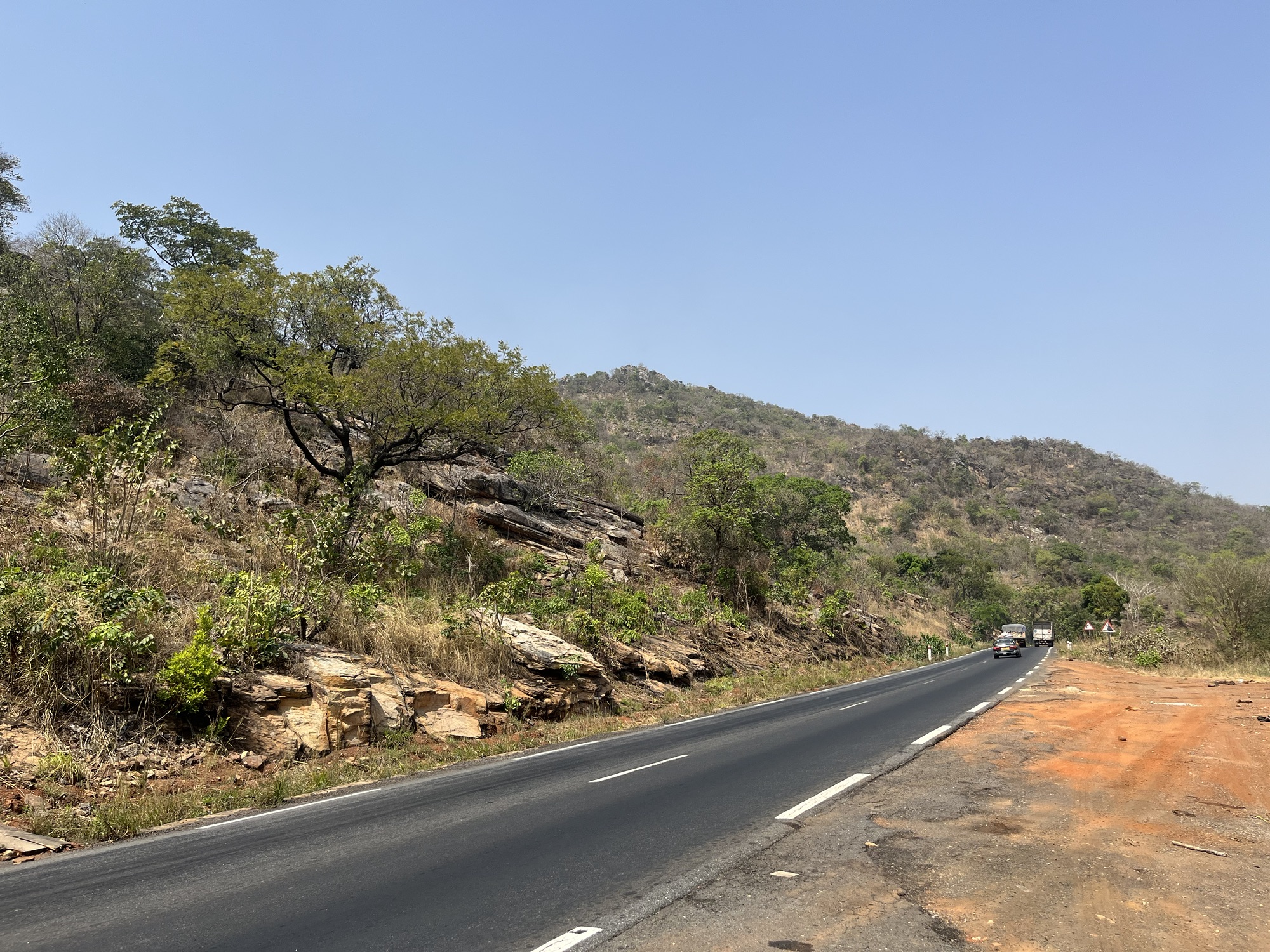
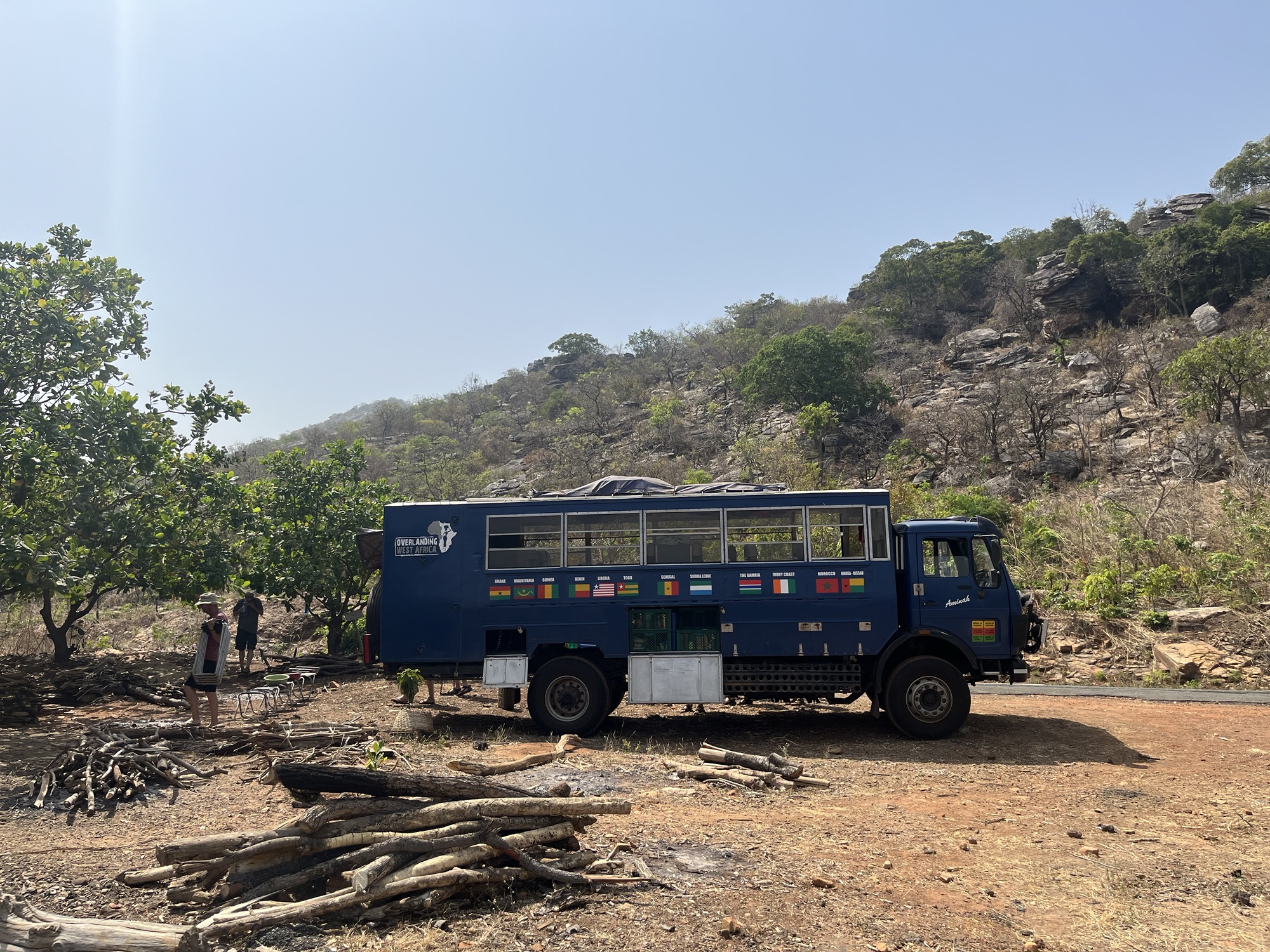
The northern half of Togo is one of the most beautiful regions we have driven through during my entire time in West Africa. Since leaving the coast, every mile north towards the influence of the Sahara Desert the ground becomes dustier and littered with dead leaves dropped from trees in an effort to save water, shade provides some respite from the heat as the humidity falls and, headscarves and mosques increasingly dominate. In fact, mosques in these northern parts of Togo are as numerous as coffee shops in the UK. Unfortunately, hotels and campsites are not so numerous, prompting us to give up the tents for a night and bed share in rooms with once again intermittent water. The kind of place where they open cans of condensed milk at breakfast with the pointy end of an ordinary kitchen knife. There is never a good time travelling for the guts to give up, but I woke up after our first night in Kande with several explosive warning shots that everything was probably not okay; not good when there may or may not be water available. I ate breakfast, propped myself up with Imodium and felt mildly confident enough to head out on our planned visit.
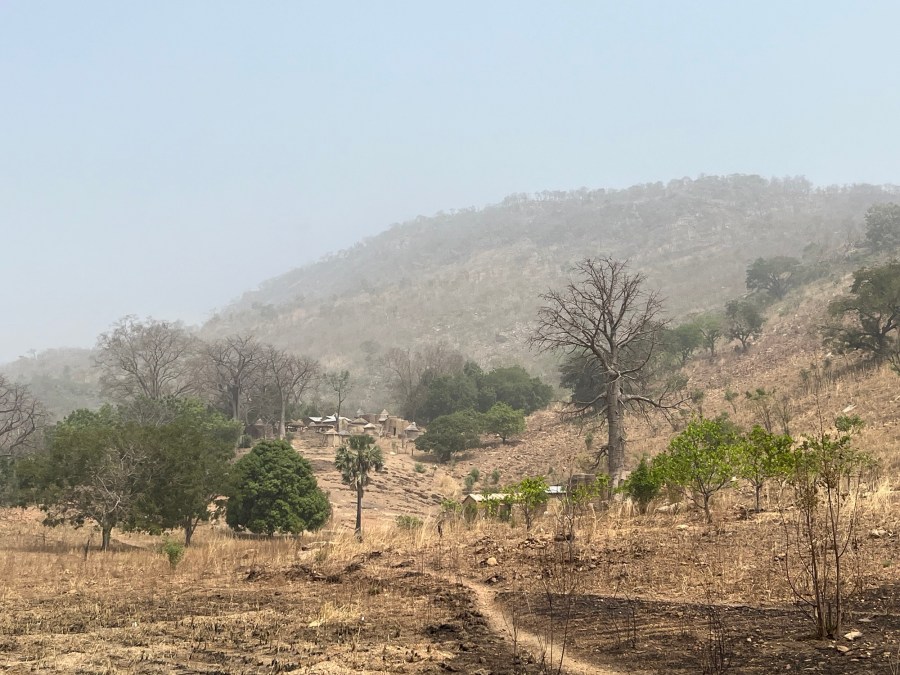
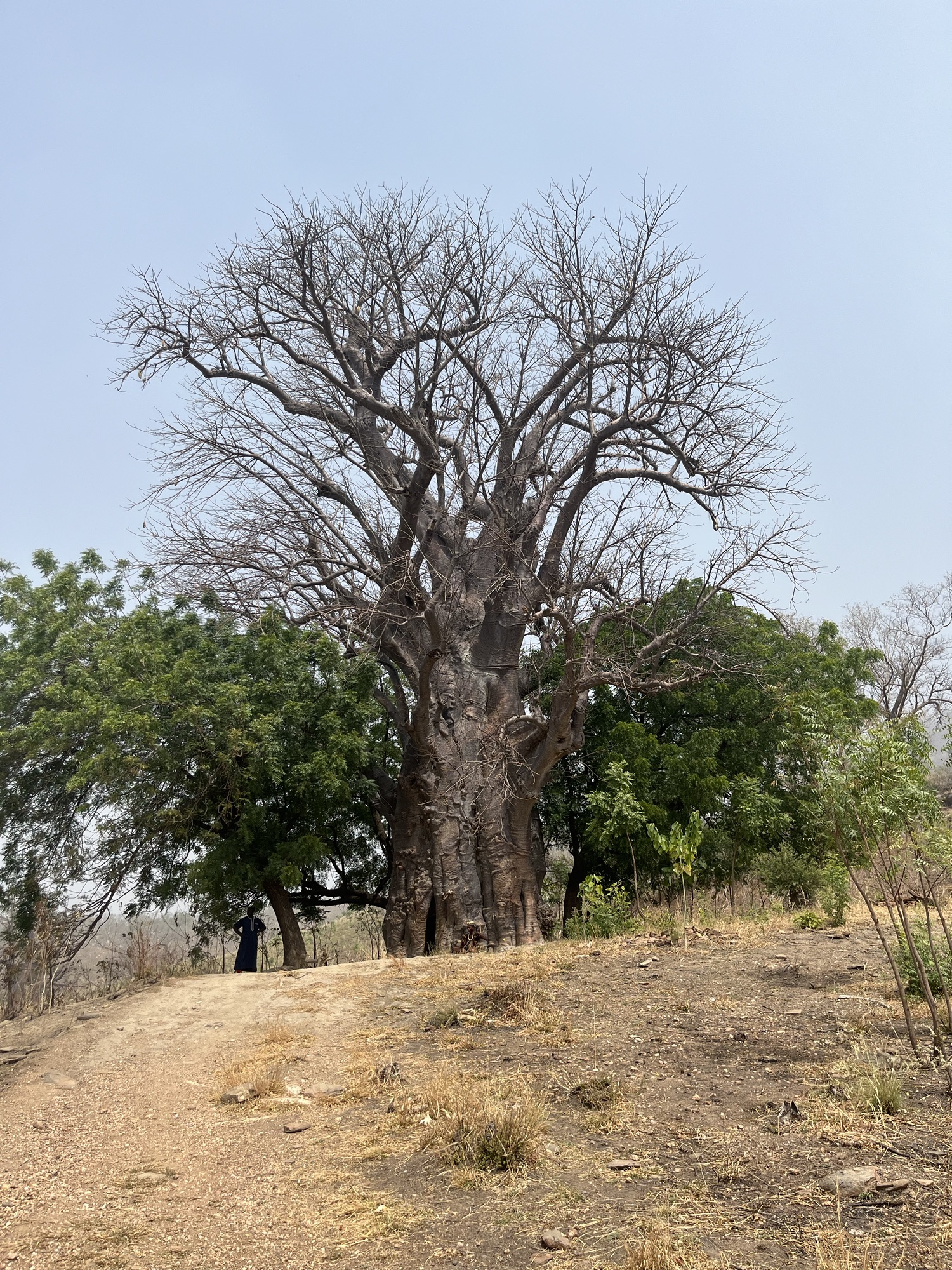
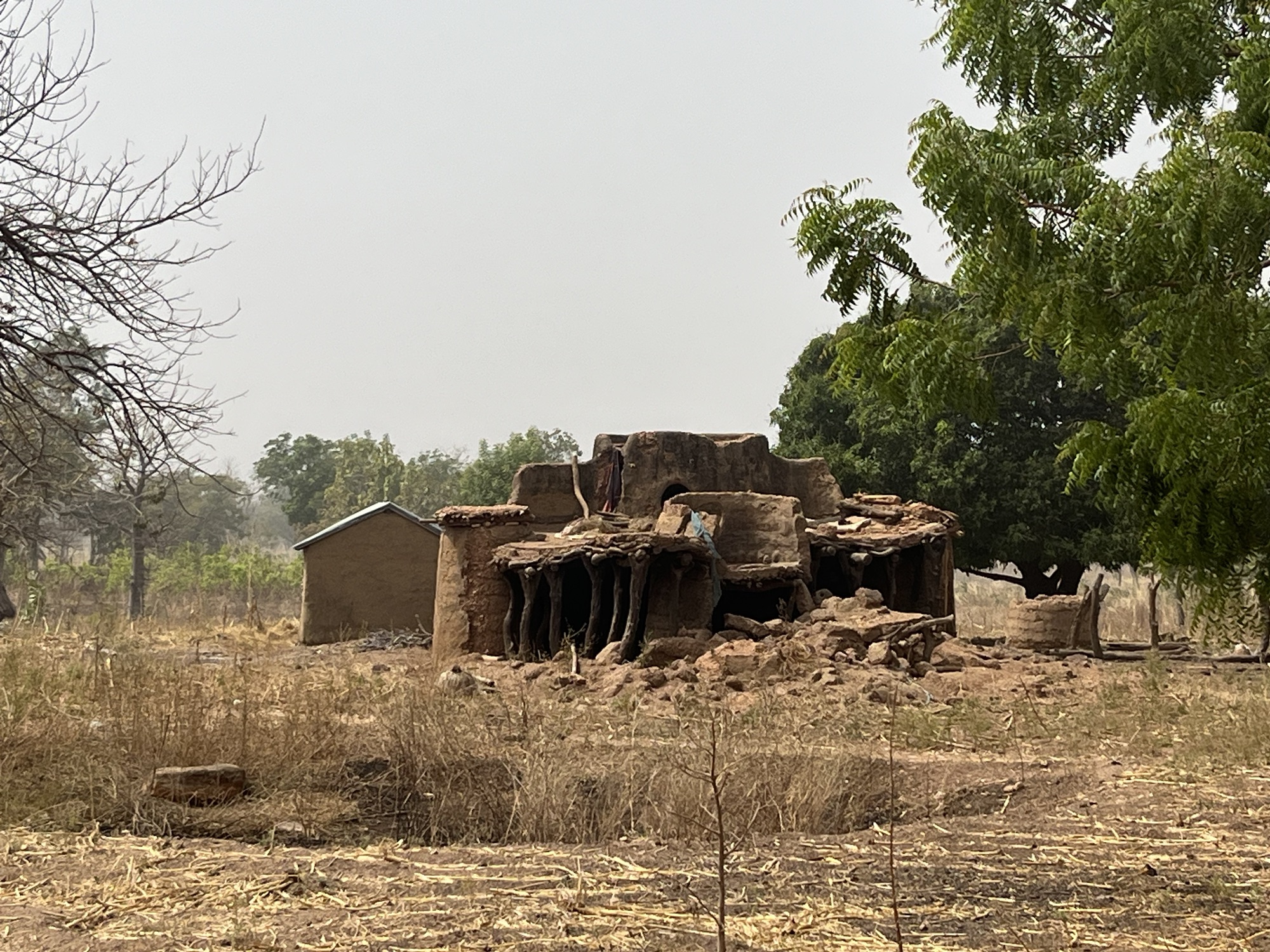
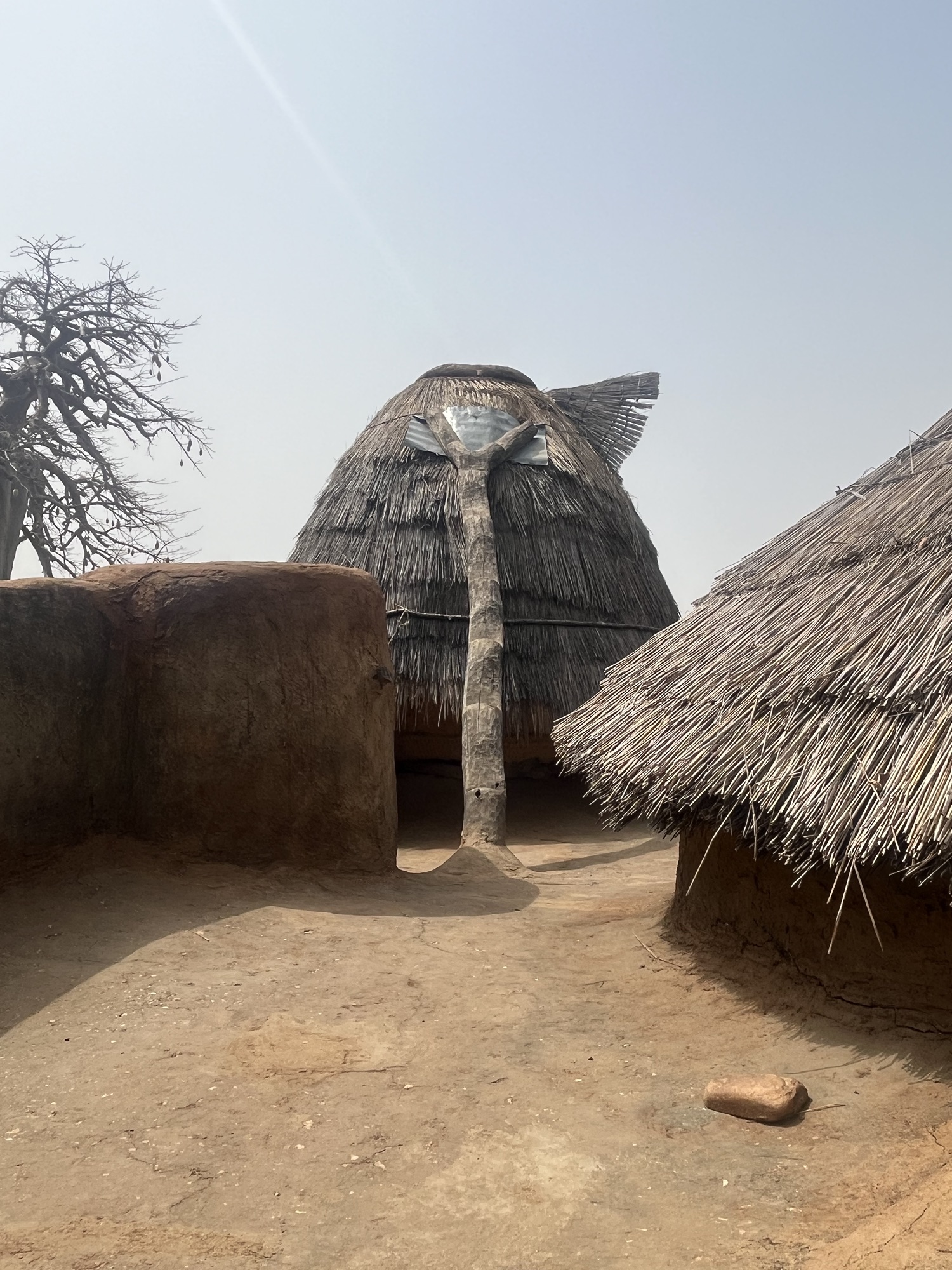
Outside of Kande, in the harsh countryside, there are numerous villages popular with tourists for the unique castle-like appearance of their homes. The area we visited was predictably a UNESCO World Heritage Site where yet again they had remembered to send a sign but apparently little else. We collected a guide and headed to a collection of standard-looking buildings all made from mud, some with thatched roofs, some with tin roofs. The buildings we had come to see were largely in a state of disrepair except for one that had been preserved for us, the tourists. Essentially a fortified home, families used to live in these spaces where they could protect themselves and their livestock from attackers. The one we perused had a flat roof with tiny chambers on top where people would sleep. A small tower with a conical straw roof also featured, not for defence, but as a grain store where its contents could be kept high and dry and away from vermin. They were smart constructions, and it was sad to see them mostly decaying amongst the large boab trees. Yet again it would have been a wonderful place to spend 24 hours and go off hiking in the surrounding hills, but this wasn’t the way. Instead, we were badgered by the locals to buy as much of their tat as possible. When we did buy, they continued to push for more, following us everywhere as we tried to enjoy the guided walk. They were desperately poor, malnourished pot-bellied children ran about playing while the men lounged under the shade of a boab, and the women pushed the hard sell. There was an air of melancholy about the place and I left feeling frustrated for being hounded so much despite parting with my money and knowing they had little. Clearly UNESCO is failing, and more money needs to be directed to these communities that provide education and jobs in both sustainable tourism and agriculture. A UNESCO sign does nothing.

It didn’t help that I wasn’t feeling my best. We returned to the hotel where I skipped lunch and went to sleep for two hours. I woke up feeling marginally better, read, wrote, drank as much water as possible, skipped dinner, and went to bed around 8.30pm having successfully avoided alcohol for the entire day, probably for only the second time in two months. I say I went to bed, but I was again sleeping on the floor. This wouldn’t have been a problem except for the medium-sized spider on the wall that looked like it had been ran over and moved like a crab. I failed to catch him. Then, during that commotion, the light bulb blew out leaving me only with the light from the bathroom and its sporadic water supply. It was like living a mild horror movie when all I wanted to do was crash and wake up eight to nine hours later feeling fresh as a daisy, which, in the end, is exactly what I did.
29th January 2024



 Trig Tales