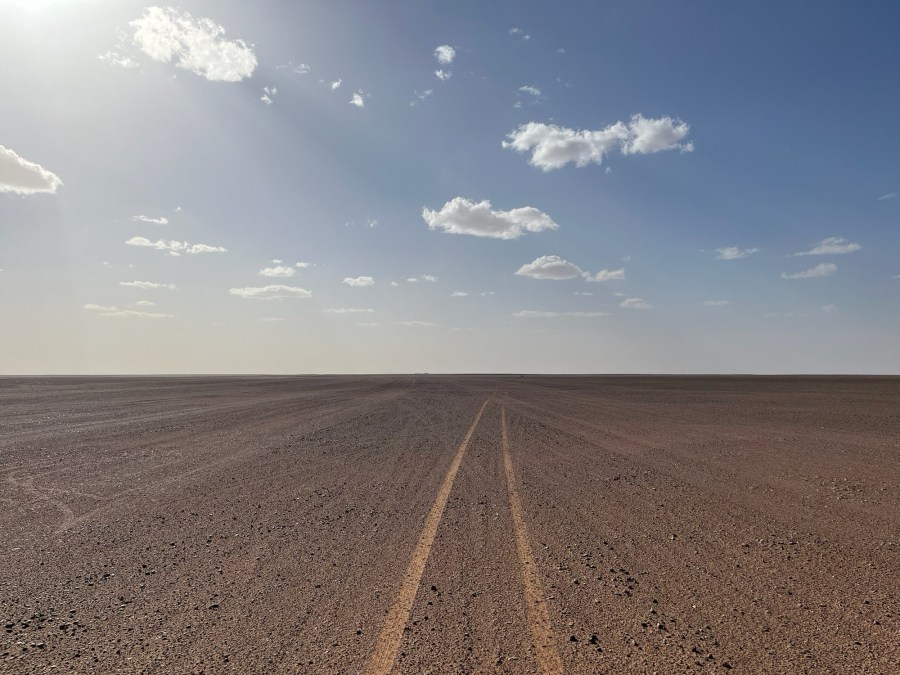
Algiers to Adrar – Algeria
Algeria has always been one of those massive countries on the map that bizarrely very few people know anything about; it’s certainly never spoke of by fellow travellers. Morocco is a buzzing tourist destination, all the egomaniacs want to go to war-torn Libya, few these days (and rightly so) dare venture into the Sahelian countries of Mali and Niger that border Algeria’s southern flank. However, check out the FCDO website as I’m sure many of us love to do on the weekends and the UK government designate the whole of Algeria as a wonderfully safe place to visit, so why don’t we? Well, I don’t think the Algerian’s quite know themselves. There is some tourism on specialist tours and the likes, but it’s not until one actually steps inside the country that everything starts to become a little clearer, especially if the visitor has some understanding of the country’s history. I do, because I read a book once. I have also been granted a multiple entry business visa as the company I work for intend to build one of the world’s largest dairy farms in the middle of Algeria. Therefore, this could be one of my finest pieces of literature, devoid of rambling passages about over tourism, idiot tourists, and the West’s complete political incompetence regarding the rest of the world. Actually, the final point may not stand.

It became immediately clear that visiting Algeria for work was going to be little different than visiting as a tourist. Simply put, this is a traditionally closed country, one controlled by the police, one that has had a bloody past with its French colonial masters who were determined to hold onto Algeria almost longer than any other of their worldly possessions. Before then it was the Arabs sweeping across North Africa upsetting the status quo of all those that had lived in the area beforehand, and still do. In Algiers it’s tricky to know if you welcome people in French or Arabic, in the south it’s tricky to know whether to welcome people in Arabic, French, or the local language that not even our Algerian contacts seem completely sure of. Algiers is a mix of French architecture and Soviet drivel with a bloody huge mosque, the largest outside of Mecca and Medina, and with the tallest minaret in the world standing at 265 metres. Head south to the town of Adrar, a provincial capital, and it’s like anywhere else in Africa. A town of decaying red mud and brick, littered and dusty, baked relentlessly by the Saharan sun, I love it. Of course I do, but there’s good reason. Adrar has a clear identity, ironically driven by 1,300 years of various colonial misdemeanours, yet it still looks where it belongs, as though a resident of the area 2,000 years ago could pop round today and still feel the same familiarity of an oasis settlement. Algiers is confusing, it has no clear identity. Some of the more progressive among us may welcome this but not me, I’m old school, I travel in order to see all manner of differing cultural identities that clearly define why a place should be visited. One could argue that Algiers has a melting pot of cultures but that is wrong, largely driven by the mass exodus of Europeans upon independence and a nasty civil war in the 1990s, although it is pertinent to say that the country is beginning to dip its toe into the waters of the international community. The only thing of note that does make Algiers unique is that you will find zero international brands in the shops, no McDonalds, definitely no Haribo Starmix, not necessarily a bad thing if visiting, quite another if asked to reside there.
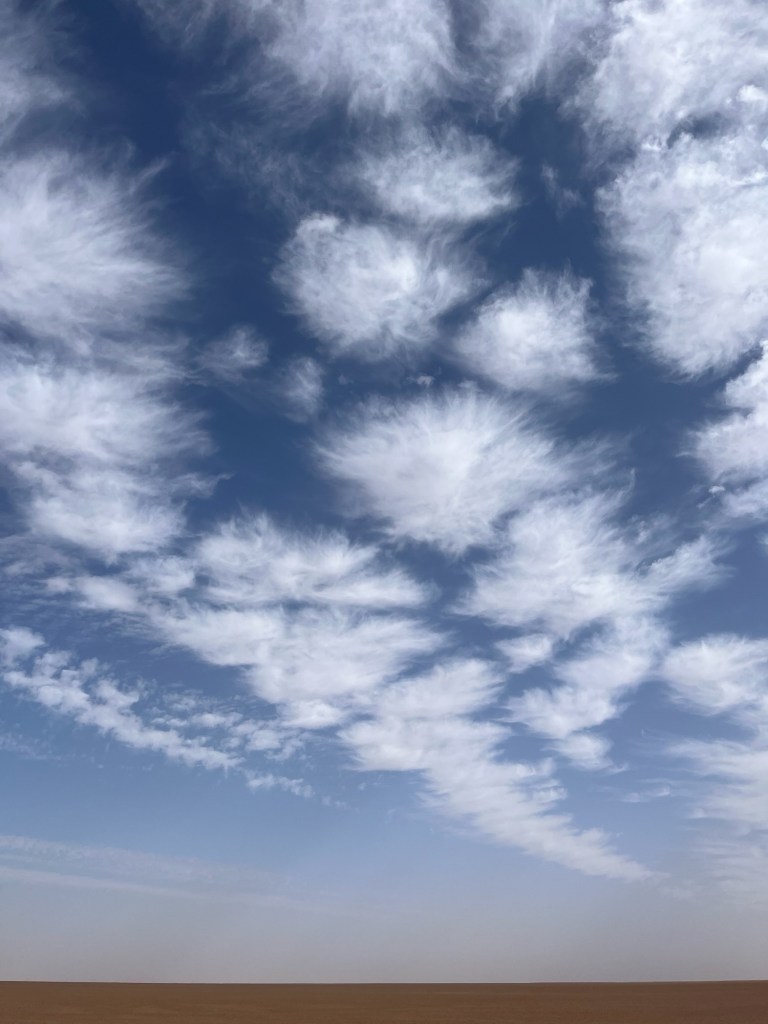
Adrar is the potential base for the project I am working on. To get there from Algiers requires a two-and-a-half-hour flight. Check-in was curious. People just loitered in groups around the desks but with no particular desire to use them. They looked like they might be wanting to, but for some reason reluctant, like me lingering around a hot girl at a bar. Not being a local, our fixer led us straight to the check-in desk and everything followed as per usual, well, except for security. We had our bags scanned on entering the airport. Regardless of the fact it was an internal flight we had forms to fill and passports to be inspected before going to Departures. Before entering here, we had to go through security again. A cat casually strolled past waiting passengers. When finally boarding the plane, our passport and ticket was checked twice again by the police, either side of my bag getting blasted with radiation one more time. The flight wasn’t fun simply because it was 11pm, I’d been travelling since 8am, I would start work the following 8am, and my considerably shorter work colleague was sat in an emergency exit seat while I’m wedged between two locals, albeit very pleasant locals. In one of the most extraordinary things I have ever seen, ever, is the discipline of local Algerians upon landing and taxiing to the airport terminal. Everyone remained in their seats until the seatbelt light went out. There is surely no other country in Africa or the Middle East whose people exhibit such patience on an aircraft. On arrival to Adrar we exited the plane and everyone pushed through a narrow door waving identity papers at plain clothed men, one of which took my passport with a smile and ushered me into the baggage area. Luckily the bag turned up, our driver was waiting for us, and we left the airport after one last bag scanner. No idea where my passport was, I made a mental note to remind myself not to keep doing these things without question while travelling. We drove into town with a police escort following close behind us, blue lights flashing in the dead of night. It makes no sense, if it’s dangerous down here we’re now lit up like a German Christmas market. It doesn’t feel dangerous, it never has, just remote, lonely, and beautiful.
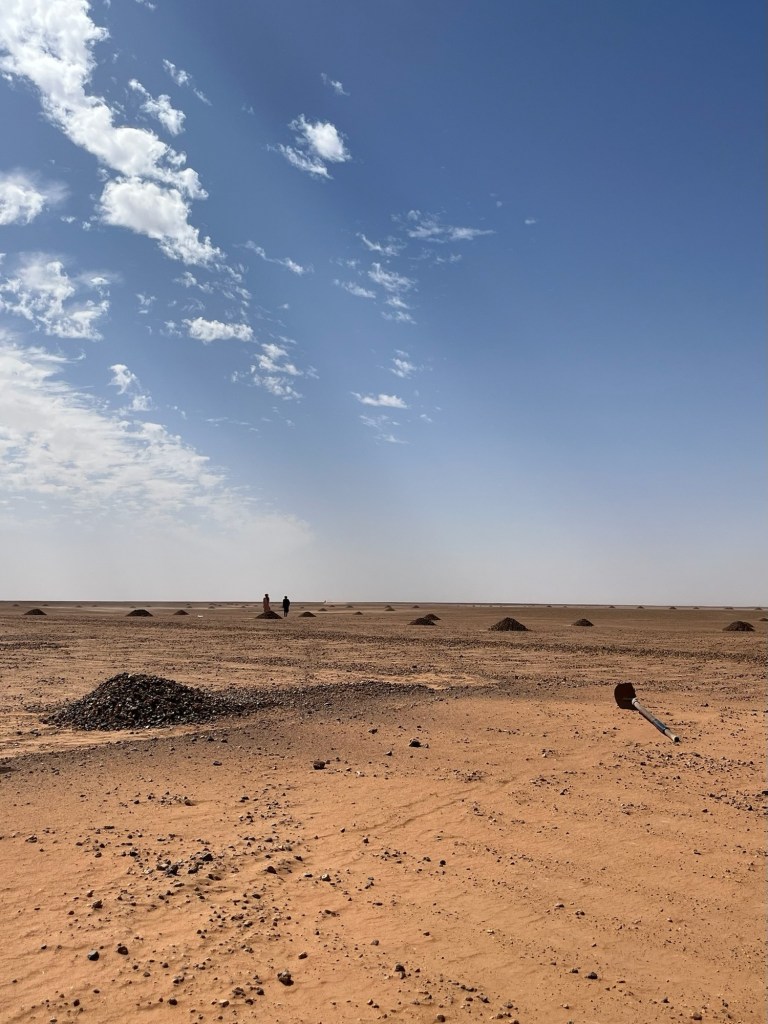
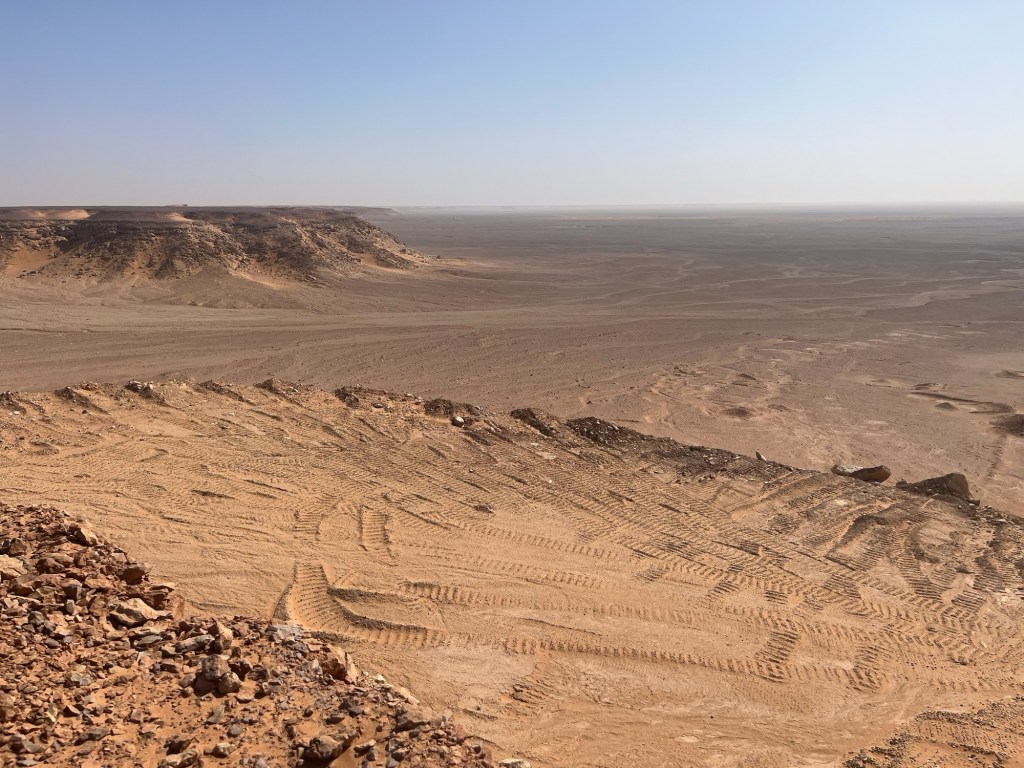
Being a work trip there is little I can say of my time in Adrar other than it is vast and a simply wonderful place to explore in a 4×4 as a tourist. So, enjoy the pictures and we’ll return to Algiers. We returned back to Adrar airport with our police escort who let their impatience be known as they beeped at us to drive through a red light at a crossroads. My passport reappeared – it had been on me during my time in Adrar but oddly they take it when transferring us to the airport. The airport is the kind where the smiley security guy is paying bugger all attention to the security scanner screen as he’s too busy assisting everyone with their bags as they pop out the other side. This time check-in had a queue that more or less made sense and with ticket in hand we waited outside the security area with little else to entertain us in the wee check-in hall. After half an hour security opened and my colleagues and I were immediately pulled out of the front of the queue and led to the police office where our passports were photocopied; not sure why that couldn’t have been done whilst we had been waiting. Queued for security again. Passports checked once more and ticket stamped with an official looking stamp. Bags through the scanners. Waited. Boarding began. Boarding pass checked by airline staff and then immediately checked by police. Boarded the bus to the plane. Got off the bus and had ticket checked by the police one last time. A few days later my flight to Doha was delayed by two hours with many police dotted around the boarding area wearing superior looking hats and pieces of gold cord tied all around them, none doing much.
I left Algiers just as the country was shutting down to celebrate their 70th anniversary of what they call Revolution Day, the day when they began a seven-year war of independence against the French. Of course, they celebrated their national pride like the rest of us; by leaving the country and going on holiday elsewhere. Those that stayed in Algiers at least could look forward to days of traffic jams as roads were closed in advance of a military parade. Yet it’s such days that help explain why Algeria is as it is today. The French fought furiously to keep hold of their prized possession, the Algerian’s murdered thousands of French civilians who had made Algiers their home. At independence I don’t think a single country in Africa avoided dictatorship and/or civil war, except for maybe Botswana. For a North African country, religious extremism isn’t far away as we see tragically in the Sahel right now. Algeria went through it all. She is now a country still finding her feet in a window of relatively peaceful opportunity. I might be sceptical at present about the way the police are deployed, but only a few decades back I would have been thankful for the added security, there is nothing to say I won’t be thankful sometime in the future but I sincerely hope that as the country opens up the police back away from people’s daily lives.
 Trig Tales