Jos – Nigeria
So, here we go, a big one. Nigeria is the most populus country in Africa and the sixth most populus in the world with 240 million people, yet only the fourteenth largest country in Africa by size. It speaks over 500 languages across 250 ethnic groups, ranks 142 of 182 on the Corruption Perceptions Index, and is largely off limits for safe travel everywhere thanks to kidnapping, terrorism and armed conflict. Most importantly, it is one country I have never fancied visiting out of curiosity as I have never heard anyone say anything positive about the place as a tourist. But no matter, as I was being sent by work, not as a tourist and so that changes the whole dynamic of any trip.
It takes a certain character to travel in Africa. One cannot stress about sitting on the toilet in the hotel room and noticing it leaking from the main disposal pipe, running along the outer edge of the shower and then into the shower and down the drain, almost as though it was designed as a solution. As this played out, I simply couldn’t have cared less as I had arrived with no major issues upon landing. Ten days before, however, I had applied for the ludicrously expensive visa online that should have been issued within a few working days but in fact wasn’t issued until 30 minutes before I was due to leave for the airport. The only reason it was issued was because one of our Nigerian partners had finally nudged someone in immigration who discovered that the application was stuck in a computer glitch – I would have been surprised but had a similar issue in West Africa before. With the visa issued I then had to fill out an electronic landing card which of course I wasn’t allowed to do because there was no record of my visa on the system. Luckily British Airways still allowed me to board and I was on my way. Landing at Abuja six hours later was far less intimidating than I had worked up in my head. I explained my landing card didn’t work; I was sent to a back room with a heap of others and a techy who fixed the problem and sent me on my way. My bag arrived, and I made it out of the airport without anyone asking me for money or generally being a pain in the arse. I met my driver, headed to a nearby hotel and rested for several hours before taking an internal flight to my final destination, Jos, in Plateau State.
The domestic terminal at Abuja is typical of the region, resembling more of a jumble sale than an airport. After checking in for my flight I was told to follow a chap in a hi-vis vest who took me and my luggage down a few back corridors to a scanner where my bag entered, and I assumed that would be the last time I ever saw it again. Essentially, instead of the bag joining a conveyor system at the check-in desk, it had to be manually hauled pretty much to runway. The chap then pointed me in the direction of departures which turned out to be a relatively standard but comfortable African departure area, only there were no signs to the boarding gates, or any screen with the flights on; in fact, there appeared to be just one gate which I took my chances on and with success. The flight only took 23 minutes which was quite the surprise but would have taken over five hours if I had gone by road. In one of the first cultural surprises of Nigeria I discovered that everyone waited patiently for their turn to get off the plane, something I have only ever witnessed once before, in Colombia, on the back of the pandemic. Nigeria is famed for being very direct whilst Ethiopia is more discreet, yet this did not reflect in the way to get off planes. Ethiopia is survival of the fittest going against what they would have you believe, whilst Nigeria, again, in opposition to what I myself at least believed were very polite and patient.
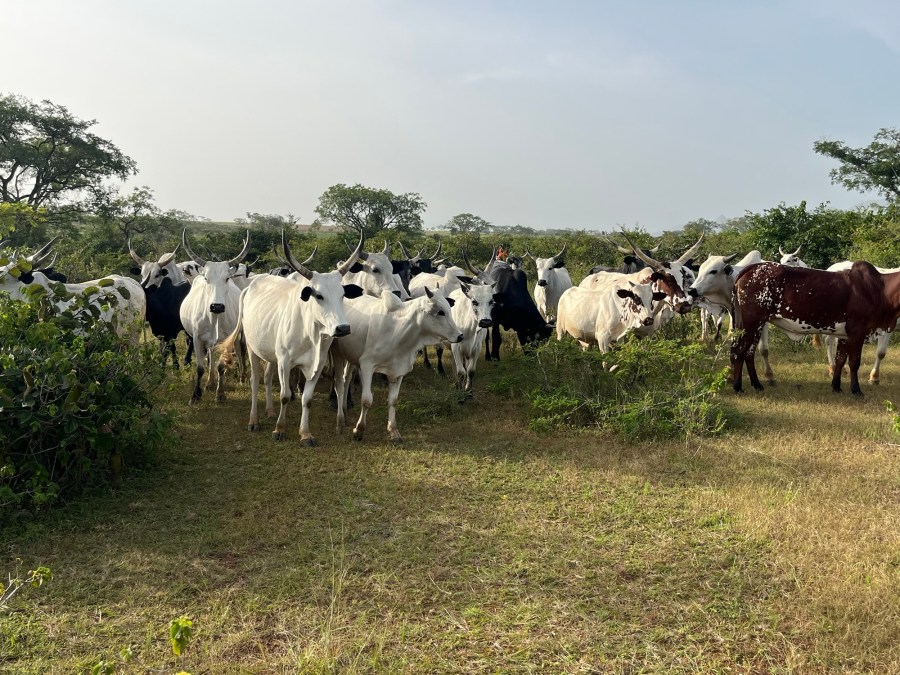
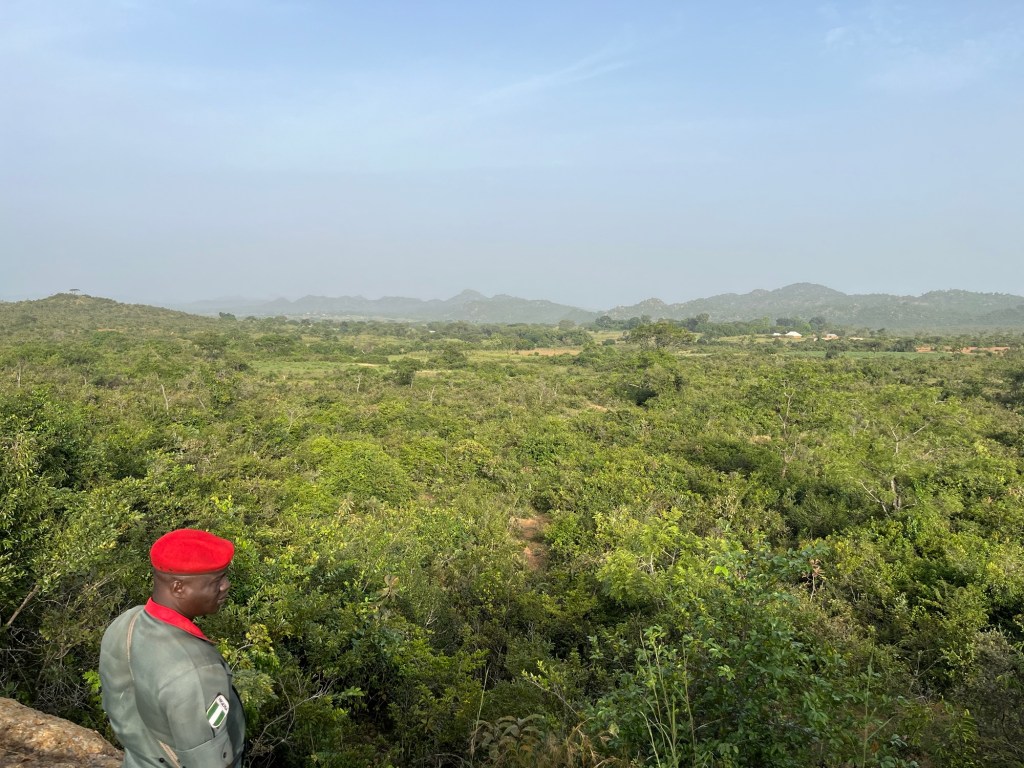
Now this is where things take a turn. In Jos I was met with my work colleague, two drivers, and a security detail of five, armed Civil Defence soldiers. I was put in a blacked-out Nissan Patrol which sped off with red and blue lights flashing in the grill and a full complement of sirens. To begin with, this was novel and a little fun, but it quickly got tiring as the week wore on and one can never help but ask the question as to whether it actually attracts more attention than is sensible. Don’t get me wrong, standing at an ATM with two heavily armed men standing behind me with their finger on the trigger is the safest I have ever felt withdrawing cash anywhere, despite the limit being $15. Every time I wondered off for a pee when out on a field visit, I would turn around after finishing to see a soldier standing guard over me. Yet, if you think about it, the sole purpose of five armed men was to deter anything inconvenient happening to me, such as kidnapping, and to protect me should the odd bullet come our way. If you think about it for too long it can be a lot to come to terms with, that is the potential of people dying to keep me alive. This is the very reason I won’t travel for fun into conflict zones; it simply isn’t fair on the people who, albeit are more than happy to welcome you to their country and to share their story and experience but also puts them at risk through protecting us. The same applies for work. My visit to Nigeria was to look for somewhere to farm dairy cows, but when does the risk become far greater than the reward; would I really want to send my staff, most of whom have young families, into this kind of security environment?
I do wonder if my impatience with incompetence at home – where we have little excuse for most things – is born out of my patience when travelling in countries with significantly greater challenges in everyday life. For example, the internet. I had an e-sim installed and ready to go when I landed in Nigeria – it worked less than 50 per cent of the time. There was no apparent reason for this and mattered not whether in the middle of a city, town, or the countryside, it simply worked when it felt like it, behaving like a meteor shower that is mega exciting when you see it, followed by prolonged periods of frustration waiting for the next opportunity. You get the full spread of G’s from 3-5 and where you might have it one time, there is no guarantee you will get it again, or vice versa for that matter. There is then the fact you can only withdraw a maximum of $15 from the ATM each time, everywhere uses local POS networks, and international cards are largely obsolete. After a 13-hour day I arrived at a hotel in Abuja, the capital, to be faced with ‘card declined’ repetitively across multiple cards. Beyond a sense of humour failure, having not eaten for 48 hours, completely exhausted, thankfully they could make the payment through Booking.com but I had to go through the process twice for each of the two reservations I had. Payment complete, I asked for the keys to which the receptionist had completely forgot about and left me standing for a further five minutes as that small matter was arranged. Needless to say I did the very un-British thing by going to sit down in the lobby to wait before I collapsed in an unhealthy heap of chest infection-induced misery.
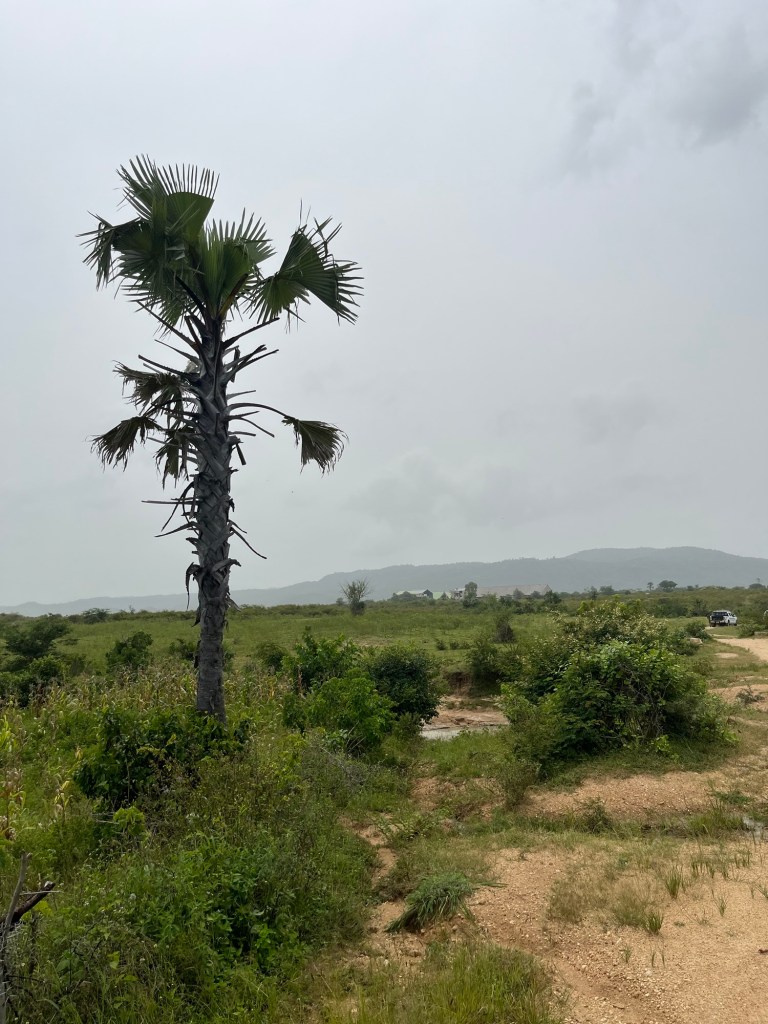
There is then breakfast. Order breakfast and it takes a mandatory 30 minutes minimum wherever you may be, and they don’t bring your cuppa Joe while you wait for the main event, oh no no no, it’s all or nothing. It also blows their mind that one should want to eat in the restaurant. Almost everywhere we went, Nigerians would take their breakfast in their rooms, or as explained to me quite simply, breakfast in bed. Being a stubborn jolly foreigner, I would always go to the restaurant for breakfast where of course there was nothing to do while waiting because both the e-sim and WIFI only worked when least convenient. With five minutes remaining before I needed to leave, on would pop the internet and breakfast would arrive ten minutes later. But it’s all ok, because my security team were 30 minutes late anyway – the moral of the story is that by not fighting the system life will play out very nicely. Yes, we will be late for our next site visit, but if we turn up on time, they probably wouldn’t be ready anyway!
As the end of my week approached I went through the usual process of stressing how much I should tip, if at all. This wasn’t a holiday, everyone was being paid well according to my colleague, and the team had taken to expecting lunch on a daily basis although that hadn’t been part of the original deal. I finally had it all worked out in my head by the end of the week and had settled on a small tip for the entire team as they had been quite delightful and as ever, when you realise how small it is to me but significant it is to them it becomes an easy decision. Still, at the end of the day they put in a dinner request and I had decided that if they did that they would lose their tip, rightly or wrongly. In the end they got both a farewell dinner and the tip because, well, see above. It was at least appreciated, and to be fair on the guys they always thanked me whenever they were fed.
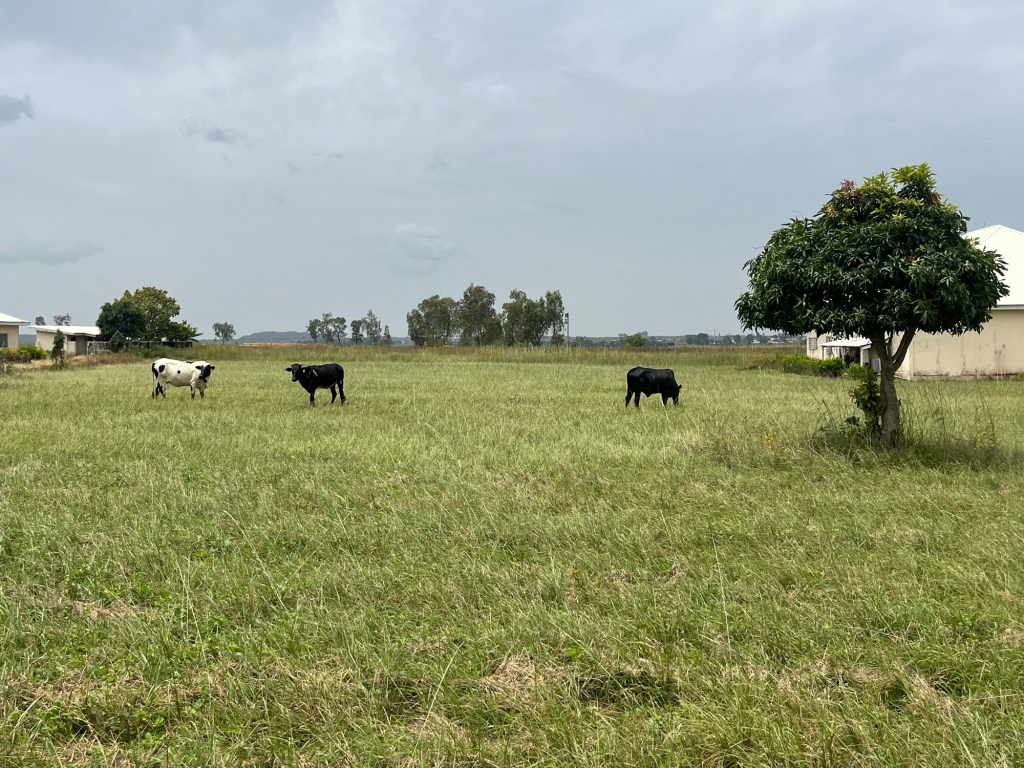
It had been a long week only because I had picked up some god-awful chest infection that literally knocked me off my feet by the end of several long days. However, I arrived at the airport quite content and pleasantly surprised with Nigeria. Before we discuss why, there is the small matter of getting to the plane. The first security check at the airport was at the entrance with a dog who hilariously only appeared to show interest in the pocket of my bag that had a stash of tennis balls that I hand out to kids from time to time. Then there was the baggage scanner coming into the airport; a passport check; another passport check; a luggage check; luggage weighed at a check-in desk, given a ticket and told to check in at another desk; checked in; passport check; visa check; exit card check; passport control; customs check; security; passport check; done, with each and every task carried out by a different individual.
Sat on the tarmac trying not to cough myself back off the plane, and less than 30 minutes before departure I had 5G for the first time all week. When travelling for work and with security it is much harder to form an opinion of a country but ultimately, I really enjoyed my time in Nigeria. I met some incredibly bright people, it’s obvious the country has a lot of talent. They can be very blunt yet at the same time always say good morning or hello when walking into a room. In one hotel I stayed at, the kitchen staff could look directly into my shower and there was nothing I could do about it. At one ATM the security guard told me to rub the microchip to make it work and after I failed the second attempt, he took my card, rubbed it on his head and it worked perfectly. A drive one night into Abuja saw that typically huge African sky transition from a blinding sunset to a lightening-filled sky. Would I recommend a holiday to Nigeria, no. Would I invest there, this remains to be seen. Nigeria is forecast to be the third largest population in the world by 2050 with around 400 to 440 million people, that’s almost double in just 25 years, simply put, it’s insane. On first appearances the country really is ineffable, that can be interpreted as you like across the entire spectrum of challenges and opportunities faced not just by Nigeria but many others in the Sahelian region of Africa.

